NANO BROWS · TECHNIQUE + CANDIDACY
What are nano brows?
What the name does—and does not—tell you.
A calm guide to machine-created brow hairstrokes, realistic healed results, safety limits and the questions that matter before pigment is opened.
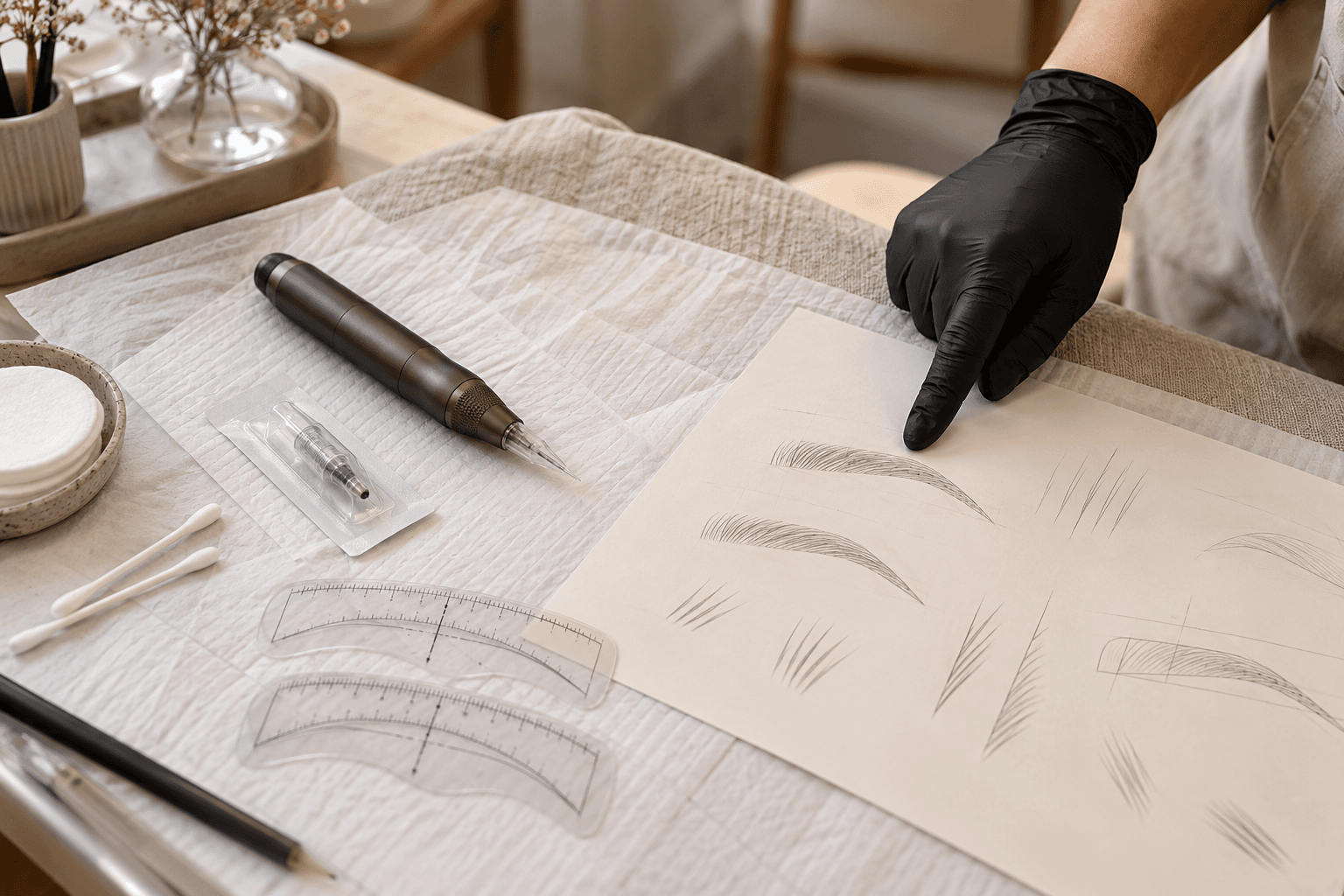
Nano brows commonly describes a cosmetic brow tattoo made with a mechanical device and a very fine needle configuration to create hair-like strokes. The important word is commonly. “Nano” is a service label, not a regulator-defined promise about the exact cartridge, pigment, depth, pain, healing, safety or longevity. Ask the artist to show and explain the method they actually use before you consent.
What are nano brows meant to do?
Nano hairstrokes are designed to add the appearance of individual brow hairs. They may appeal to someone who wants more visible structure through sparse-looking areas or a stroke-based effect instead of a fully shaded makeup look. They change appearance; they do not grow hair, diagnose hair loss or treat its cause.
The National Alopecia Areata Foundation describes nano brows as using a fine mechanical tattooing needle to draw hair-like strokes. FDA classifies permanent makeup as tattooing because a needle inserts colored ink into skin. That means the decision should include pigment records, infection control, healing, future fading and difficult-removal questions—not only the fresh design.
What does “nano” not guarantee?
| The label may suggest… | It does not prove… |
|---|---|
| A machine-created, stroke-like brow effect | Which device, cartridge, needle configuration or pigment will be used |
| Fine-looking hairstroke detail | That every healed stroke will stay crisp or perfectly match natural hair |
| A different process from manual microblading | That it is automatically safer, gentler or less likely to scar |
| A softer alternative to full shading | That it will suit every skin condition, age or prior brow tattoo |
| Maintenance over time | One fixed lifespan, touch-up date or complete future disappearance |
These limits are not a reason to fear the service. They are a reason to replace marketing shorthand with specific questions. A qualified practitioner should be comfortable explaining the equipment, design plan, pigments, healing instructions and reasons to postpone.
Nano brows vs. microblading: what is the practical difference?
The usual distinction is the instrument. Nano hairstrokes are commonly described as machine-created. Microblading uses a manual hand tool with a grouped needle edge to make stroke-like marks. Both place pigment through broken skin and both can lead to infection, allergy, inflammation, scarring, color change, migration or an unwanted design.
Do not choose from a blanket claim that one method is “best for oily skin,” “best for mature skin” or always more natural. Those claims are not established by the sources reviewed for this guide. Current skin condition, natural brow hair, existing pigment, scar history, medicines, goals and the practitioner's healed work all belong in the assessment. For the broader technique decision, use the separate powder brows versus microblading guide.
Who may want a nano-brow consultation?
A consultation may be reasonable when you want a stroke-based permanent brow effect, understand that the service is tattooing and are prepared for visible healing, fading, possible maintenance and difficult correction. It may also help when conventional brow makeup is hard to apply, but cosmetic tattooing should never be presented as treatment for a medical hair-loss condition.
Look at healed, unfiltered work with starting brows relevant to yours. Fresh strokes often look darker and sharper than the settled result. Normal facial asymmetry also remains normal: mapping can create visual balance, but it cannot promise two identical brows.
When should you pause or ask a clinician?
Postpone when the brow area is infected, open, sunburned, recently injured or actively inflamed. Do not cover an unexplained rash, swelling, sore, changing spot or hair-loss pattern with pigment before the appropriate licensed clinician evaluates it.
Share pregnancy or breastfeeding status, medicines and supplements, allergies, prior pigment, previous reactions, immune or bleeding concerns, scar or keloid history and recent skin procedures. Do not stop a prescribed medicine for a beauty appointment unless the prescriber directs it. The separate guide to permanent-makeup candidacy can help you organize the conversation; it cannot clear you medically.
What happens during a thoughtful appointment?
- Consultation: discuss your routine, existing pigment, health history, desired softness and realistic healed result.
- Mapping: review shape and balance while your face is at rest and moving. Ask for changes before pigment is opened.
- Technique confirmation: identify the actual device, disposable needle or cartridge system and whether shading will be added.
- Pigment and consent: record the pigment manufacturer, color and lot, review risks and confirm the complete price and follow-up terms.
- Procedure and aftercare: proceed only after questions are answered, then leave with written instructions and a red-flag plan.
Pain is personal. Numbing does not guarantee a pain-free service, and pain level is not proof that pigment was placed correctly. Tell the practitioner if discomfort becomes unexpected, sharply localized or comes with an unusual symptom.
How should you prepare?
- Bring photos of your brows bare and with the makeup you actually wear.
- Bring examples of healed effects you like and dislike—not only freshly completed brows.
- List medicines, supplements, allergies, prior reactions, skin concerns and all existing pigment.
- Ask how recent peels, retinoids, injectables, lasers, tanning, sunburn or brow services affect timing.
- Leave room in the calendar for visible healing and a later settled-result review.
- Get the deposit, cancellation, touch-up, additional-session and correction terms in writing.
There is no responsible one-size-fits-all list of products or medicines to stop. Follow the practitioner's written preparation plan and ask the appropriate clinician when a medical treatment is involved.
Aftercare: use the written plan, not a viral countdown
Expect the fresh color and edges to look different from the settled result. Temporary tenderness, swelling, flaking or patchiness may occur, but the exact course varies. Wash your hands before touching the area, avoid picking or peeling and use only the products and cleansing approach in your written instructions. Do not improvise with acids, retinoids, scrubs, antibiotic ointment or a social-media “hack.”
There is no universal rule for when every client may wash, exercise, apply makeup or return to sun exposure. The procedure, skin response and provider instructions matter. Read Enclave's permanent-makeup aftercare guide, then keep the procedure-specific plan you receive.
Do / Don't before you book
Do:
- Ask the practitioner to define “nano” in concrete tool and technique terms.
- Review healed, unfiltered work and discuss existing pigment before mapping.
- Verify Orange County practitioner registration and the studio's facility permit.
- Ask how single-use items, pigment brand, color and lot are documented.
- Get written preparation, aftercare, red-flag and follow-up instructions.
Don't:
- Assume a very fine-sounding name means risk-free or temporary.
- Choose from a filtered fresh photo, low price or expiring offer alone.
- Hide medicines, allergies, prior reactions, skin symptoms or old pigment.
- Accept universal promises about skin type, pain, retention or perfect symmetry.
- Add more pigment automatically before the first work has fully settled.
What can go wrong?
Permanent-makeup complications reported by FDA, dermatology guidance and peer-reviewed reviews include infection, allergic or inflammatory reactions, granulomas, scarring, unwanted shape or color, pigment migration and dissatisfaction. Even careful hygiene cannot make the risk zero because contaminated ink can also introduce microorganisms.
Correction is not always a simple cover-up. Adding pigment can make later removal more complicated, and removal may require multiple procedures without guaranteeing complete clearance or scar-free skin. If you already have brow pigment, ask whether waiting, redesign, partial fading or removal should be considered before more color is added.
When should you seek medical care?
Contact the practitioner and seek prompt medical evaluation for worsening pain, spreading redness, increasing warmth or swelling, pus, open sores, fever, red streaking, delayed healing or systemic symptoms. Raised or persistently itchy areas also deserve medical assessment. Trouble breathing or swelling of the lips, tongue or throat is an emergency—call 911. A permanent-makeup practitioner should not diagnose or treat these symptoms.
Seven questions for a Santa Ana consultation
- When you say “nano hairstrokes,” what machine, cartridge and motion do you use?
- May I see healed, unfiltered nano-brow work—not only fresh photos?
- How do my natural hair, skin condition and any old pigment change the design?
- Can I see your current Orange County registration and the facility permit?
- How are single-use items and the pigment brand, color and lot recorded?
- What is included in the posted price, healed review and any later maintenance?
- What would make you postpone, decline or refer me to a licensed clinician?
Orange County says permanent cosmetics are body art. Artists must hold current Body Art Practitioner Registration and may work only in a facility with a valid body-art facility permit. These documents are a legal hygiene baseline—not proof of artistic fit or a guaranteed result. Use the full permanent-makeup artist checklist too.
THE SHORT DECISION
Choose the explanation, not the label.
A useful nano-brow consultation should leave you able to name the tool, desired healed effect, main risks, reasons to pause, full cost, aftercare plan and realistic options if the result changes. If the explanation stays vague, waiting is a valid choice.
Frequently asked questions
What are nano brows?
Nano brows commonly describes a permanent-makeup technique that uses a mechanical cosmetic-tattoo device and a very fine needle configuration to place hair-like brow strokes. The name is not a regulator-defined guarantee of the exact device, needle, pigment, depth or healed result, so ask the practitioner to explain the method they use.
Are nano brows the same as microblading?
They are commonly distinguished by the tool: nano hairstrokes are described as machine-created, while microblading uses a manual blade-like needle group to make stroke-like marks. Both break the skin and place pigment, and neither is universally safer, gentler or longer-lasting.
How long do nano brows last?
There is no trustworthy universal clock. Permanent-makeup pigment can remain for years while fading or changing, and visible retention varies with technique, pigment, skin, sun exposure, healing, aftercare and later skin treatments. Ask for a healed-result review instead of an automatic touch-up promise.
How much are nano hairstroke brows at Enclave?
Enclave's live service menu listed Nano Hairstroke Brows at $795 when checked October 17, 2026. The public menu does not state whether a touch-up is included, so confirm the complete written price, follow-up and maintenance terms before booking.
Who should postpone nano brows?
Postpone when the brow area is infected, open, sunburned or actively inflamed, or when you have unexplained symptoms at the site. Pregnancy, breastfeeding, medicines, allergies, immune or bleeding concerns, prior reactions, scar history and recent procedures may require an individual discussion with the appropriate licensed clinician and practitioner.
Sources and evidence note
- U.S. Food and Drug Administration — Tattoos, Temporary Tattoos & Permanent Makeup (current page accessed October 17, 2026; definition, ink oversight, complications and removal limits)
- U.S. Food and Drug Administration — Tattoos & Permanent Makeup Fact Sheet (current page accessed October 17, 2026; contaminated ink, infection, migration, fading and difficult removal)
- American Academy of Dermatology — Confidence Redefined: Permanent Makeup (June 18, 2024; realistic results, provider selection, pigment records, aftercare and complication signs)
- National Alopecia Areata Foundation — Eyebrows: Tools and Techniques (current page accessed October 17, 2026; consumer-facing nano, microblading and powder-brow tool descriptions; not a comparative clinical trial)
- Ghafari et al. — Permanent Makeup: A Review of Its Technique, Regulation, and Complications (Journal of the American Academy of Dermatology, 2024; narrative review of uses, regulation and reported complications)
- Rai et al. — Eyebrow Microblading: Science, Art, and Complications (Skin Appendage Disorders, 2025; microblading review used only for manual-tool description and brow-tattoo complication context)
- Orange County Health Care Agency — Body Art / Permanent Makeup Program (current page accessed October 17, 2026; practitioner registration, training and facility permits)
- Enclave Beauty — Permanent Makeup Services in Santa Ana (live menu checked October 17, 2026; documented Nano Hairstroke Brows name and posted $795 price)
Evidence note: “Nano brows” was a current U.S. search-question signal during this newsroom review, but no local search volume is claimed. The nano-specific consumer definition comes from NAAF; FDA, AAD, Orange County and peer-reviewed reviews establish the broader permanent-makeup safety and regulatory context. No reviewed head-to-head trial establishes that nano brows are universally safer, gentler, faster-healing, longer-lasting or better for a particular skin type.
Medical disclaimer: Educational only, not medical advice, diagnosis or individual candidacy clearance.