PERMANENT MAKEUP · PROVIDER CHECKLIST
How to choose a permanent makeup artist:
12 questions better than “Are you certified?”
A certificate can be one useful detail, but it does not replace current registration, a permitted facility, healed work, traceable pigments, infection control and honest referral boundaries.
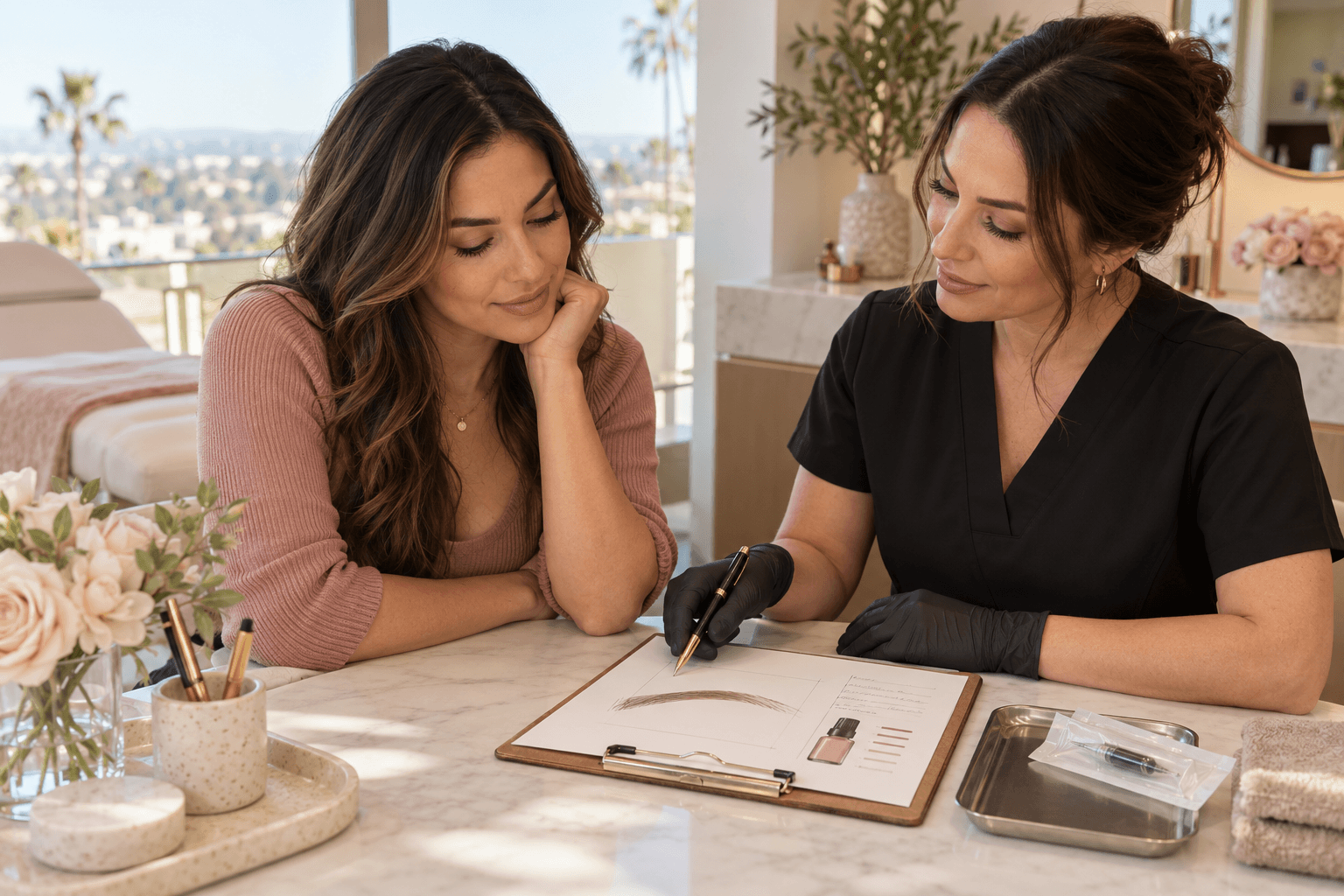
Choose a permanent makeup artist by verifying how they work—not by trusting one title, certificate or fresh photo. In Orange County, permanent cosmetics are body art: the practitioner needs current Body Art Practitioner Registration, and the procedure must happen in a facility with a valid body-art permit. Then evaluate healed results, hygiene, pigment records, consent, aftercare and whether the artist knows when not to proceed.
What does a permanent makeup artist do?
A permanent makeup artist places pigment into the skin to create a cosmetic tattoo, such as powder brows. This is different from brow tint or lamination: the result may soften or change, but pigment can remain for years. That permanence makes provider selection, informed consent and a conservative design process especially important.
Who should use this checklist?
Use it if you are considering first-time permanent makeup, refreshing older work, correcting a shape or color, or bringing work from another artist. It is also useful for Santa Ana clients traveling from Tustin, Orange, Garden Grove, Costa Mesa, Irvine, Anaheim and other nearby Orange County communities: the relevant question is not which city name appears in an ad, but whether the specific practitioner and facility meet the applicable safeguards.
12 questions to ask before booking
- Is your Orange County Body Art Practitioner Registration current? Ask to see it. A training certificate is not the same as local practitioner registration.
- Does this exact location have a current body-art facility permit? Practitioner registration and facility permitting are separate. Verify the room where the procedure will actually occur.
- Can I see healed work that resembles my goal? Fresh brows can look darker, sharper and smoother than healed brows. Ask for healed examples at meaningful intervals, with honest lighting and no beauty filter.
- How will you assess my existing pigment and skin? Old shape, color, saturation, scarring, active irritation, medicines and prior removal can change the plan. A responsible answer may be “wait,” “seek medical guidance” or “discuss removal first.”
- How do we agree on shape and color before tattooing? Ask how mapping, symmetry, facial movement, color selection and your approval are documented. You should have time to understand the proposed design.
- What training supports this specific service? Look beyond the word “certified.” Ask about sanitation, bloodborne pathogens, anatomy, wound care, infection recognition and the particular technique—not just a brand course.
- Which items are single-use, and what is sterilized? Ask to see sealed disposable needles or cartridges opened for you and how reusable equipment and surfaces are handled. Gloves do not make a contaminated setup safe by themselves.
- What pigment will you use, and will I receive the record? The American Academy of Dermatology recommends recording the pigment color, manufacturer and lot number. This information can matter if there is a reaction, recall, future touch-up or removal consultation.
- What are the realistic limits for my case? No artist can guarantee perfect symmetry, exact retention, a scar-free outcome or a fixed number of years. Ask what could change during healing and what cannot be corrected simply by adding more pigment.
- What does informed consent cover? It should address the planned procedure, alternatives, expected healing, important risks, your health history and what happens if the artist decides not to treat.
- What aftercare and follow-up will I receive? You need written instructions, a way to ask questions and clear warning signs. Review ENCLAVE’s permanent makeup aftercare guide before the appointment so you can plan around healing.
- When would you refer me to a medical professional? A qualified artist should not tattoo over a suspicious or changing lesion, diagnose a rash or treat an infection. They should be able to explain when a dermatologist, eye doctor or other clinician belongs in the plan.
How to evaluate a portfolio without being misled
- Prioritize healed images over same-day images.
- Look for consistent lighting, angle and skin texture—not blurred or heavily retouched skin.
- Find multiple clients rather than one repeated “best result.”
- Notice whether shapes vary with anatomy and goals instead of repeating one template.
- Ask whether older work, correction or removal was involved.
A portfolio shows aesthetic judgment, not registration or infection control. Use it alongside official checks—not in place of them.
Red flags worth slowing down for
Pause if you are pressured to book immediately, promised a guaranteed result, discouraged from asking about pigments or permits, shown only filtered fresh work, or told that a patch test proves an allergy cannot happen. Be cautious when an artist wants to cover unexplained discoloration, a changing lesion, active irritation or very saturated old pigment without an appropriate assessment.
What should happen next?
Bring reference photos, a list of medicines and allergies, details of prior permanent makeup or removal, and your everyday brow routine. During the consultation, compare your desired look with what can heal realistically. If the plan feels unclear, you can wait. Permanent makeup is elective; informed confidence matters more than speed.
Related guidance
Learn how permanent makeup changes over time, review ENCLAVE’s ombré powder brow service, and read the aftercare and warning-sign guide before choosing a date.
Sources
- American Academy of Dermatology — Confidence Redefined: Permanent Makeup
- U.S. FDA — Cosmetics Safety Q&A: Tattoos and Permanent Makeup
- Orange County Health Care Agency — Body Art Program
- American Academy of Dermatology — Questions to Ask Before a Cosmetic Treatment
Evidence note: Registration, permitting and training are safeguards, not guarantees of a cosmetic result. Verify current requirements and records for the practitioner and facility you plan to use.
Medical disclaimer: Educational information only; not medical advice, diagnosis or a guarantee of candidacy, healing or results.