PERMANENT MAKEUP · BROW DECISIONS
Powder brows vs. microblading:
a decision guide
Choose by the healed effect, skin assessment and long-term plan—not a viral before-and-after photo.
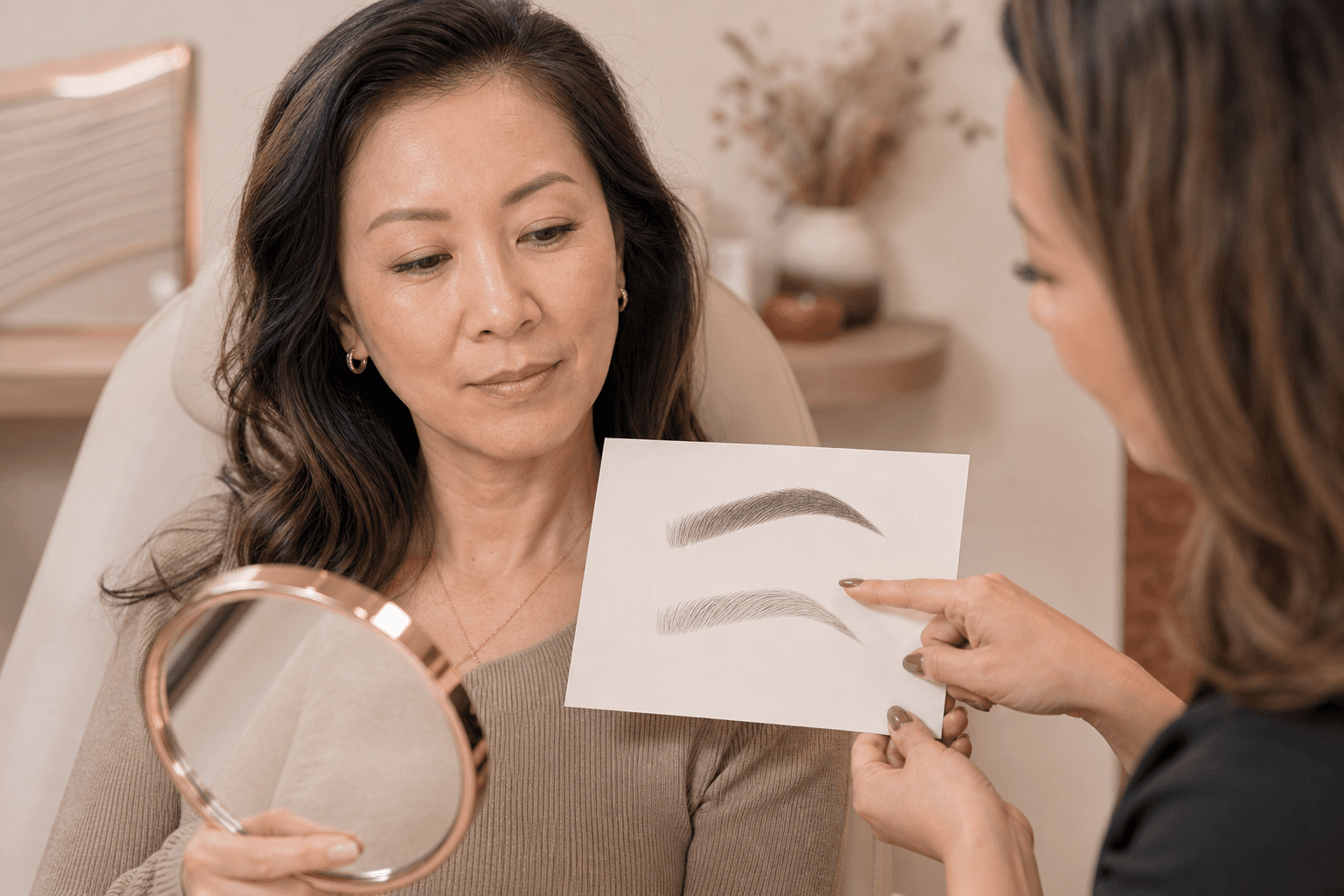
Short answer: powder brows use machine shading to build a soft filled-in effect; microblading uses a manual group of needles to create stroke-like marks. Neither is universally more natural, safer or longer-lasting. Both are forms of permanent cosmetics, and both require informed consent, sanitation, healing and a plan for how the pigment may change.
Compare the healed effect—not the fresh result
Fresh permanent makeup is usually darker and sharper than the healed result. Powder or ombré brows are designed around graduated shading; microblading is designed around separated hair-stroke marks. “Natural” is a preference, not a technique guarantee. Ask to see healed work on brows with a starting condition similar to yours—not only same-day photos.
Skin type is one factor, not a verdict
Current search results often declare microblading best for dry skin and powder brows best for oily or mature skin. That shortcut is too broad. Oil, pore visibility, sun damage, active dermatitis, acne, scarring, prior pigment and the amount of natural brow hair can all affect the plan. Age or ethnicity alone should never prescribe a technique.
Delay cosmetic tattooing over irritated, infected, sunburned or actively inflamed skin. Discuss isotretinoin history, immune conditions, bleeding risk, pregnancy, allergies, keloid history and upcoming procedures with the appropriate licensed clinician and practitioner.
Both techniques are permanent cosmetics
“Semi-permanent” can sound reversible, but pigment is implanted in skin and may not disappear completely or predictably. Color can fade, shift or blur; shape preferences and facial features can change. Removal or correction may require multiple medical procedures and can introduce additional risk. The FDA notes that permanent makeup is not easily removed and that no color additives are approved for injection into skin.
Safety questions matter more than the trend name
In Orange County, permanent cosmetics fall under body art. The county states that practitioners must hold Body Art Practitioner Registration and services may be provided only in a permitted body-art facility. Verify both, plus current bloodborne-pathogen training, single-use sterile needles, pigment traceability, barrier practices and written aftercare.
Peer-reviewed reviews describe infectious, allergic, inflammatory and technical complications. Rare delayed nodules or granulomatous reactions can occur. Seek medical care for spreading redness, worsening swelling, pus, fever, severe pain, eye symptoms, breathing difficulty or persistent raised or itchy areas.
Questions to bring to the consultation
- Do you offer the exact technique I am considering?
- May I see healed, unfiltered work—not only fresh results?
- How does my current skin and existing pigment affect candidacy?
- What pigment brand, lot record and needle system will be documented?
- Can I verify practitioner registration and the facility permit?
- What is included in the initial plan, healing review and later maintenance?
- What would make you postpone or decline the service?
- If I dislike the healed result, what are the realistic options and risks?
What ENCLAVE documents
ENCLAVE’s current menu documents Ombré Powder Brows. This comparison does not imply that microblading is offered. Confirm current services and candidacy through the documented service menu and booking consultation. Review the permanent makeup aftercare guide before deciding.
Frequently asked questions
Does powder brow always look like heavy makeup?
No. Density, gradient, shape, color and healed response influence the effect. Ask for healed examples that match the softness you want.
Can old microblading be covered with powder brows?
Sometimes prior pigment changes the design or makes correction inappropriate. An in-person assessment should evaluate color, saturation, placement, scarring and whether removal or medical review belongs first.
Can a photo tell me which technique is best?
No. A photo cannot reliably show skin condition, scar history, health factors or how pigment has behaved before.
Sources and editorial note
- FDA: Tattoos and Permanent Makeup Safety Q&A — checked September 1, 2026
- Orange County Health Care Agency: Body Art / Permanent Makeup — checked September 1, 2026
- Eyebrow Microblading: Science, Art, and Complications — 2025; checked September 1, 2026
- Permanent makeup: technique, regulation and complications review — 2024; checked September 1, 2026
Editorial note: Search results and community discussions were used only to identify consumer questions. Medical and regulatory claims rely on official and peer-reviewed sources.
Medical disclaimer: Educational only, not medical advice or a diagnosis.