PERMANENT MAKEUP · TREND CHECK
The concealer you can't wash off.
A trend check on under-eye and freckle tattoos.
It is 11 p.m., the makeup wipe comes out, and for a moment the dark circles are back. Somewhere on your feed, someone promises you will never see them again: tattoo the concealer on once and be done. Faux freckle tattoos sell a similar dream from the other direction, a sun-kissed face that never washes off. Before you hand your face to a needle, here is what the trend actually is, why most dark circles are not a color ink can match, what happens when skin-tone pigment meets a laser, and what to do instead.

Short answer: an under-eye concealer tattoo places skin-colored pigment into the thin skin below the eyes to hide dark circles. It is a trend we would ask a friend to skip. Most dark circles are shadows, visible blood vessels, pigment or thin aging skin, and Mayo Clinic lists a long line of possible causes; ink cannot fill a hollow, flatten a bag or follow your skin as it changes. Skin-tone and white pigments are also among the hardest to remove: the FDA says they can turn black under a laser, and once that happens the pigment is no longer treatable by laser. Faux freckle tattoos are smaller and usually fade within one to three years, but they carry the same risks of infection, allergy, scarring, color change and regret.
Why your concealer comes off every night, and why that is a feature
Concealer has one quiet superpower nobody puts on the label: it is reversible. If the shade was wrong, the light was harsh or your skin got a little tan over the summer, tomorrow you pick a different one. Your face changes across a year and across a decade. Your concealer changes with it.
A tattoo does the opposite. It freezes one decision about color, made on one day, under one light, into skin that will keep aging, tanning, thinning and moving. That is the real question behind this trend. Not “does it look good the week after?” but “will I still want exactly this, in exactly this spot, in five years, in every light?”
In Santa Ana, that light is not gentle. Drive west on the 22 toward Garden Grove late in the afternoon and the sun lands straight on your face. Strong, low, warm light is exactly where a flat patch of pigment under the eyes would show whether it still matches.
Where the trend came from
Under-eye camouflage tattooing went viral through a São Paulo tattoo artist, Rodolpho Torres. In February 2019, Inked, FutureDerm and Brit + Co all covered his work, which used skin-tone ink to even out the under-eye area. Brit + Co reported that most of his clients needed three or four sessions and that he could not guarantee the number. The idea later resurfaced on TikTok as “permanent concealer,” and a Refinery29 UK report on that wave described sessions of about an hour, roughly three sessions for full coverage and prices in the UK of about £600 to £2,500.
What stands out in that coverage is who was worried. It was not only dermatologists. Cosmetic tattooists, the people who do permanent makeup for a living, were among the loudest skeptics. One UK permanent makeup clinic quoted by Refinery29 said it does not offer the procedure at all, and said the long-term results are almost impossible to predict. Another UK tattooist in the same piece warned that, because the skin is so thin, it can age badly.
Faux freckles followed a parallel path. NewBeauty's February 2024 explainer, which interviewed six dermatologists, describes pigment placed into the skin with a hand tool or a tattoo device, usually lasting from about a year to as long as three years.
The core problem: most dark circles are not a stain
A concealer tattoo assumes your dark circle is a color sitting on top of the skin that you can cover with another color. Often it is not. Mayo Clinic's page on dark circles (updated December 25, 2025) lists causes that include genetics, aging skin changes, eczema and contact dermatitis, fatigue, rubbing or scratching the eyes, sun exposure, smoking, alcohol, stress and pigment changes such as melasma or post-inflammatory hyperpigmentation, which it says are more common in people with brown or Black skin. It adds a line that matters most for this trend: what looks like dark circles may be shadows cast by puffy eyelids or hollows that develop with age.
| What is making it look dark | Can skin-tone ink fix it? | Better first step |
|---|---|---|
| Shadow from a hollow or a puffy lid | No. A shadow is shaped by light and volume, not color. | Dermatologist or oculoplastic consult; Mayo lists fillers for hollows and surgery for puffy lids. |
| Pigment (melasma, post-inflammatory hyperpigmentation) | Ink can hide it today, but pigment can shift with sun, hormones and treatment while the tattoo stays put. | Daily sunscreen, a skin assessment, prescription creams or other treatment from a clinician. |
| Eczema, allergy or rubbing | No. Tattooing irritated skin adds risk. | Treat the irritation first; see a dermatologist or allergist. |
| Genetics, thin skin, visible vessels | Partly, and unpredictably. Thin skin is where pigment is hardest to place evenly. | Good concealer, sun protection, a clinician's view on medical options. |
| Change under one eye only, getting worse | Never a cosmetic question first. | Mayo Clinic says to talk to a healthcare professional. |
A New York dermatologist quoted by Brit + Co made the same point: many under-eye circles come from age-related fat loss, which no amount of pigment can stop. A dermatologist quoted by Inked pointed to changes in the under-eye fat pads as the common reason. Ink cannot add volume back, and it cannot keep up as volume keeps changing.
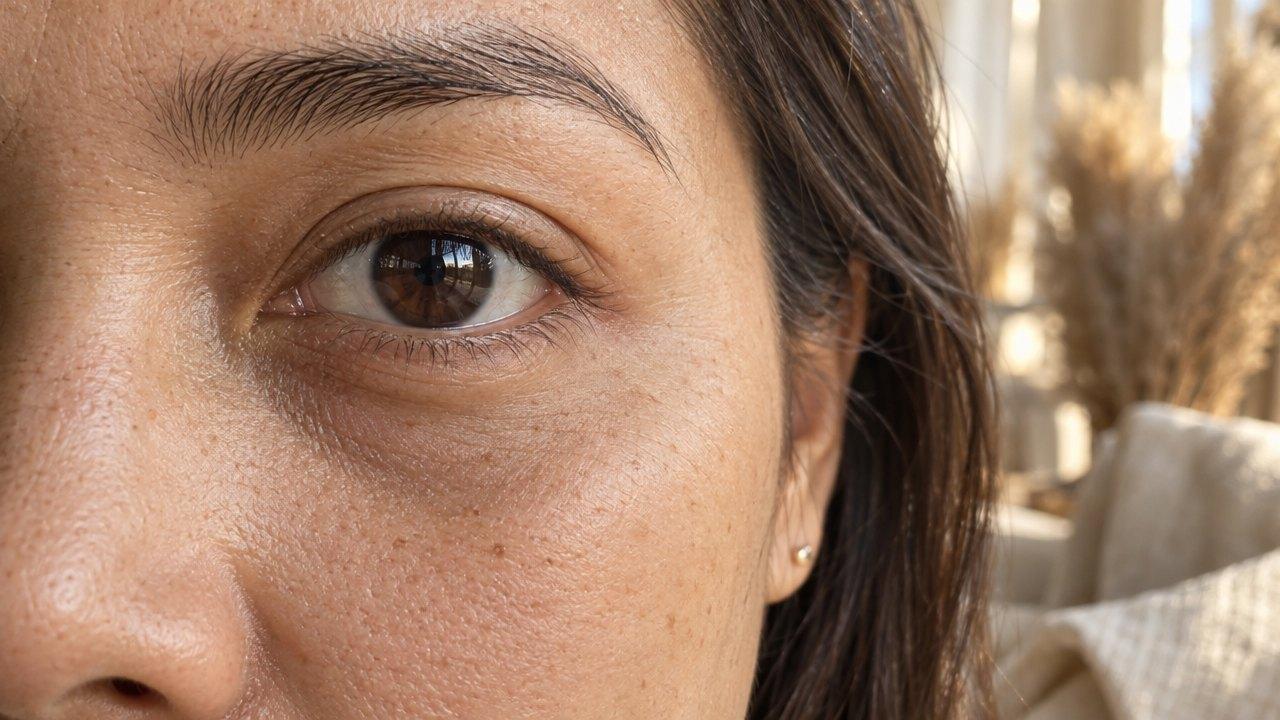
The skin-tone ink problem: matching, drifting and turning black
Brows and lip blush use colors that are meant to look like color. Concealer tattoos and freckles have a harder job: blending invisibly into skin that changes. Three issues keep coming up.
- Matching is a moving target. Your under-eye skin is not one color across a year. A shade picked in November can read differently after a summer in Orange County, after a melasma flare or as the skin thins with age. A dermatologist quoted by Refinery29 put the risk bluntly: if you don't like the shade, there is little you can do.
- Pale pigments can age badly. Skin-tone shades are commonly built with white pigments such as titanium dioxide. Tattooists quoted by FutureDerm and Refinery29 described pale pigment under thin skin turning lumpy or discolored over time, likening it to cottage cheese. NewBeauty's experts said freckle ink can also change, sometimes turning white or pink, and that this is unpredictable.
- Lasers can make it worse, not better. The FDA's consumer guide on tattoo removal says flesh-colored tattoos, white ink and permanent makeup are “particularly tricky” because the pigment can oxidize when treated by laser, and that oxidized pigment “is no longer treatable by laser.” A 1993 Archives of Dermatology report described five cases of immediate, irreversible darkening of cosmetic, white, flesh-colored and pink-red tattoos after laser treatment. Now imagine that happening one centimeter from your eye.
That last point is why removal is the real deal-breaker. Our color-by-color guide to laser tattoo removal explains the chemistry. For the under-eye area, the eye adds its own layer of risk: lasers near the eye need careful shielding, and a UK clinic quoted by Refinery29 warned that lasering near the eyes carries a risk of blindness. The safest removal is the tattoo you never got.
The FDA also reminds anyone considering permanent makeup that it can cause allergic reactions, infection, discoloration and results that are difficult to remove, and that contaminated ink can cause infection even when the artist's technique is clean. A New York dermatologist quoted by Brit + Co added that scarring under the eye can pull the lower lid down, a problem called ectropion.
Faux freckles: a smaller canvas, the same rules
Freckle tattoos feel lower-stakes, and in some ways they are: the dots are small, and most estimates put their life at roughly one to three years. But small is not the same as safe or reversible. In NewBeauty's February 2024 report, one dermatologist called regret the biggest risk, and others listed infection, allergic reaction, improper application and scarring. One noted that more than 50 pigments and shades are in use and that none is approved for injection into the skin.
Two practical traps are worth knowing. First, real freckles come and go with sun; tattooed ones do not, so in winter they can look stamped on. Second, “it will fade” is a hope, not a plan. Fading can be uneven, and a faded dot that turned pink or gray is still a dot on your face. If you love the look, freckle pencils and tinted products let you test the placement for months first.
Seven mistakes people make with this trend
- Treating a shadow like a stain. If the dark area moves when you tilt your head under a light, part of it is likely shadow. Ink cannot fix shadow.
- Choosing the shade in one light. Studio light, phone light and noon sun all lie in different ways.
- Believing “semi-permanent” means removable. It is a marketing word. Faded pigment can still be visible, and pale pigment is among the hardest to remove.
- Skipping the medical question. Eczema, allergy, melasma or a one-sided change deserve a clinician before a cosmetic fix.
- Booking on a viral video. Most clips are filmed on the day or the week after. The questions that matter are at year two and year five.
- Not asking about the ink. If something goes wrong, you or your doctor will want to know exactly which pigment went in.
- Forgetting the exit plan. Ask before booking what happens if you hate it. If the honest answer is “not much,” that is your answer.
Who should skip it, and when to see a clinician first
Skip or postpone if you have active eczema or dermatitis around the eyes, a history of tattoo or pigment allergy, melasma that is still changing, a tendency to scar or form keloids, a current eye infection or recent eye surgery, or if you are pregnant. Our guide to who should avoid permanent makeup explains each of these in more detail.
See a healthcare professional if a dark circle appears under only one eye and gets worse over time, which Mayo Clinic says warrants a conversation, or if you have swelling, itching or flaking around the eyes. After any facial tattoo, seek prompt care for spreading redness, increasing pain or warmth, pus, fever, swelling near the eye or any change in vision.
If you are still curious: questions to ask any artist
- Which exact pigment would you use, and can I have its name and lot number in writing?
- How many of these have you done, and can I see healed photos at one and two years, not just fresh ones?
- What happens if the shade is wrong or changes? What is the removal plan, and who would do it?
- Is your practice registered with the county? In Orange County, permanent cosmetics fall under the Health Care Agency's Body Art Program, not the state Board of Barbering and Cosmetology.
- Will you take a full health history first? California's Safe Body Art Act requires a health questionnaire for a reason.
Any artist who answers these calmly and honestly is doing their job. Any artist who says “it never goes wrong” has told you what you need to know. Our guide to choosing a permanent makeup artist goes further.
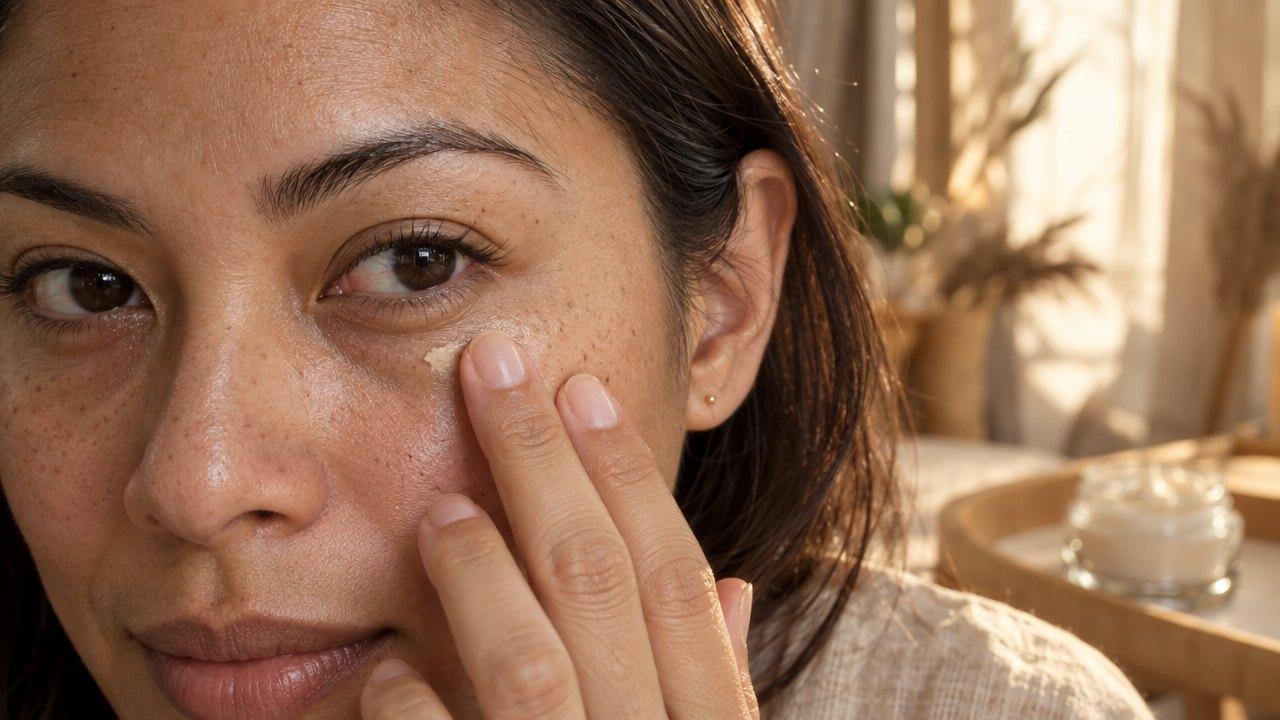
What to do instead
Start by naming the cause. Stand by a window, tilt your chin down and then up. If the darkness shifts, shadow is part of the story. If it stays brown or gray in every angle, pigment may be involved. Bluish or purple tones that look the same in any light often point to thin skin and visible vessels. This is not a diagnosis; it is a better question to bring to a professional.
- Daily habits that help: Mayo Clinic recommends sunscreen with an SPF of at least 30 and lists rubbing the eyes, sun exposure, smoking, too much alcohol and stress among the things that can make dark circles look worse. It mentions eye creams and patches with ingredients such as caffeine, kojic acid or vitamin K, while noting that none of those patches is regulated by the FDA.
- Medical options for some people: prescription creams, laser or chemical peels, fillers for hollows, platelet-rich plasma injections and surgery for puffy lids, all chosen by a clinician based on the cause.
- Cosmetic help that stays reversible: a peach or orange-toned corrector under a skin-matched concealer, applied with a ring finger. For uneven tone elsewhere on the face, our guide to dark spots, melasma and post-acne marks explains how each type behaves.
At Enclave Beauty in Santa Ana, our permanent makeup menu covers brows (Ombré Powder Brows from $495), lip blush (from $550) and eyeliner (Upper or Lower Eyeliner from $385). We do not offer under-eye concealer or freckle tattoos. For skin, our facials start with the Signature Relax Facial from $85, and the Dark Spot Treatment is listed from $250 for visible spots on the face. None of these is a dark-circle cure, and we will tell you so. What we can do is look at your skin with you during the free 45-minute skin consultation, talk through what is likely going on and tell you when a dermatologist should be your first stop.
What a good outcome looks like
Picture next November. The light through the window is low and golden again. You know why your under-eyes look the way they do, because someone took the time to explain it. You have a routine that fits: sunscreen you actually wear, a concealer shade you can switch when your skin changes, maybe a treatment plan from a dermatologist if the cause called for one. And the best part is invisible: there is nothing under your eyes you are stuck with. If you change your mind, you just wash your face.
If you are coming from Westminster, Garden Grove or Irvine and want a second opinion before you book anything permanent, book the free consultation or call or text (310) 666-8298.
Questions people ask
Can you tattoo over dark circles?
Some tattoo artists offer it, under names such as permanent concealer, under-eye camouflage or micropigmentation, but it is widely discouraged. Mayo Clinic explains that dark circles come from many causes, including genetics, thin aging skin, pigment changes, eczema, rubbing and shadows from puffy lids or hollows. Ink cannot fill a hollow or flatten a bag, and skin-tone pigment is hard to match, hard to predict as it ages and hard to remove. Cosmetic tattooists and dermatologists quoted by Inked, Brit + Co, FutureDerm and Refinery29 have warned against it.
Can an under-eye concealer tattoo be removed?
Removal is the weak point. The FDA says flesh-colored tattoos, white ink and permanent makeup are particularly tricky because the pigment can oxidize, or turn black, when treated by laser, and that oxidized pigment is no longer treatable by laser. Lasers also have to be used very close to the eye. Anyone considering it should assume it may not come out cleanly.
How long do freckle tattoos last?
Estimates vary. Dermatologists quoted by NewBeauty in February 2024 described freckle tattoos as semi-permanent, lasting about a year to as long as three years depending on ink color, depth and sun exposure. Fading is not the same as disappearing evenly: the same article notes that some inks discolor and can turn white or pink, unpredictably.
Are freckle tattoos safe?
They carry the same basic risks as any cosmetic tattoo: infection, allergic reaction, scarring, color change and regret. The FDA notes that permanent makeup can cause allergic reactions, infection, discoloration and results that are difficult to remove, and that contaminated ink can cause infection even with hygienic technique. Freckles are small, but they sit on the face where any problem is visible.
What actually helps dark circles?
It depends on the cause, which is why an assessment comes first. Mayo Clinic mentions self-care such as sunscreen with an SPF of at least 30 and over-the-counter eye products (which it notes are not regulated by the FDA), and medical options such as prescription creams, laser or chemical peels for some people, fillers for hollows and surgery for puffy lids. Shadows from volume loss and pigment from melasma need different plans. A one-sided change that worsens over time should be checked by a healthcare professional.
Does Enclave Beauty do under-eye concealer tattoos or freckle tattoos?
No. Enclave Beauty's permanent makeup menu in Santa Ana covers brows, lip blush and eyeliner. If dark circles or uneven tone bother you, start with the free 45-minute skin consultation so we can talk through what is likely causing them and when a dermatologist is the better first stop.
Sources and evidence note
- Mayo Clinic — Dark circles under eyes (Mayo Clinic Staff, December 25, 2025; causes, shadows from puffy lids or hollows, one-sided changes, sunscreen, eye patches, prescription creams, peels, lasers, fillers, PRP and surgery; read November 15, 2026)
- U.S. FDA — Tattoo Removal: Options and Results (content current as of August 3, 2023; flesh-colored, white and permanent makeup pigment can oxidize under laser; oxidized pigment no longer treatable by laser)
- U.S. FDA — Tattoos & Permanent Makeup: Fact Sheet (allergic reactions, infection, contaminated ink, discoloration and removal difficulty)
- Cosmetic tattoo ink darkening: a complication of Q-switched and pulsed-laser treatment. Arch Dermatol. 1993;129(8):1010-1014 (five cases of immediate, irreversible darkening; PubMed record)
- Brit + Co — This Tattoo Artist Conceals Dark Circles With His Ink (February 22, 2019; Rodolpho Torres, three or four sessions, dermatologist warnings on pigment allergy, ectropion and fat loss; read November 15, 2026)
- Inked — Why dermatologists and cosmetic tattooers warn against the under-eye tattoo trend (February 12, 2019; cosmetic tattooist and dermatologist warnings, removal risk, fat-pad changes; read November 15, 2026)
- FutureDerm — Should You Tattoo Your Dark Circles and Undereye Bags Away? (February 5, 2019; titanium pigment discoloring under the skin, ageing and removal concerns; read November 15, 2026)
- Refinery29 UK — Permanent concealer on TikTok (undated in the text we read; UK cosmetic tattooists and a dermatologist on shade risk, ageing, laser darkening, cost £600–£2,500 and about three sessions; read November 15, 2026)
- NewBeauty — Freckle Tattoos 101 (Tatiana Bido, February 29, 2024; six dermatologists on technique, one-to-three-year longevity, regret, infection, allergy, scarring, unpredictable color change, more than 50 pigments and none approved for injection; read November 15, 2026)
- California Board of Barbering and Cosmetology — Esthetician scope of practice flier (cosmetic tattooing listed among services the Board does not regulate)
- OC Health Care Agency — Body Art Program (county oversight of body art, including permanent cosmetics)
- Los Angeles County Public Health — Summary of the California Safe Body Art Act (health questionnaire and consent requirements)
- Enclave Beauty — Services (Ombré Powder Brows $495, Lip Blush $550, Upper or Lower Eyeliner $385, Signature Relax Facial $85, Dark Spot Treatment $250, free skin consultation; starting prices checked November 15, 2026; prices may change)
Evidence note: Photos in this guide are styled illustrations; they do not show Enclave clients or treatment results. There are no controlled studies of under-eye concealer tattooing that we could find; the warnings here come from the FDA's general guidance on skin-tone and permanent makeup pigment, a small 1993 case report on laser darkening, and practitioners and dermatologists quoted in consumer media, which is expert opinion rather than trial evidence. The FDA pages, the 1993 PubMed record and the California and county pages could not be reopened from our system during this update because of a fetch permission timeout; their details come from our newsroom's earlier verified reads of the same pages (October–November 2026). We did not use archive, cache or mirror copies. The 2018 date sometimes given for the trend's first viral wave could not be confirmed from a readable source, so we date the coverage to February 2019.
Medical disclaimer: This article is educational and is not medical advice, diagnosis or treatment. Enclave Beauty services do not replace care from a licensed medical professional.