PIGMENT LITERACY · DARK SPOTS
Dark spots after acne or melasma?
Why the difference matters
“Hyperpigmentation” describes a color change, not one diagnosis. Pattern, trigger and history determine the safer next question.
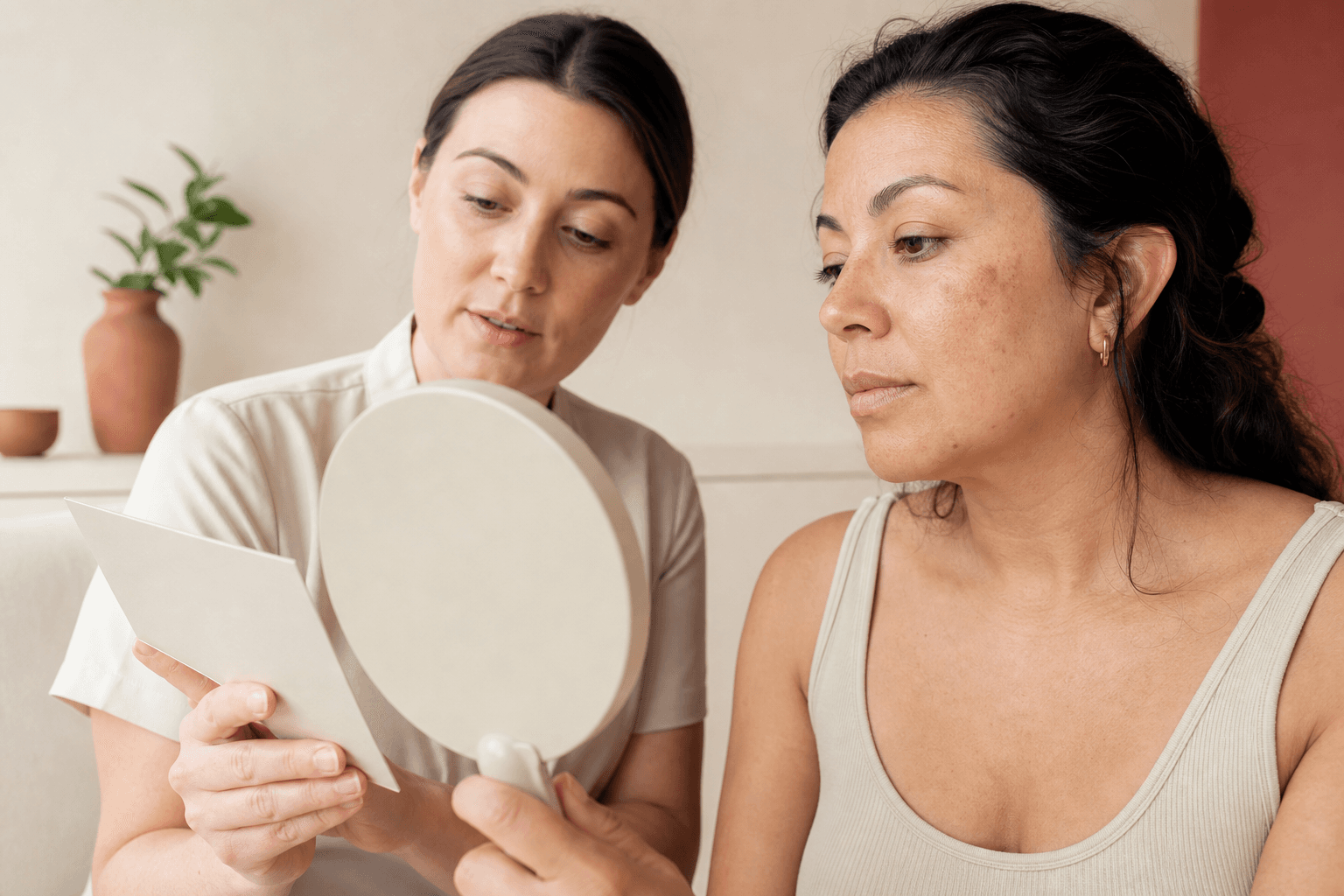
Short answer: a brown mark after a pimple may be post-inflammatory hyperpigmentation, while broader recurrent facial patches may suggest melasma—but overlap is common and appearance alone is not enough. Treating every dark spot with the same peel, laser or brightening product can waste time or worsen irritation.
Post-inflammatory hyperpigmentation follows inflammation
PIH can remain after acne, dermatitis, picking, burns or another injury has settled. The mark often follows the location of the original inflammation. Preventing new inflammation is part of pigment care: repeatedly squeezing acne or over-exfoliating can keep creating new marks while older ones fade.
Red or pink post-acne marks may reflect blood-vessel change rather than excess melanin, so “dark spot” language can blur different processes.
Melasma is usually a pattern, not one isolated mark
Melasma commonly appears as brown or gray-brown facial patches and is influenced by light exposure and hormonal factors. It can recur after improvement. Pregnancy, hormone use, family history and the distribution of patches are relevant, but none of them proves a diagnosis from a selfie.
Because treatment can involve prescription medication and because some procedures may aggravate pigment, a dermatologist should confirm suspected melasma before an aggressive plan.
Sun-related spots and changing lesions need another lens
Freckles and solar lentigines reflect different patterns of sun exposure. A new, changing, irregular, bleeding or symptomatic spot should not be assumed to be a cosmetic pigment concern. It needs medical examination before bleaching, peeling or laser treatment.
Why Orange County photoprotection belongs in every plan
Research reviews support broad-spectrum photoprotection for both melasma and PIH. Visible light may also contribute to some pigment disorders, particularly in darker skin tones; tinted sunscreens containing iron oxides are one option discussed in clinical guidance. Product choice still needs to be wearable, tolerated and used consistently.
Sunscreen is not a one-step cure. Pair it with shade, hats, timing and reapplication. Review our Orange County sunscreen routine.
Do not stack every brightening ingredient
Systematic reviews support several topical approaches for PIH, including retinoids and hydroxy acids, but evidence varies by condition and formulation. Melasma treatment often uses different combinations and may require prescription oversight. Starting vitamin C, retinol, acids and spot correctors at once makes irritation more likely and hides which product caused it.
Introduce one change at a time, use a plain moisturizer and stop escalating if skin burns or peels. Our guides to azelaic acid with retinol and niacinamide explain evidence limits.
Questions before a peel, laser or facial
- What is the working diagnosis, and who established it?
- Could this procedure worsen PIH or melasma in my skin?
- What experience does the provider have with my skin coloring and pigment response?
- Which products should be paused, and for how long?
- What is the photoprotection and aftercare plan?
- What outcome is realistic after one session?
A cosmetic consultation can document goals and support a gentle routine, but it should not diagnose a changing lesion or promise permanent pigment removal.
When to see a dermatologist first
- The pigment is new, changing, asymmetric, raised, bleeding, itchy or painful.
- Dark patches appeared suddenly or with other health changes.
- Acne, eczema or another inflammatory condition is still active.
- You are pregnant, breastfeeding or considering prescription lightening treatment.
- Prior peels, lasers or products made the area darker.
- The diagnosis remains uncertain.
Frequently asked questions
Are post-acne dark spots scars?
Flat color changes are different from depressed or raised scars, though both can occur together. Treatment goals and options differ.
Can melasma go away permanently?
Melasma can improve but often recurs. Avoid permanent-clearance promises and plan for ongoing photoprotection and clinician-guided maintenance.
Should I use a stronger peel for stubborn pigment?
Stronger is not automatically better. Peel depth, diagnosis, skin response and provider scope matter; excessive inflammation can create more pigment.
Sources and editorial note
- Global consensus on melanin hyperpigmentation disorders — 2025; checked September 1, 2026
- Topical treatment for post-inflammatory hyperpigmentation: systematic review — 2021; checked September 1, 2026
- Role of sunscreen in melasma and PIH — 2020; checked September 1, 2026
- Guide to tinted sunscreens in skin of color — 2023; checked September 1, 2026
Editorial note: Current search and community questions supplied consumer wording only. Medical claims rely on peer-reviewed reviews and consensus guidance.
Medical disclaimer: Educational only, not medical advice or a diagnosis.