SKIN SCIENCE · TRENDING ROUTINE QUESTION
Azelaic acid and retinol together:
compatibility is not the same as tolerability.
Both may fit one plan, but starting them together makes it harder to identify irritation and does not guarantee faster results.
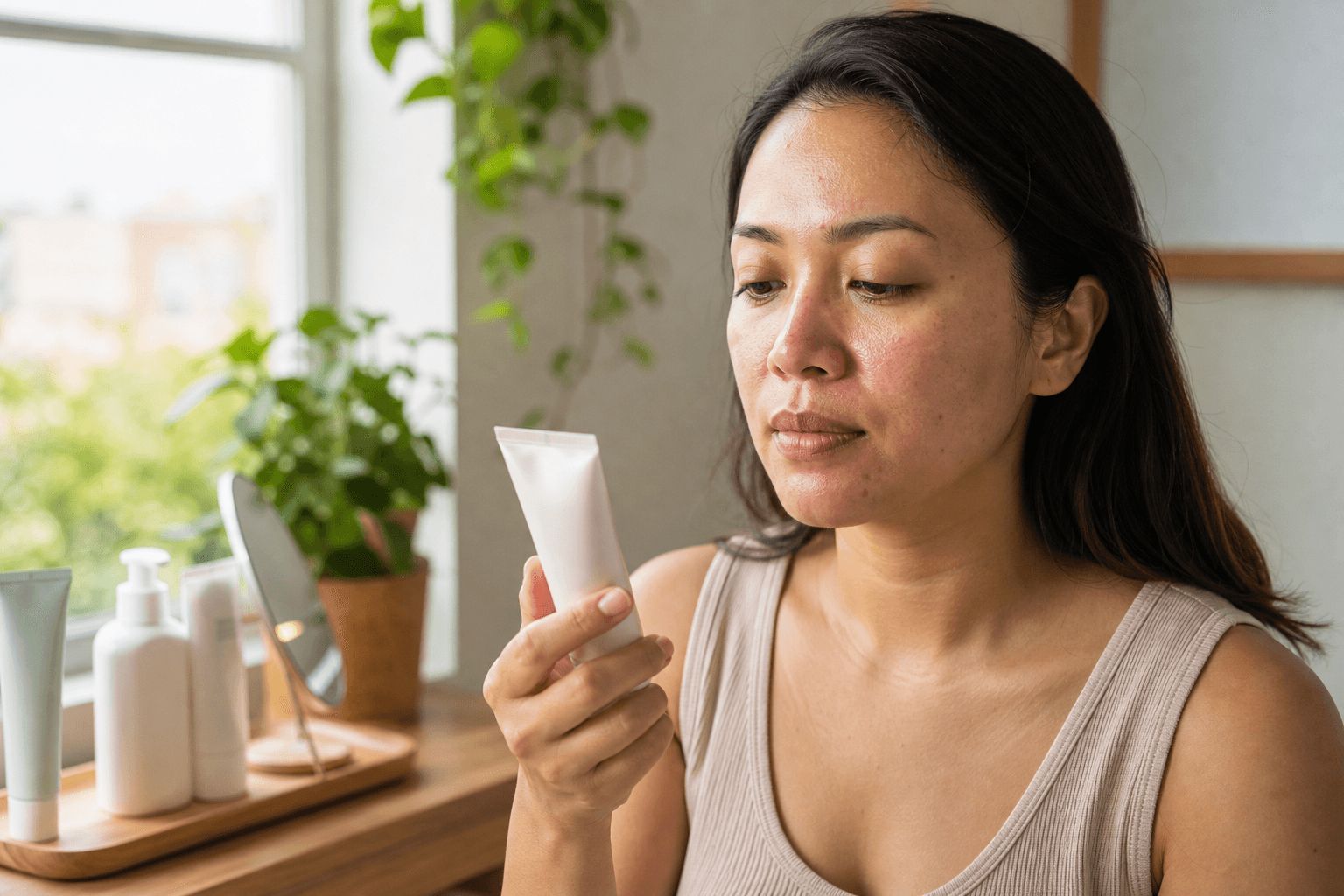
Short answer: azelaic acid and a retinoid can appear in the same broader routine, but that does not mean every person should layer them in one application. Use one established product first, add the second slowly, moisturize and reduce frequency when irritation appears.
What azelaic acid can—and cannot—do
Azelaic acid is used in acne and rosacea treatment and has evidence for some pigmentation concerns. AAD notes that it can help acne-like rosacea breakouts and may reduce persistent color. It is not a universal cure for facial redness; rosacea, acne, dermatitis and pigment disorders can look similar and need different plans.
What retinol adds
Retinol is an over-the-counter cosmetic retinoid. Prescription retinoids such as tretinoin or adapalene have different evidence, strength and directions. Retinoids may address acne or photoaging but commonly cause dryness, peeling and stinging, especially during introduction. Read our retinol versus retinoid beginner guide.
Has the combination itself been well studied?
Evidence supports azelaic acid and retinoids individually for particular diagnoses and outcomes, but that does not automatically prove that an over-the-counter pairing is superior or necessary. A recent live search found strong consumer interest and many combination instructions, while direct published evidence for every product pairing, order and concentration remains limited.
A lower-irritation sequence
- Choose the concern you are trying to address and confirm whether it needs diagnosis.
- Introduce one product alone for several weeks.
- Use a gentle cleanser, plain moisturizer and daily sunscreen.
- If skin is comfortable, add the second product on alternate days or in a separate routine.
- Increase only one variable at a time.
Some people use azelaic acid in the morning and a retinoid on selected nights; others alternate nights. Prescription directions take priority over a generic schedule.
Application order is less important than tolerability
Follow each label or prescription. Thin-to-thick layering is a practical texture rule, not proof that the combination works better. Applying to dry skin, buffering with moisturizer or separating use may improve comfort for some people. Do not add acids, scrubs and benzoyl peroxide at the same time just because each ingredient is popular.
When to pause
Persistent burning, marked redness, swelling, cracking, crusting or worsening dermatitis means the routine needs reassessment. Stop the suspected products and seek a dermatologist when symptoms are significant, persistent or associated with eye swelling or breathing difficulty. Do not treat a reaction by layering more “barrier repair” actives.
Pregnancy changes the retinoid decision
AAD advises avoiding retinoids during pregnancy. Do not treat azelaic acid as permission to continue a retinoid. Review every prescription and cosmetic product with your obstetric clinician and dermatologist, including during breastfeeding.
Orange County routines still need sunscreen
Neither ingredient replaces broad-spectrum sunscreen, shade or protective clothing. Pigmentation goals are difficult to assess when ongoing sun exposure continues to deepen color. If sunscreen stings, simplify the routine and address irritation rather than skipping protection.
Before a facial or peel
Tell the provider the exact products, concentrations, frequency and last application. Do not guess a stop-and-restart schedule for prescription retinoids. The treatment provider and prescriber should coordinate timing when a peel, waxing, dermaplaning, microneedling or laser procedure is planned.
Sources and editorial note
- American Academy of Dermatology: Rosacea Diagnosis and Treatment
- American Academy of Dermatology: Acne Diagnosis and Treatment
- Azelaic acid for acne, rosacea, melasma and skin aging: systematic review — 2023
- Interventions for rosacea: updated systematic review — 2019
Trend note: The azelaic-acid-plus-retinol question appeared in beauty coverage dated August 28, 2026 and in recent community routine questions; those sources were used for demand discovery, not as clinical authority.
Medical disclaimer: Educational only, not medical advice or a diagnosis.