MORNING SKIN · SUN PROTECTION
Sunscreen works best
when the routine is realistic.
The label matters, but so do amount, timing, missed areas, reapplication, sweat, water, storage, and the protection you wear alongside it.
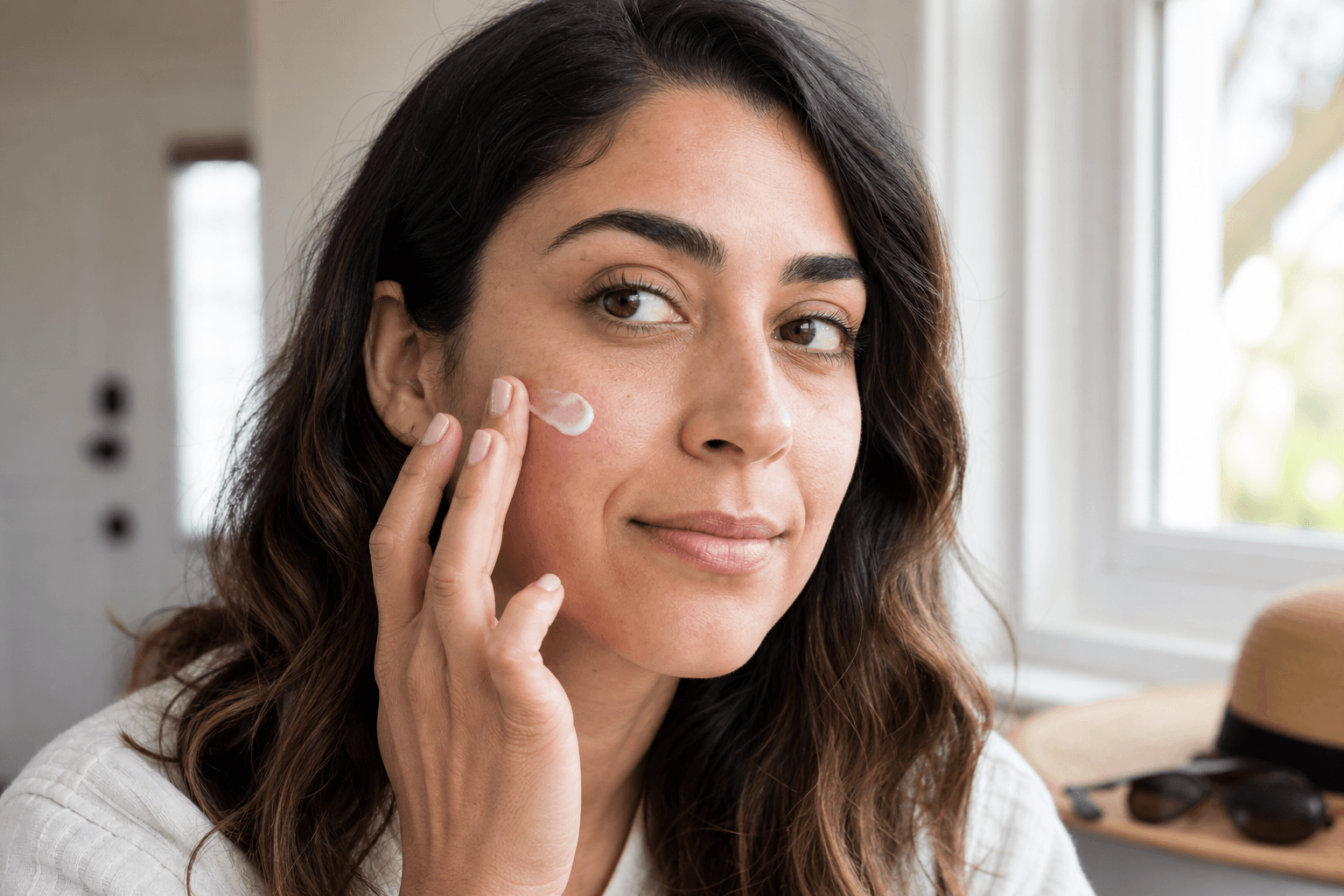
A high SPF cannot compensate for a thin, uneven layer or a product left in the car. Think of sunscreen as one part of a system that includes shade, clothing, a wide-brim hat, and sunglasses—not permission to stay in intense sun indefinitely.
Choose broad spectrum and read Drug Facts
The FDA recommends broad-spectrum sunscreen with SPF 15 or higher, used regularly and as directed. Broad spectrum means the product has met requirements related to UVA protection as well as UVB protection. People with skin-cancer history, pigment concerns, photosensitizing medicines, or recent procedures should ask a dermatologist for individualized guidance, which may include a higher SPF.
Apply before exposure
FDA directions say to apply sunscreen 15 minutes before sun exposure. This is especially useful when leaving Santa Ana for a commute, school drop-off, a patio, an Irvine trail, or a coastal Orange County day: put it on before the activity starts rather than after skin has been exposed.
Use enough for exposed skin
The FDA says an average-size adult or child needs at least one ounce—about a shot-glass amount—to cover the exposed body from head to toe. The exact amount for the face alone varies with face size and product, so apply liberally and evenly according to the label instead of relying on a viral “two-finger” rule as a universal measurement.
Remember the areas routines miss
Cover the ears, nose, lips with an SPF lip product, back of the neck, hands, tops of feet, hairline, and exposed or thinning scalp. Clothing coverage changes during the day, so check straps, necklines, sleeves, sandals, and the part in the hair.
Reapply at least every two hours outdoors
FDA and CDC guidance says to reapply at least every two hours, and more often with swimming or sweating. Reapply after towel drying. If makeup sits over sunscreen, choose a reapplication method you can apply generously and evenly; a light mist or dusting should not be assumed to provide the labeled protection unless used exactly as directed.
Water resistant does not mean waterproof
U.S. labels may state water resistance for 40 or 80 minutes. That is the tested duration while swimming or sweating—not an all-day guarantee. No sunscreen is waterproof or sweatproof. Follow the product’s specific reapplication directions.
Driving and cloudy days still belong in the plan
Cloud cover does not eliminate ultraviolet exposure, and a car trip includes exposure through windows and during walking, parking, and errands. Build a routine around actual exposed skin and time outdoors rather than whether the day feels hot. UV is radiation, not temperature.
Protect the product from heat
FDA labeling directs consumers to protect sunscreen containers from excessive heat and direct sun. Do not make a hot parked car the permanent storage location. At a beach or pool, keep the container shaded or wrapped rather than baking in direct sunlight.
After peels, dermaplaning, or permanent makeup
Follow the specific provider’s aftercare directions because the timing and type of sunscreen may differ while skin heals. Do not force sunscreen onto open, weeping, infected, or severely irritated skin; use physical shade and clothing and contact the treating provider. New or changing spots, a non-healing lesion, or repeated sunburns belong with a dermatologist.
Sources and editorial note
- U.S. FDA: Sunscreen—How to Help Protect Your Skin — updated 2026
- CDC: Sun Safety Facts — updated 2026
- FDA: Tips to Stay Safe in the Sun — updated 2025
- CDC: Reducing Risk for Skin Cancer — updated 2026
Editorial note: Reviewed August 31, 2026. This evergreen guide does not replace a product label or personalized dermatology advice.
Medical disclaimer: Educational only, not medical advice or a diagnosis.