INGREDIENT LITERACY · NIACINAMIDE
Niacinamide is versatile.
More is not automatically better.
Vitamin B3 in a topical formula may support the barrier, oil control and uneven tone—but no single serum replaces diagnosis, sunscreen or a complete routine.
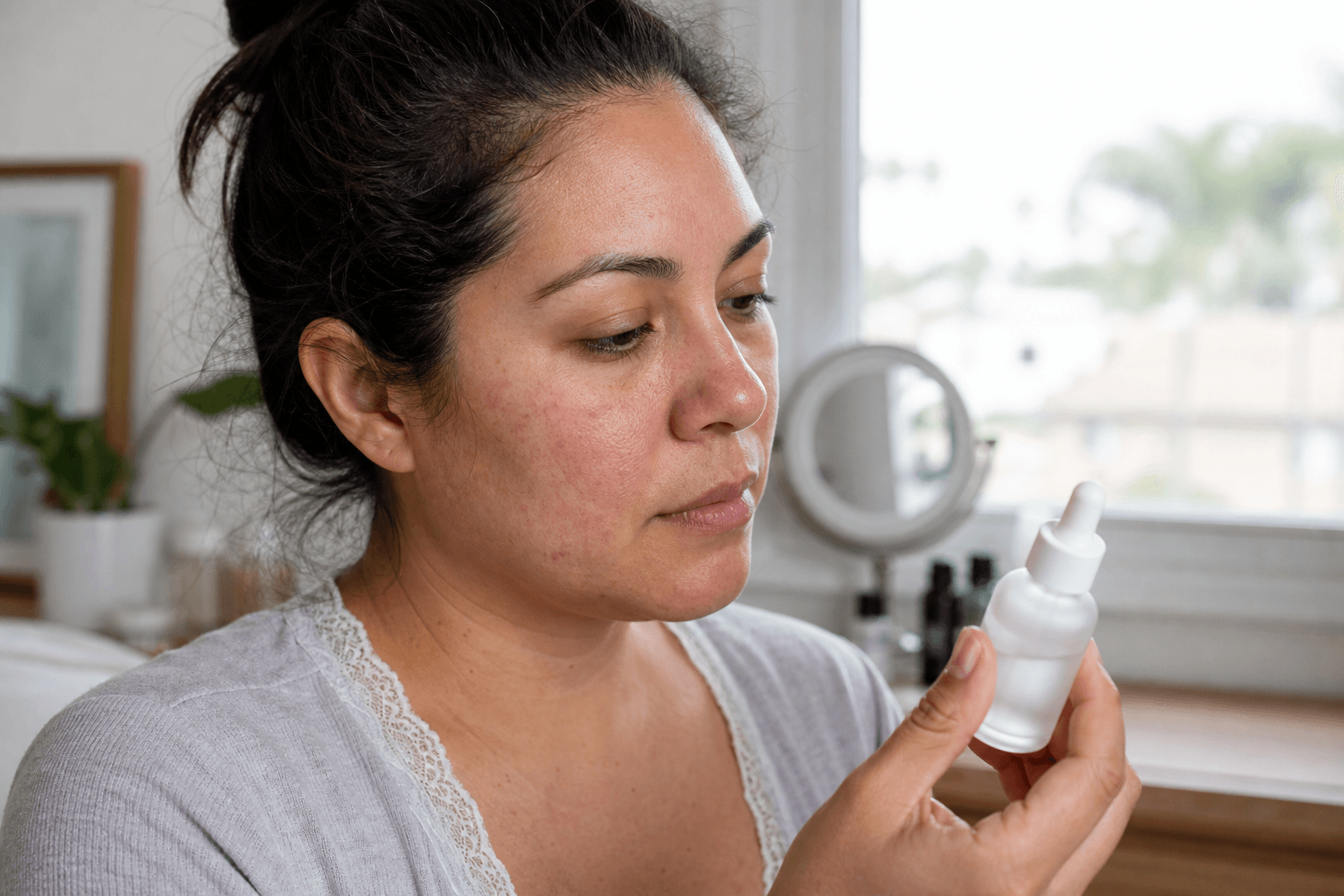
Niacinamide—also called nicotinamide—is a form of vitamin B3 used in many serums, moisturizers and masks. Research supports several potential topical uses, but outcomes depend on the concentration, vehicle, companion ingredients, condition being treated and consistency.
What the evidence can support
Peer-reviewed reviews describe roles in skin-barrier function, pigmentation, oiliness and signs of photoaging. A systematic review of post-inflammatory hyperpigmentation found high-quality studies for niacinamide among several topical options, while retinoids, hydroxy acids and broad-spectrum sunscreen had the largest number of high-quality studies. That means niacinamide can be useful without being the only—or strongest—tool.
It is not a substitute for acne care
Niacinamide may help reduce shine and support an acne-prone routine, but it does not diagnose acne, rosacea, folliculitis or perioral dermatitis. Persistent, painful, cystic or scarring breakouts deserve a dermatologist. Do not replace a prescribed acne plan with a cosmetic serum without discussing it with the prescriber.
Higher percentages are not proven superior
Many clinical cosmetic formulations studied in reviews use concentrations around 4% to 5%. Products at 10%, 15% or 20% are common in the marketplace, but a bigger number does not guarantee better penetration, faster fading or less oil. It may add cost or irritation. Judge the finished formula and your skin’s response—not the boldest label.
Start with one change
Patch-test on a small area, then introduce the product a few times per week if its directions allow. Apply after gentle cleansing and before heavier moisturizer or sunscreen according to texture. If you already use retinoids, exfoliating acids, benzoyl peroxide or prescription products, keep the rest of the routine stable so the cause of a reaction is clear.
Niacinamide can still irritate
Burning, itching, swelling, hives or persistent redness is not “purging.” The reaction may come from niacinamide, fragrance, preservatives, solvents, botanicals or another active in the same bottle. Stop the new product and seek medical guidance for a significant, spreading or lasting reaction.
Uneven tone needs patience and sun protection
Post-inflammatory marks fade slowly, and ongoing acne, rubbing or dermatitis can keep producing pigment. In sunny Santa Ana and Orange County routines, use broad-spectrum sunscreen as directed and reduce the source of inflammation. A changing, bleeding, painful or non-healing spot belongs with a dermatologist—not a brightening experiment.
Before a facial or peel
Bring or photograph the label so the provider sees every active, not only “niacinamide.” Mention stinging, flaking, recent reactions and prescription use. Postpone exfoliating services on sunburned, open, infected or actively irritated skin. A barrier-supporting facial cannot treat a medical skin disease.
Sources and editorial note
- Niacinamide: A Review on Dermal Delivery Strategies and Clinical Evidence — 2024
- Topical Treatment for Postinflammatory Hyperpigmentation: A Systematic Review — 2021
- Mechanistic Basis and Clinical Evidence for Nicotinamide in Skin Aging and Pigmentation — 2021
- American Academy of Dermatology: Facial Masks and Skin Care — updated 2026
Editorial note: Evidence for niacinamide does not validate every concentration, combination formula or marketing claim.
Medical disclaimer: Educational only, not medical advice or a diagnosis.