LIP BLUSH · COLD-SORE SAFETY
Can lip blush trigger cold sores?
Ask before the appointment—not after an outbreak.
Lip blush cannot create herpes from nowhere, but the skin trauma of cosmetic lip tattooing may reactivate a virus already in the body. A calm health-history conversation can prevent a painful surprise.
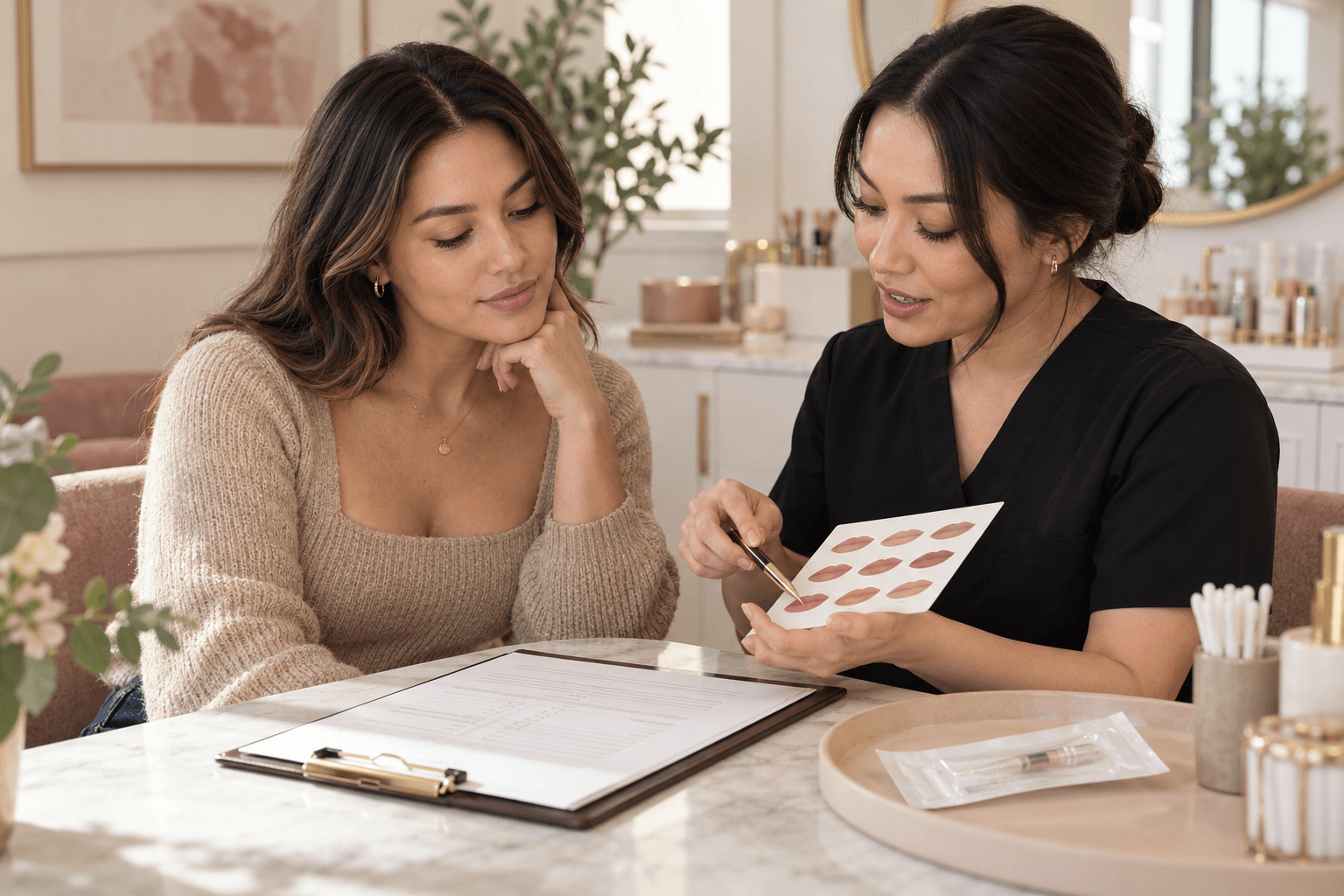
Yes—lip blush may trigger a cold-sore outbreak in someone who carries herpes simplex virus, especially if they have had cold sores before. Lip blush creates controlled skin injury to place pigment. Injury is a recognized trigger for herpes reactivation. That does not mean everyone will have an outbreak, and it does not mean a client did anything wrong.
First: a cold sore is common health information, not a reason for shame
Cold sores are usually caused by herpes simplex virus type 1, or HSV-1. The World Health Organization describes HSV-1 as very common and notes that most infections are asymptomatic or unrecognized. The CDC also explains that many people acquire oral HSV-1 through nonsexual contact with saliva during childhood or young adulthood.
Sharing a cold-sore history is like sharing an allergy or a prior reaction: it helps the provider know when to pause and when medical guidance is needed.
What is lip blush—and what problem can it help with?
Lip blush is permanent makeup: pigment is placed into the lips to adjust visible color or definition. It may be considered by adults who want a softer everyday tint or more balanced-looking borders. It cannot treat herpes, heal damaged lips, guarantee symmetry or replace medical care for unexplained color change, sores or swelling.
How could an outbreak happen?
After infection, HSV can remain inactive in nerve cells and later reactivate. WHO lists injury, illness, fever, sunlight, stress and surgery among recognized triggers. Lip tattooing deliberately causes many small skin injuries, so a provider should ask specifically about prior cold sores, warning sensations and past procedure-related outbreaks.
Published evidence specific to lip blush is limited, so no responsible provider can give one exact outbreak percentage or promise that prevention will work every time. The practical response is screening, postponing when symptoms are present and involving a licensed medical clinician when prescription advice is needed.
The mistake that matters most: treating tingling as “just dry lips”
Burning, itching, stinging, tingling or unusual tenderness can begin before blisters appear. If you notice those symptoms—or have an active, crusted or recently healing sore—do not conceal it with makeup and continue the appointment. Tell the provider and postpone until the area is fully healed and a clinician has addressed any unresolved concern.
Five questions to answer before booking
- Have I ever had a cold sore or fever blister? Include childhood outbreaks and episodes after dental or cosmetic work.
- Do I have tingling, burning, a blister, broken skin or unexplained lip irritation today? These are reasons to stop and reassess.
- Should I speak with my clinician before the procedure? A permanent makeup artist cannot diagnose HSV or prescribe medication. Ask your own licensed clinician whether a medical plan is appropriate for you.
- Is the artist currently registered and the facility permitted? Orange County classifies permanent cosmetics as body art. The practitioner needs current registration, and the procedure must occur in a permitted facility.
- What happens if symptoms begin after the appointment? Get written aftercare, a contact method and clear instructions about when to seek medical care.
Do not borrow an antiviral or copy an online dosing schedule
Antiviral medicines can be used to treat herpes, and clinicians may consider preventive prescribing for some patients and procedures. The right medicine, timing and dose depend on individual medical history. Do not use someone else’s prescription, buy an unverified product or ask a cosmetic artist to practice medicine. Speak with a licensed prescriber early enough to make an informed plan.
If sores appear after lip blush
- Contact the treating provider and a medical clinician promptly; share the procedure date and symptom timeline.
- Do not pick, peel, scrub or apply acids, retinoids, essential oils or another person’s medication to healing lips.
- Wash hands after touching the area and avoid sharing cups, utensils, towels, lip products or items that touched saliva.
- Avoid kissing and oral contact while symptoms are present because HSV can spread through direct contact.
- Do not assume every blister or swollen lip is HSV. Allergy, bacterial infection and other problems can overlap and need professional assessment.
Warning signs that need faster medical attention
Seek prompt medical care for rapidly worsening swelling or pain, spreading redness, pus, fever, dehydration, extensive sores, symptoms that are not healing, or concern in someone who is pregnant or immunocompromised. Eye pain, light sensitivity, discharge or a gritty feeling needs immediate eye care because herpes involving the eye can threaten vision.
What makes a qualified Orange County provider?
For Santa Ana clients traveling from Orange, Tustin, Garden Grove, Costa Mesa, Irvine, Anaheim and nearby communities, verify the individual—not just the city in the advertisement. Ask to see current Orange County Body Art Practitioner Registration and the facility permit. A careful artist reviews health history, uses sealed single-use supplies, documents pigments, postpones unsafe appointments and stays within the boundary between cosmetic service and medical care.
Related guidance
Review 12 questions for choosing a permanent makeup artist, read the permanent makeup aftercare and warning-sign guide, and understand how permanent makeup changes over time before committing.
Sources
- World Health Organization — Herpes Simplex Virus
- U.S. CDC — About Genital Herpes, Including Oral HSV-1 Context
- American Academy of Dermatology — Cold Sore Signs and Symptoms
- Cleveland Clinic — Lip Blushing: What You Need to Know
- U.S. FDA — Tattoos and Permanent Makeup Safety Q&A
- Orange County Health Care Agency — Body Art / Permanent Makeup Program
Evidence note: HSV reactivation after cosmetic procedures is recognized, but reliable incidence data specifically for lip blush are limited. A cold-sore history helps risk planning; it cannot predict an individual outcome with certainty.
Medical disclaimer: Educational information only; not medical advice, diagnosis, treatment or a prescription. Ask a licensed medical clinician about symptoms and medication.