SKIN HEALTH · NEWS & REGULATION
Benzoyl peroxide and benzene:
don't panic, but do move it out of the hot car.
Since 2024, headlines have warned that one of the most trusted acne ingredients can break down into benzene, a carcinogen. Since then the FDA has tested the shelves, a handful of products have been recalled in the U.S. and Canada, and a 2026 review of more than 4 million patients has looked for a cancer signal. Here is the whole story in order, with real dates, what it means for the tube in your bathroom, and the storage habits dermatology groups actually recommend.

Short answer: benzoyl peroxide (BPO) can break down into benzene, especially when it gets hot or sits in strong light, and a few products have been recalled because of it. But when the FDA tested 95 BPO acne products in 2025, more than 90% had undetectable or extremely low benzene, and the agency called the cancer risk from these products very low even with daily use for decades. The American Academy of Dermatology (AAD) says there is no clear evidence of dangerous levels. The practical fix is not to abandon acne treatment. It is to store BPO cool, replace it every 10 to 12 weeks, throw it out after heat exposure or expiry, and check recall lot numbers.
The tube in the glovebox
You know the one. A small white tube of spot treatment that rides around in a gym bag, a beach tote, a car door pocket, because a breakout never picks a convenient moment. Then a headline crosses your feed: “cancer-causing chemical found in acne products.” You look at the tube. It has been in a parked car through a warm week. Do you throw it away? Throw away every acne product you own? Stop treating your skin entirely?
The common mistake is reacting to the headline instead of the evidence, in either direction. Some people quit acne care completely and watch their skin flare. Others decide it was all hype and keep storing BPO on the dashboard. The real answer sits in between, and the storage part is the part you can control.
What benzoyl peroxide is, and why it matters
Benzoyl peroxide is one of the oldest and most widely used over-the-counter acne ingredients, found in spot treatments, washes, creams and prescription combinations. The AAD describes it as a treatment for mild inflammatory pimples, and dermatologists quoted in health press have called it one of the best ingredients available for acne. Our adult acne guide explains where it fits next to adapalene, salicylic acid and azelaic acid.
The concern is chemistry. BPO is unstable by design: it works by breaking down. Under certain conditions, particularly heat, part of that breakdown can produce benzene. The question since 2024 has never been whether that can happen in a lab. It is how much forms under real-life storage, and whether it matters for people using these products.
The timeline, in order
| Date | What happened |
|---|---|
| March 2024 | Independent lab Valisure files a citizen petition with the FDA after heating BPO products at 37°C, 50°C and 70°C (about 99°F to 158°F). It reports benzene above what it calls the FDA's conditional 2 ppm limit, and benzene leaking into the surrounding air, and asks the FDA to act. |
| April 11, 2024 | The Canadian Dermatology Association and the Acne and Rosacea Society of Canada issue a joint statement: continuing BPO is a personal choice; avoid hot places like cars and shower stalls; discard products before expiry; consider alternatives. |
| October 7, 2024 | A Valisure-funded study in the Journal of Investigative Dermatology (Kucera et al.) tests 111 new, unopened BPO products kept at room temperature and reports benzene from 0.16 to 35.30 ppm. UV light speeds formation, encapsulated formulas do not prevent it, and cold storage significantly reduces it. |
| March 11, 2025 | The FDA publishes its own testing of 95 BPO acne products: more than 90% undetectable or extremely low, six elevated. Retail-level voluntary recalls follow. |
| March 24–25, 2025 | The AAD issues a statement and updates its benzene FAQ with storage advice and alternatives. |
| November 5, 2025 | Health Canada announces a recall of specific Proactiv lots for benzene outside the allowable limit. |
| February 11, 2026 | The Acne and Rosacea Society of Canada publishes an updated 2026 position statement, calling overall risk very low while listing precautions. |
| April–May 2026 | A meta-analysis letter in the Journal of Drugs in Dermatology pools four studies and 4,062,218 patients and finds no significant association between BPO and blood cancers. |
What the alarming tests showed, and what they didn't
The early numbers were dramatic. The Canadian dermatology statement summarized Valisure's data this way: of 66 products incubated at 50°C (122°F) for 18 days, 42 exceeded 10 ppm benzene, 17 exceeded 100 ppm and 2 exceeded 1,500 ppm. Valisure also reported that one product heated to 70°C released benzene into the air far above an EPA long-term inhalation threshold.
Two things are worth holding at the same time. First, the stress tests used temperatures far hotter than a bathroom shelf, on purpose, to simulate what heat does over time. Second, the October 2024 follow-up found some benzene even in unopened products at room temperature, and found that sunlight-level UV could drive formation faster than heat. That second study was funded by Valisure, which, according to the publisher's press release, holds patents in related areas; the authors also reported industry ties. None of that makes the data wrong. It is a reason to weigh it alongside independent testing, which is exactly what came next.
What the FDA found when it tested the shelves
In its March 11, 2025 notice, the FDA said it tested 95 BPO acne products and that more than 90% had undetectable or extremely low benzene. Six had elevated levels, and their makers recalled specific lots at the retail level:
- La Roche-Posay Effaclar Duo Dual Action Acne Treatment
- Walgreens Acne Control Cleanser
- Proactiv Emergency Blemish Relief Cream, Benzoyl Peroxide 5%
- Proactiv Skin Smoothing Exfoliator
- SLMD Benzoyl Peroxide Acne Lotion
- Walgreens Tinted Acne Treatment Cream
Separately, Zapzyt Acne Treatment Gel was recalled by its manufacturer after its own testing. The FDA's notice lists the exact lot numbers and expiration dates; a product with the same name but a different lot is not part of the recall.
Three details in that notice are easy to miss. The recalls were at the retail level, meaning stores pulled stock; the FDA said the action did not specifically instruct consumers to do anything with products already at home, though it recommended throwing away anything past its expiration date. The agency wrote that even with daily use for decades, the risk of developing cancer from benzene in these products is very low. And it cautioned that some third-party lab methods that are not validated can report much higher benzene levels than are really present.
What happened in Canada
On November 5, 2025, Health Canada posted a Type II recall of specific lots of several Proactiv and Proactiv+ products, mostly 2.5% BPO gels and kits plus a 5% cream, from Alchemee Skincare Corporation, because affected lots might contain benzene outside the allowable limit. Its advice to consumers was direct: check whether your product is affected, stop using it if it is, and talk to a health care provider about any concerns. If you buy skincare across the border or through international sellers, that notice is worth checking by lot number.
So, does it cause cancer?
This is the question behind every headline, and the best current answer is that studies of real patients have not found a link. A 2025 study in the Journal of the American Academy of Dermatology, cited by the AAD, found no significant association between BPO and benzene-related cancers. In spring 2026, a meta-analysis by Lapenda, von Dannecker and Rao in the Journal of Drugs in Dermatology combined four studies covering 4,062,218 patients. The pooled risk of any blood cancer among BPO users was essentially the same as among non-users (risk ratio 0.99, 95% confidence interval 0.92 to 1.06), with no significant difference for leukemia, acute myeloid leukemia or lymphoma either.
Read that with honest limits. It is four studies, published as a short letter, and several of the individual results varied a lot from study to study. Observational data can't prove zero risk, and the Canadian 2026 statement says longer-term prospective studies are still needed. Some researchers in this area take the stricter view that no level of benzene in skincare is acceptable. Both camps agree on the same practical steps: keep benzene formation as low as possible through storage and turnover, and keep treating acne.
Seven mistakes people make after the headlines
- Quitting acne treatment cold turkey. Breakouts that go untreated can leave marks and scars that take far longer to fade than a tube takes to replace. Switch or adjust; don't abandon.
- Treating a recall as a brand verdict. Recalls name lots. Check the lot code on your tube or box against the FDA or Health Canada list instead of tossing every product from that brand, or assuming a brand is fine forever.
- Storing BPO somewhere hot. Cars, beach bags, gym lockers, a windowsill, a steamy shower caddy. The AAD says to throw out products exposed to temperatures above about 78°F. On a warm Orange County afternoon, and during a Santa Ana wind spell even in November, a parked car outside South Coast Plaza or the beach lot in Huntington Beach can get hotter than that quickly.
- Making one tube last a year. The AAD suggests replacing BPO products every 10 to 12 weeks. A smaller tube you finish beats a jumbo tube that ages in the cabinet.
- Ignoring the expiration date. The FDA specifically recommended discarding recalled products past expiry, and Canadian dermatologists recommend discarding BPO before it expires. Write the open date on the cap with a marker.
- Buying from random third-party sellers. The 2026 Canadian statement suggests avoiding online purchases because shipping can expose products to heat. If you do order online, bring packages in promptly instead of letting them sit on a sunny porch.
- Overcorrecting with five new actives. Swapping BPO for a stack of acids, retinoids and scrubs all at once is a fast route to a damaged barrier. Change one thing at a time; our over-exfoliated skin guide explains the warning signs.
A storage routine that takes two minutes
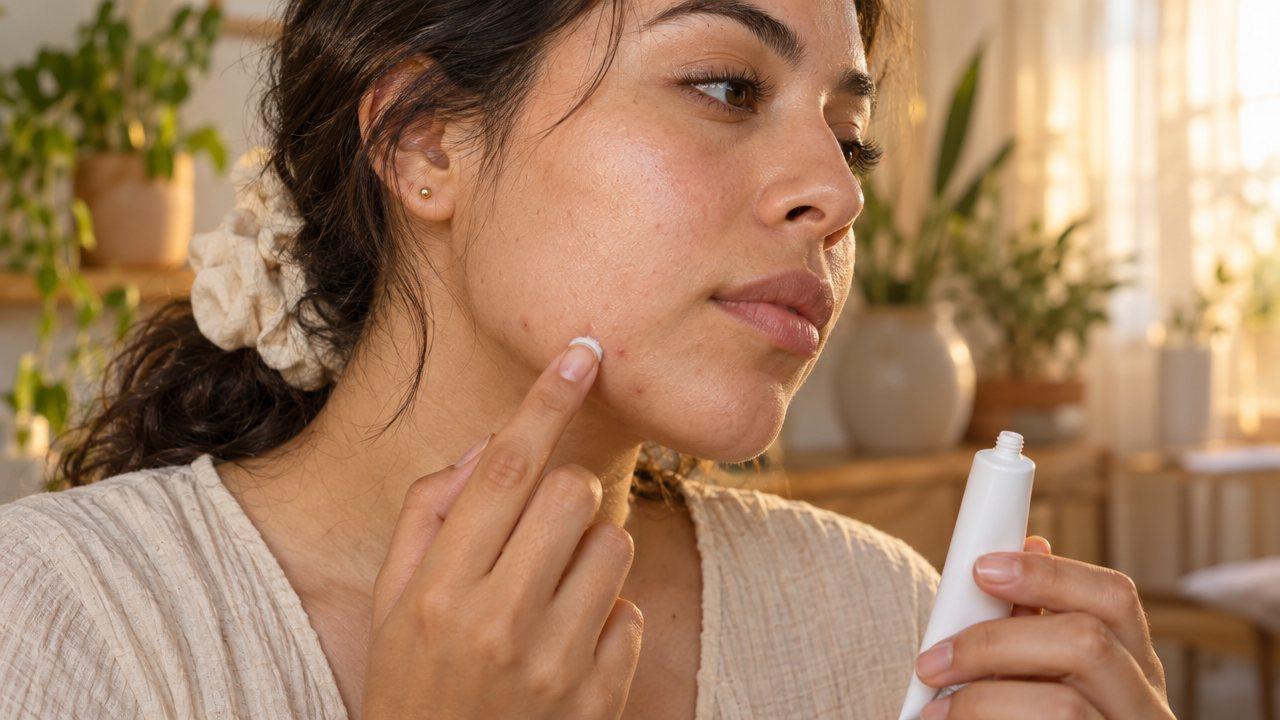
- Pick a cool home for it. A bedroom drawer or a closet shelf away from the shower and windows, or the refrigerator. The AAD says room temperature or cooler, including refrigerated, and the October 2024 study found cold storage significantly reduced benzene formation.
- Date it. Write the month you opened it on the cap and set a reminder for 10 to 12 weeks.
- Travel small. If you need spot treatment on the go, keep it in an insulated pouch and bring it inside with you rather than leaving it in the car.
- Apply it in the evening if it suits your routine. UV can speed breakdown, and the Canadian statement recommends protecting skin from the sun; a dermatologist quoted by the MedShadow Foundation suggests applying BPO at night. Wear sunscreen in the morning either way; our sunscreen guide covers how much.
- Toss it if it changes. If the texture, color or smell is different from when you opened it, or it spent a hot day somewhere it shouldn't have, replace it.
- Check recalls once. Look up your lot number on the FDA or Health Canada notice. If it's listed, replace it and move on.
If you would rather skip BPO for now
That is a reasonable choice, and both the AAD and Canadian dermatology groups say so. The AAD names adapalene, salicylic acid and azelaic acid as options. Each works differently: adapalene is a retinoid that keeps pores from clogging, salicylic acid exfoliates inside the pore, and azelaic acid calms inflammation and can help with post-breakout marks. Our guides to retinoids for beginners and azelaic acid with retinol walk through starting slowly. Expect a few weeks of adjustment, and read our purging vs. irritation guide before deciding a new product isn't working.
When to see a dermatologist
Over-the-counter changes are fine for mild breakouts. See a board-certified dermatologist if your acne is deep, painful or cystic; if it is leaving scars or dark marks; if nothing has helped after a couple of months of consistent use; if you are pregnant or planning to be, since some acne medicines aren't suitable; or if a product causes swelling, blistering, intense burning or a rash beyond the treated spot. A dermatologist can also prescribe combinations and alternatives that are not sold over the counter.
Five questions worth asking
- At the pharmacy or online: “What is the lot number and expiration date, and how has this been stored?”
- To your dermatologist: “Should I keep my BPO product in the refrigerator, and how often should I replace it?”
- To your dermatologist: “If I want to avoid BPO, which alternative fits my type of acne?”
- To your esthetician: “How should I adjust my BPO or other actives before and after a facial?”
- To yourself: “Where does this tube actually live during the day?”
Do / Don't
| Do | Don't |
|---|---|
| Store BPO at room temperature or cooler, including the fridge. | Leave it in a car, beach bag, gym locker or shower caddy. |
| Replace it every 10 to 12 weeks and before it expires. | Keep using a tube that sat in the heat or changed smell or texture. |
| Check recalls by lot number. | Throw out every acne product you own because of a headline. |
| Use a pea-sized amount, and wear sunscreen in the daytime. | Swap in several new actives at once. |
| Ask a dermatologist about alternatives if you prefer to skip BPO. | Stop treating acne that is scarring or cystic. |
What the good version looks like
Picture it a month from now. Your spot treatment lives in a small zip pouch in the fridge door, next to the eye cream, with the open date written on the cap. There's a reminder on your phone for the end of January. You checked the lot number once, it wasn't on any list, and you stopped thinking about it. Your skin didn't notice any of this drama: the routine that was calming your jawline kept doing its job. And the next time a scary headline shows up, you know the move is to read past it, check the lot, and keep the tube cool.
How this works at Enclave
Enclave Beauty offers the Acne & Detox Facial, from $135, at our studio on West 5th Street in Santa Ana, on the edge of Little Saigon. We focus on pore-focused cleansing and calming congested skin, and we'll ask what you use at home, BPO included, so your facial and your routine don't work against each other. We don't prescribe or sell acne medication, and when breakouts are cystic or scarring, we'll tell you that a dermatologist is the right next step. If you're coming from Garden Grove, Tustin or Irvine, bring a photo of your products (or the products themselves) to the free 45-minute skin consultation. Prices are starting points and can change, so check the services page for current pricing, and see our acne facial page for details.
Frequently asked questions
Is benzoyl peroxide safe to use after the benzene reports?
The FDA tested 95 benzoyl peroxide acne products and found more than 90% had undetectable or extremely low benzene; six had elevated levels and were recalled at the retail level in March 2025. The FDA said that even with daily use for decades, the cancer risk from benzene in these products is very low, and it did not instruct consumers to take specific action. The American Academy of Dermatology says there is no clear evidence that these products have dangerous levels of benzene. Dermatology groups do recommend storing them cool and replacing them regularly.
Which benzoyl peroxide products were recalled for benzene?
In March 2025 the FDA listed retail-level recalls of specific lots of La Roche-Posay Effaclar Duo Dual Action Acne Treatment, Walgreens Acne Control Cleanser, Proactiv Emergency Blemish Relief Cream (benzoyl peroxide 5%), Proactiv Skin Smoothing Exfoliator, SLMD Benzoyl Peroxide Acne Lotion and Walgreens Tinted Acne Treatment Cream; Zapzyt Acne Treatment Gel was recalled by its maker after its own testing. In Canada, Health Canada announced a recall of specific Proactiv lots on November 5, 2025. Recalls apply to listed lots, not every product with the same name.
How should I store benzoyl peroxide?
The American Academy of Dermatology says to follow the package instructions, which generally means room temperature or cooler, including the refrigerator; to replace products every 10 to 12 weeks; and to throw out products exposed to higher temperatures, for example above 78°F. The Acne and Rosacea Society of Canada adds avoiding storage in hot places and considering that online orders may sit in heat during shipping.
Does benzoyl peroxide cause cancer?
Current evidence has not shown that. A 2025 study in the Journal of the American Academy of Dermatology found no significant association with benzene-related cancers, and a 2026 meta-analysis in the Journal of Drugs in Dermatology, pooling four studies and more than 4 million patients, found no significant link between benzoyl peroxide use and leukemia, lymphoma or other blood cancers. Researchers and Canadian dermatology groups say longer-term prospective studies are still needed.
What can I use instead of benzoyl peroxide?
The American Academy of Dermatology lists adapalene, salicylic acid and azelaic acid as alternatives, and suggests a board-certified dermatologist for persistent acne. Each has its own directions and irritation profile, so change one thing at a time rather than stacking several new actives at once.
Should I stop using a recalled product?
Check the lot number against the FDA or Health Canada notice. Health Canada told people with affected Proactiv lots to stop using them and consult a health care provider with any concerns. The FDA's March 2025 notice did not direct consumers to take action but recommended throwing away products past their expiration date. If your product is on a list, the simplest choice is to replace it and keep treating your acne.
Sources and evidence note
- U.S. FDA — Limited number of voluntary recalls initiated after FDA testing of acne products for benzene; findings show (March 11, 2025; 95 products tested, more than 90% undetectable or extremely low, six elevated; retail-level recalls with lot numbers; Zapzyt recall; “very low” cancer risk; discard expired products; caution on unvalidated test methods)
- American Academy of Dermatology — FAQs: Benzene in acne products containing benzoyl peroxide (last updated March 25, 2025; no clear evidence of dangerous levels; storage at room temperature or cooler; replace every 10–12 weeks; discard after exposure above about 78°F; alternatives; cites Veenstra et al., JAAD 2025)
- American Academy of Dermatology — Statement on benzoyl peroxide in personal care products (March 24, 2025)
- Health Canada — Proactiv / Proactiv+ BPO products: benzene concentration outside allowable limit (November 5, 2025; recall RA-78447, Type II; affected lots; verify, stop using affected product, consult a health care provider)
- Valisure — FDA Citizen Petition #8: Benzene in Benzoyl Peroxide Products (March 2024; stability testing at 37°C, 50°C and 70°C; benzene in products and surrounding air; request for FDA action)
- Elsevier press release — Kucera et al., “Evaluation of Benzene Presence and Formation in Benzoyl Peroxide Drug Products,” Journal of Investigative Dermatology (October 7, 2024; 111 unopened products; UV accelerates formation; encapsulation does not prevent it; cold storage significantly reduces it; funded by Valisure)
- HealthDay — Benzene exposure results from benzoyl peroxide drug product use (October 11, 2024; 0.16 to 35.30 ppm at room temperature; funding and disclosures)
- Canadian Dermatology Association and Acne and Rosacea Society of Canada — Position statement: Benzene in BPO-containing products (released April 11, 2024; summary of Valisure 50°C data; personal choice; avoid hot cars and shower stalls; discard before expiry; alternatives)
- Acne and Rosacea Society of Canada — 2026 Position Statement: Benzene in BPO-containing products (February 11, 2026; overall risk very low; replace every 10–12 weeks; room temperature or fridge; avoid online purchase heat; sun protection; long-term studies needed)
- Lapenda I, von Dannecker R, Rao B. Benzoyl Peroxide and Malignancy Risk: A Systematic Review and Meta-analysis of Over 4 Million Patients. J Drugs Dermatol. 2026;25(5):e43 (published online April 23, 2026; 4 studies, 4,062,218 patients; hematologic malignancy RR 0.99, 95% CI 0.92–1.06)
- MedShadow Foundation — Is Benzoyl Peroxide Still Safe? What to Know About Acne Treatment Recalls (May 28, 2025; dermatologist views on benefit and risk; storage and nighttime application advice)
- Enclave Beauty — Services (Acne & Detox Facial starting price checked November 11, 2026; prices may vary)
Evidence note: Photos in this guide are styled illustrations; they do not show Enclave clients or treatment results. Benzene levels from Valisure's stress tests come from deliberately heated samples and from a company-funded study; the FDA's testing used its own methods and reached a more reassuring result, and we report both. Recalls apply only to the lots named by the FDA and Health Canada. The Fahrenheit conversions are ours. The FDA notice's page carries a later metadata date than its March 11, 2025 content date; we use the content date. A PubMed record for a 2026 review on BPO could not be read from our system, and pages from the National Cancer Institute, the American Cancer Society and an older FDA benzene alert could not be fetched, so this guide does not rely on them; we did not use archive, cache or mirror copies of any source. Driving-heat examples for Orange County are general illustrations, not measured temperatures.
Medical disclaimer: This article is educational and is not medical advice, diagnosis or treatment. Enclave Beauty services do not replace care from a licensed medical professional.