ENCLAVE NEWS · NOVEMBER 14, 2026
Enclave News: The $1.1B Lash Serum Boom, and a Skin Cancer Rising Faster in Women
A lash serum forecast with an eye-color warning inside, a common skin cancer climbing faster in women, the FDA's recall playbook, K-beauty's new Wall Street ticker, and more.
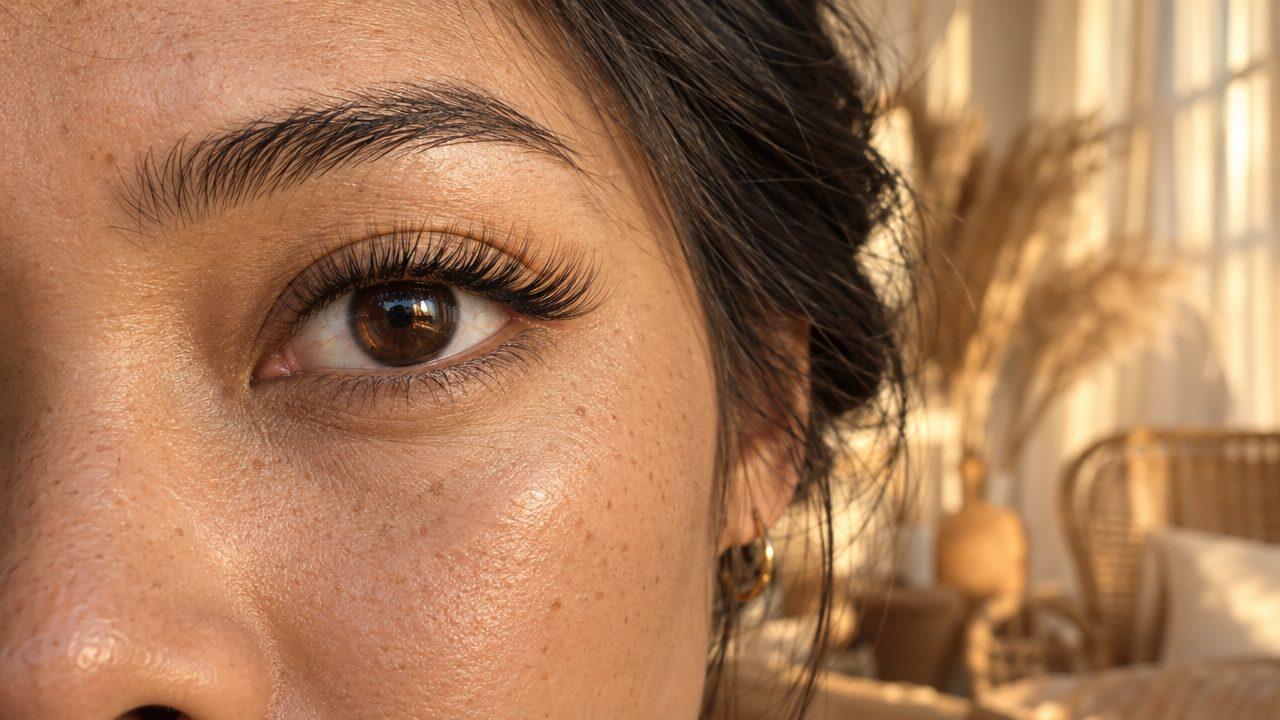
A forecast that hides a warning. A skin cancer most people never think about. A rulebook for pulling products off shelves. Six stories, each dated and sourced, each ending with what you can do.
LASHES
A $1.1 Billion Lash Serum Boom, and the One Side Effect Eye Doctors Say Can't Be Reversed

Reader note: This story discusses drug side effects around the eyes. It is general information, not medical advice.
Longer lashes from a tiny bottle is now a billion-dollar habit.
On November 10, 2026, the research firm Research and Markets put numbers on it in a release distributed by GlobeNewswire: the global eyelash serum market was valued at about $1 billion in 2025 and is projected to grow from $1.1 billion in 2026 to $1.7 billion by 2033, a 7.1% yearly growth rate. Asia Pacific led in 2025 with 45% of revenue, the firm said.
Tucked inside the sales forecast was a line worth reading twice. The release said "concerns regarding eye irritation and changes in iris color have affected demand for certain prostaglandin-based products," and it pointed to peptide-based formulas as the growth opportunity.
The iris part is not marketing drama. The American Academy of Ophthalmology explains that Latisse, the prescription lash drug, is bimatoprost, the same main ingredient as a glaucoma eye drop; patients on that glaucoma drop were the ones who first noticed fuller, darker lashes.
According to the Academy, redness, irritation and darkening of the eyelid skin fade after stopping the drug. Darkening of the iris, the colored part of the eye, "cannot be reversed."
The bigger gray zone is the beauty aisle. The Academy notes that many over-the-counter serums use isopropyl cloprostenate, a prostaglandin analog that is not FDA-approved, and says those serums "have not been FDA tested, their safety and effects are not known."
So the forecast and the fine print point the same way: the market is growing, and shoppers are reading labels more closely before they put anything on their lash line.
HOW WE GOT HERE
Enclave News has covered lash safety all fall: on November 9, 2026 we reported a Shanghai consumer test that flagged most lash glues for carcinogens, and on November 11 a Philippine regulator's warning on an unauthorized lash glue. The Academy's guidance on lash growth serums dates from December 5, 2019.
THE FIX
The 4-word label check before any lash serum touches your eyes
- Flip the box and look for "bimatoprost" or anything ending in "-prost", such as isopropyl cloprostenate. Those are prostaglandin-type ingredients, the group tied to the iris warning.
- If you want the prescription route, get it from an eye doctor who knows your history, especially glaucoma, eye inflammation or recent eye surgery, as the Academy advises.
- Skip prostaglandin serums if you are pregnant or breastfeeding; the Academy says Latisse is not recommended then.
- Stop and call an eye doctor for redness that does not settle, vision changes or any new eye reaction.
- Want lift without a drug? A lash lift or lightweight extensions change the look on the outside of the lash, after a patch test and an honest talk about your eyes.
Picture opening your eyes in the morning to lashes that already look done, and knowing exactly what is on your lash line and why.
The Enclave take: If a lash serum lists a prostaglandin, treat it like an eye medicine, not a mascara.
Sources: Research and Markets via GlobeNewswire, Nov 10, 2026; American Academy of Ophthalmology, Dec 5, 2019
SKIN
Not Melanoma, and Not Slowing Down: A Common Skin Cancer Is Rising Faster in Women
Reader note: This story covers cancer research. It is general information, not medical advice.
When people say skin cancer, most picture melanoma. A new study is about its more common, less famous cousin, and the people it is catching up with.
On Wednesday, November 11, 2026, Australia's QIMR Berghofer Medical Research Institute released a study, published in the British Journal of Dermatology, on cutaneous squamous cell carcinoma, or SCC, according to reports carried by The Peninsula from the Xinhua news agency and by MENAFN.
The researchers looked at more than 30 years of data from seven cancer registries: Tasmania in Australia, Norway, Sweden, Finland, Denmark, Scotland and the Netherlands.
Their finding: SCC rates rose from one generation to the next in Australia and Europe, and generally rose more among women than men. Lead researcher Catherine Olsen said the team was surprised by that gap, because melanoma has not followed the same pattern, the reports said.
Senior author Professor David Whiteman said almost all SCC cases are believed to be caused by ultraviolet exposure, and that the results show the need for stronger prevention and monitoring.
The reports did not include rate figures, so we are not quoting any. The direction is the news: more cases in each new generation, and women's numbers climbing faster.
HOW WE GOT HERE
Enclave News reported on November 11, 2026 that a dermatologist called out viral sunscreen myths, and on November 9 that the American Academy of Dermatology was marking November as Healthy Skin Month.
THE FIX
The everyday habits that work in your favor
- Make broad-spectrum sunscreen part of your morning, not your beach bag, since SCC is linked to UV adding up over a lifetime.
- Reapply when you are outdoors for long stretches, and add a hat and shade for midday errands and kids' games.
- Treat car rides and sunny Orange County winters as sun time too; the exposure counts year-round.
- Learn your own skin: a rough patch, a sore that does not heal or a spot that grows or bleeds deserves a dermatologist visit, not a wait-and-see.
- If you have had a lot of sun over the years, ask a dermatologist how often you should get a full skin check.
Picture a routine so automatic you never think about it, and a skin check that is simply a calm yearly appointment on your calendar.
The Enclave take: SCC is tied to lifetime sun, so the habit matters more than the season.
Sources: The Peninsula (Xinhua), Nov 11, 2026; MENAFN, Nov 11, 2026
SAFETY
The FDA Published Its Playbook for Ordering a Cosmetic Off the Shelf. Here's How It Works
For most of American history, a cosmetic recall was the company's call. A 2022 law changed that, and the FDA has now written down exactly how it will use the power.
On October 22, 2026, the FDA published final guidance titled "Questions and Answers Regarding Mandatory Cosmetics Recalls: Guidance for Industry," BeautyMatter reported, with a Federal Register notice following on October 23, according to a November 12 legal analysis by attorney Jennifer Diaz. It finalizes a December 2025 draft, and BeautyMatter reported "no substantive changes from the original draft."
The authority comes from the Modernization of Cosmetics Regulation Act, or MoCRA, enacted in 2022. It kicks in when the FDA finds a reasonable probability that a cosmetic is adulterated or misbranded and that using it will cause serious adverse health consequences or death. Personal Care Insights reported that examples of serious harm include significant disfigurement and second- or third-degree burns.
The steps, as described by Personal Care Insights and the law firm ArentFox Schiff: the FDA first offers the company a chance to stop distribution and recall voluntarily. If it refuses, the FDA can order it to "immediately cease distribution," with an informal hearing within 10 days. After that, the agency can drop the order, keep it, or expand it into a full recall. Only the FDA Commissioner can order a recall.
For shoppers, the FDA issues a press release naming the product and the risk, and may post a product image, the reports said.
Two limits are worth knowing. BeautyMatter noted that "a product defect or complaint alone does not establish grounds for a mandatory recall." And ArentFox Schiff pointed out the guidance still does not say how long a company gets to act voluntarily.
HOW WE GOT HERE
MoCRA was enacted in 2022. The FDA issued the draft of this recall guidance in December 2025 and received seven public comments, according to the November 12, 2026 analysis.
THE FIX
How to be the first to know if your product is pulled
- Keep the box or snap a photo of the lot number for anything that goes near your eyes or on broken skin.
- If a product burns, swells or blisters your skin or eyes, stop using it, keep the container, and report it to the FDA's MedWatch program.
- Check the FDA's recalls page by product name when you hear a rumor, instead of trusting a screenshot.
- Ask your lash, brow or facial studio what they use on you; a good studio can name its products and show you the containers.
Picture hearing about a recall and calmly checking your shelf in two minutes, because you already know what you own and where it came from.
The Enclave take: A mandatory recall is the FDA's emergency brake, so most bad products will still leave shelves through voluntary recalls you have to watch for.
Sources: BeautyMatter, Nov 1, 2026; Personal Care Insights, Oct 27, 2026; ArentFox Schiff, Nov 3, 2026; Customs & International Trade Law Blog, Nov 12, 2026
INDUSTRY
K-Beauty Just Got Its Own Wall Street Ticker. Your Bathroom Shelf Got There First
Your snail mucin and sunscreen sticks now have a stock ticker.
On November 12, 2026, Pasadena-based Guinness Atkinson announced the Guinness Atkinson K-Beauty ETF, ticker KBTY, which tracks the Indxx K-Beauty Index, according to the firm's press release. Seoul Economic Daily reported the fund began trading in New York that day and tracks 25 companies.
Named holdings include Amorepacific, PharmaResearch and Kolmar Korea, Bloomberg reported on November 13. Seoul Economic Daily added APR and said the fund rose 0.18% on its first day, then slipped 0.73% to $25.21 the next.
The bet rests on export numbers. South Korea shipped $11.4 billion in cosmetics in 2025, a 12% jump, according to the country's Ministry of Food and Drug Safety as cited by Bloomberg, overtaking the U.S. as the world's second-largest cosmetics exporter, behind only France. The U.S. is now Korea's biggest cosmetics market.
"The products tend to be very effective and good, and they tend to be cheaper," Guinness Atkinson CEO Jim Atkinson told Bloomberg.
Bloomberg also noted the risk of themed funds: a K-pop ETF was liquidated last year with $1.4 million in assets.
Closer to home, the trend is literally moving into the neighborhood. Cosmetics Business reported on November 10 that Olive Young plans five more California stores, including Irvine Spectrum Center and Brea Mall, by the end of the first half of 2027.
HOW WE GOT HERE
Guinness Atkinson first filed to launch a K-beauty ETF in July 2026, Personal Care Insights reported on July 15. Enclave News covered Olive Young's Irvine and Brea plans on November 13, 2026.
THE FIX
How to ride the K-beauty wave without wrecking your skin barrier
- Add one new K-beauty product at a time and give it two weeks before judging, so you know what is working.
- Patch test first, behind the ear or along the jaw, especially exfoliating toners and actives.
- Buy from the brand or an authorized retailer; counterfeit beauty products are a real problem in online marketplaces.
- Read the English ingredient list, not just the hero ingredient on the front.
- This is a beauty story, not investment advice: talk to a licensed financial professional before buying any fund.
Picture a short shelf of products you actually finish, and skin that looks calm and even because nothing on it is competing.
The Enclave take: Wall Street just priced in what your skin care shelf already knew; the smart move for your face is the same as ever: fewer, better products.
Sources: Guinness Atkinson via PR Newswire, Nov 12, 2026; Bloomberg via Yahoo Finance, Nov 13, 2026; Seoul Economic Daily, Nov 14, 2026; Cosmetics Business, Nov 10, 2026; Personal Care Insights, Jul 15, 2026
CELEB
A Supermodel and Her Hairstylist Launch a Hair Brand With "Exosomes." Ask This First
Some couples renovate a kitchen together. Amber Valletta and hairstylist Teddy Charles launched a hair-care line.
In a November 12, 2026 interview with Fashionista, the supermodel and Charles, partners in life and business, talked about Maison Beaux, a brand the outlet said debuted the month before with five products.
Fashionista described the line as rooted in natural ingredients and the pair's years of on-set experience, and said it is marketed as color-safe, cruelty-free and suited to all hair types, with exosomes among its ingredients.
"We were able to combine high performance and advanced 'clean' science," Charles told the outlet. Valletta said the mask "really represents the brand," calling it her treatment hero.
The interview did not list prices or name the other four products, and it did not detail testing behind the exosome claim. Fashionista featured the launch again in its November 14 roundup.
Exosomes have become one of 2026's most-used words on beauty labels. A famous founder makes a launch easy to notice; it does not answer what the word means inside a particular bottle.
THE FIX
The 3 questions that cut through any celebrity launch
- Ask what the buzzword means in this product: what kind of exosomes, at what amount, and what testing the brand did on hair or scalp.
- Ask the brand what "clean" means to them, and read the full ingredient list rather than the front of the box.
- Patch test a new scalp or hair mask on a small area first, especially if you have a sensitive scalp or color-treated hair.
- Judge it after a few weeks of normal use, in your own bathroom light, not after one glossy video.
Picture buying one new product because you understood it, then watching your hair simply behave better week after week.
The Enclave take: A buzzword on a label is a reason to ask a question, not a reason to buy.
Sources: Fashionista, Nov 12, 2026; Fashionista, Nov 14, 2026
INDUSTRY
47 Imported Chemicals, Missing Paperwork: Colgate-Palmolive Pays the EPA $930,000
Not every chemical headline is about what is in your toothpaste. This one is about paperwork, and it still cost almost a million dollars.
On November 4, 2026, the U.S. Environmental Protection Agency announced a $930,000 settlement with Colgate-Palmolive over chemical import reporting, according to an EPA Region 2 news release.
The EPA said the company failed to report numerous chemical substances it imported from 2016 through 2019 under the Toxic Substances Control Act's Chemical Data Reporting rule. In all, the agency said Colgate-Palmolive imported 47 chemicals above the reporting threshold and missed the January 2021 deadline.
The issue surfaced after a March 2023 inspection of a New Jersey facility, and the company reported the data in July 2023, the EPA said. Colgate-Palmolive has certified it is now in compliance.
"EPA's data-reporting requirements are essential to protecting human health and the environment," EPA Region 2 Administrator Michael Martucci said in the release.
The release is about reporting, not a product recall: the EPA did not announce any finding that a Colgate-Palmolive product is unsafe.
THE FIX
How to read a scary chemical headline in 60 seconds
- Check who acted and why: an EPA reporting settlement is about records, while an FDA recall or warning is about a product.
- Look for a product name, lot number or recall notice; if there is none, there is nothing to throw out.
- Go to the agency's own release instead of a reposted screenshot; it states exactly what was found.
- If a product ever does bother your skin or eyes, stop using it, keep the container and report it.
Picture reading the next alarming headline, checking the source in a minute, and getting on with your day, informed instead of anxious.
The Enclave take: Read past the dollar amount: a reporting fine and a product safety warning are two very different stories.
Source: U.S. Environmental Protection Agency, Nov 4, 2026
Before you go
Curious whether a lash lift, extensions or simply better habits fit your eyes and skin? Bring your questions to a free 45-minute consultation at Enclave in Santa Ana. Honest answers, no pressure.
Book a free 45-minute skin consultation
Medical disclaimer: This page is for general information and isn't medical advice. Talk with a licensed clinician about your own health.
Sources
- Research and Markets via GlobeNewswire, “Global $1.1 Billion Eyelash Serums Market Outlook, 2033” (Nov 10, 2026): https://www.globenewswire.com/news-release/2026/11/10/3399973/28124/en/global-1-1-billion-eyelash-serums-market-outlook-2033-capitalize-on-clean-peptide-based-serums-and-influencer-partnerships.html
- American Academy of Ophthalmology, “What You Should Know About Eyelash Growth Serums” (Dec 5, 2019): https://aao.org/eye-health/drugs/latisse
- The Peninsula (Xinhua), “Common skin cancer rising faster in women: study” (Nov 11, 2026): https://thepeninsulaqatar.com/article/11/11/2026/common-skin-cancer-rising-faster-in-women-study
- MENAFN, “Skin Cancer Surge: SCC Rates Climbing Faster in Women, Study Finds” (Nov 11, 2026): https://menafn.com/1111947000/Skin-Cancer-Surge-SCC-Rates-Climbing-Faster-in-Women-Study-Finds
- BeautyMatter, “What the FDA's Recall Guidance Means for Cosmetics” (Nov 1, 2026): https://beautymatter.com/articles/what-the-fdas-recall-guidance-means-for-cosmetics
- Personal Care Insights, “US FDA sets out mandatory cosmetic recall process in final MoCRA guidance” (Oct 27, 2026): https://www.personalcareinsights.com/news/fda-mocra-cosmetic-recall-guidance.html
- ArentFox Schiff, “Recall the Draft? FDA's Final Guidance on Mandatory Cosmetic Recalls Looks Familiar” (Nov 3, 2026): https://www.afslaw.com/perspectives/alerts/recall-the-draft-fdas-final-guidance-mandatory-cosmetic-recalls-looks-familiar
- Customs & International Trade Law Blog, “FDA Finalizes Guidance on Mandatory Cosmetics Recalls: What Importers and Manufacturers Need to Know” (Nov 12, 2026): https://customsandinternationaltradelaw.com/2026/11/12/fda-finalizes-guidance-on-mandatory-cosmetics-recalls-what-importers-and-manufacturers-need-to-know/
- Guinness Atkinson via PR Newswire, “Guinness Atkinson Launches K-Beauty ETF” (Nov 12, 2026): https://www.prnewswire.com/news-releases/guinness-atkinson-launches-k-beauty-etf-302937060.html
- Bloomberg via Yahoo Finance, “K-Beauty Boom Becomes Wall Street's Latest Investment Play” (Nov 13, 2026): https://finance.yahoo.com/markets/stocks/articles/k-beauty-boom-becomes-wall-165553416.html
- Seoul Economic Daily, “K-Beauty ETF Debuts in New York as Wall Street Eyes New Theme” (Nov 14, 2026): https://en.sedaily.com/world/2026/11/14/k-beauty-etf-debuts-in-new-york-as-wall-street-eyes-new
- Cosmetics Business, “Olive Young to open five more US stores in significant K-beauty expansion” (Nov 10, 2026): https://cosmeticsbusiness.com/olive-young-to-open-five-more-us-stores
- Personal Care Insights, “Wall Street chases K-beauty with first dedicated ETF filing” (Jul 15, 2026): https://www.personalcareinsights.com/news/k-beauty-etf-investment.html
- Fashionista, “Supermodel Amber Valletta and Hairstylist Teddy Charles on Being Partners in Life and Business” (Nov 12, 2026): https://fashionista.com/2026/11/amber-valletta-teddy-charles-hair-maison-beaux-interview
- Fashionista, “ICYMI: Hanifa's Relaunch, Nuuly Is 'Spring Awakening''s Styling Partner & Amber Valletta and Teddy Charles on Their New Hair-Care Brand” (Nov 14, 2026): https://fashionista.com/2026/11/fashion-news-you-need-to-know-november-14
- U.S. Environmental Protection Agency, “EPA Reaches Settlement with Colgate-Palmolive to Bring it Into Compliance with Requirements for Large-Quantity Chemical Imports” (Nov 4, 2026): https://www.epa.gov/newsreleases/epa-reaches-settlement-colgate-palmolive-bring-it-compliance-requirements-large
Enclave News summarizes and fact-checks reporting from the outlets listed above in our own words. Dates shown are the dates of each development; older events are labeled as background. Spot an error? Call or text (310) 666-8298 and we will correct it.