INGREDIENT LITERACY · SKIN BARRIER
Ceramides for the skin barrier:
what moisturizer can do
Ceramides matter—but a label is not a clinical result. Here is how to judge the whole formula and use it sensibly.
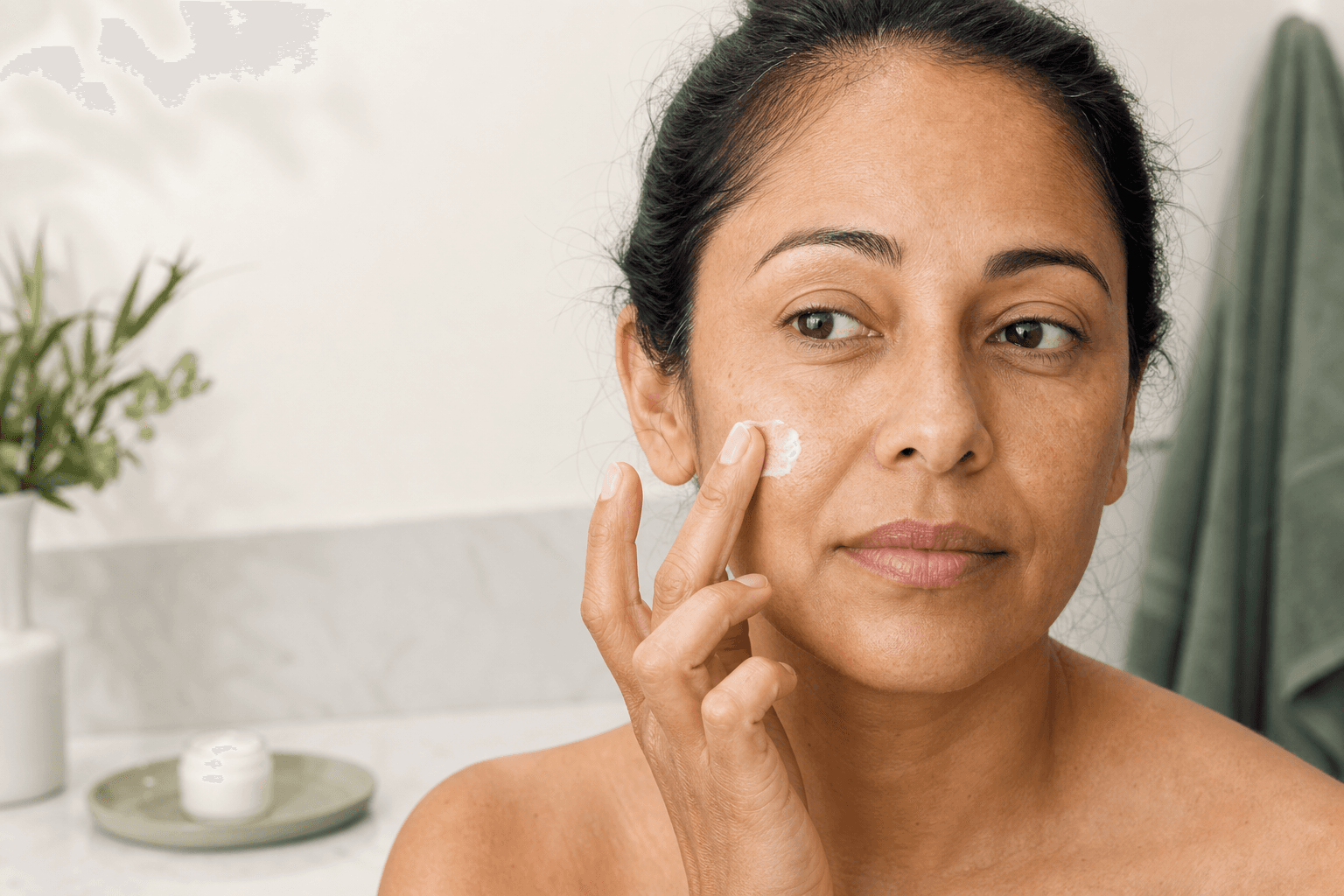
Short answer: ceramides are lipids naturally found in the skin’s outer barrier. A thoughtfully formulated ceramide moisturizer may improve dryness and support barrier function, but “contains ceramides” does not guarantee superiority, cure eczema or cancel an irritating routine.
What ceramides do in skin
The stratum corneum is often described as bricks and mortar: flattened cells form the bricks, while lipids—including ceramides, cholesterol and free fatty acids—help form the organized matrix between them. That structure slows water loss and limits entry of irritants.
Ceramides are a family, not one molecule. Their type, concentration, processing and relationship to other ingredients can affect how a finished formula behaves.
Ceramides, humectants and occlusives are different
- Humectants, such as glycerin or hyaluronic acid, help attract water.
- Emollients soften and smooth rough spaces at the surface.
- Occlusives, such as petrolatum, reduce evaporation by forming a surface film.
- Ceramides are barrier lipids; in products, they still depend on the complete vehicle and formulation.
These categories can work together. Read our hyaluronic acid moisturizer guide for the humectant side of the routine.
What the evidence actually says
A 2021 qualitative review found ceramide-containing preparations could improve dryness and barrier measures in studied skin disorders, while calling for larger double-blind trials. A 2023 systematic review in atopic dermatitis found no significant advantage over other moisturizers for transepidermal water loss, although disease-severity scores favored ceramide products by a small amount. That means ceramides can be useful without making every ceramide cream universally best.
A 2024 formulation review adds an important limit: poorly incorporated or undissolved ceramides may not deliver the intended barrier effect. Ingredient lists cannot reveal every manufacturing detail or predict your response.
How to choose without chasing label numbers
- Start with a fragrance-free cream or ointment if skin is dry or reactive.
- Judge comfort and consistency over several uses, not an instant glow.
- Avoid assuming more ceramide types or a proprietary ratio guarantees a better result.
- Patch-test a new product when your skin is reaction-prone.
- Choose packaging and texture you can use consistently.
How to use it
AAD recommends applying moisturizer while skin is still damp after washing and again when skin feels dry. In the morning, finish with broad-spectrum, water-resistant SPF 30 or higher and other sun protection. For air-conditioned or dry Orange County days, reapply moisturizer based on comfort rather than a rigid schedule.
If retinoids, acids or scrubs make skin sting, a ceramide cream is not permission to push through. Pause the likely irritant, simplify the routine and read our over-exfoliated skin barrier reset.
When moisturizer is not enough
Persistent itch, widespread rash, cracking, bleeding, oozing, pain, swelling or signs of infection need medical assessment. Atopic dermatitis, contact allergy, psoriasis and other conditions can look like ordinary dryness but require diagnosis. Sudden facial swelling, trouble breathing or eye involvement needs urgent care.
Frequently asked questions
Are plant ceramides the same as skin ceramides?
Labels may use natural, synthetic or ceramide-like ingredients. Source alone does not establish performance; the final formula and evidence matter.
Can oily or acne-prone skin use ceramides?
Yes, but texture and the full ingredient list matter. Choose a product you tolerate and do not treat moisturizer as an acne treatment.
How quickly should it work?
Surface comfort may change quickly, while barrier measurements and visible dryness vary by formula, condition and consistent use. Avoid products promising permanent repair in a fixed number of hours.
Sources and editorial note
- American Academy of Dermatology: Dermatologists’ tips for relieving dry skin — checked September 1, 2026
- Clinical significance of ceramide-containing formulations: qualitative review — 2021; checked September 1, 2026
- Ceramide moisturizers in atopic dermatitis: systematic review and meta-analysis — 2023; checked September 1, 2026
- Role of ceramides and correct formulation for skin care — 2024; checked September 1, 2026
Editorial note: Live search results supplied question wording only. Health claims rely on AAD and peer-reviewed reviews; evidence limits are stated above.
Medical disclaimer: Educational only, not medical advice or a diagnosis.