MOISTURIZER LITERACY · HYALURONIC ACID
Hyaluronic acid holds water.
A complete moisturizer does more.
Topical hyaluronic acid can support surface hydration, but the full formula—and how you apply it—matters more than one fashionable ingredient.
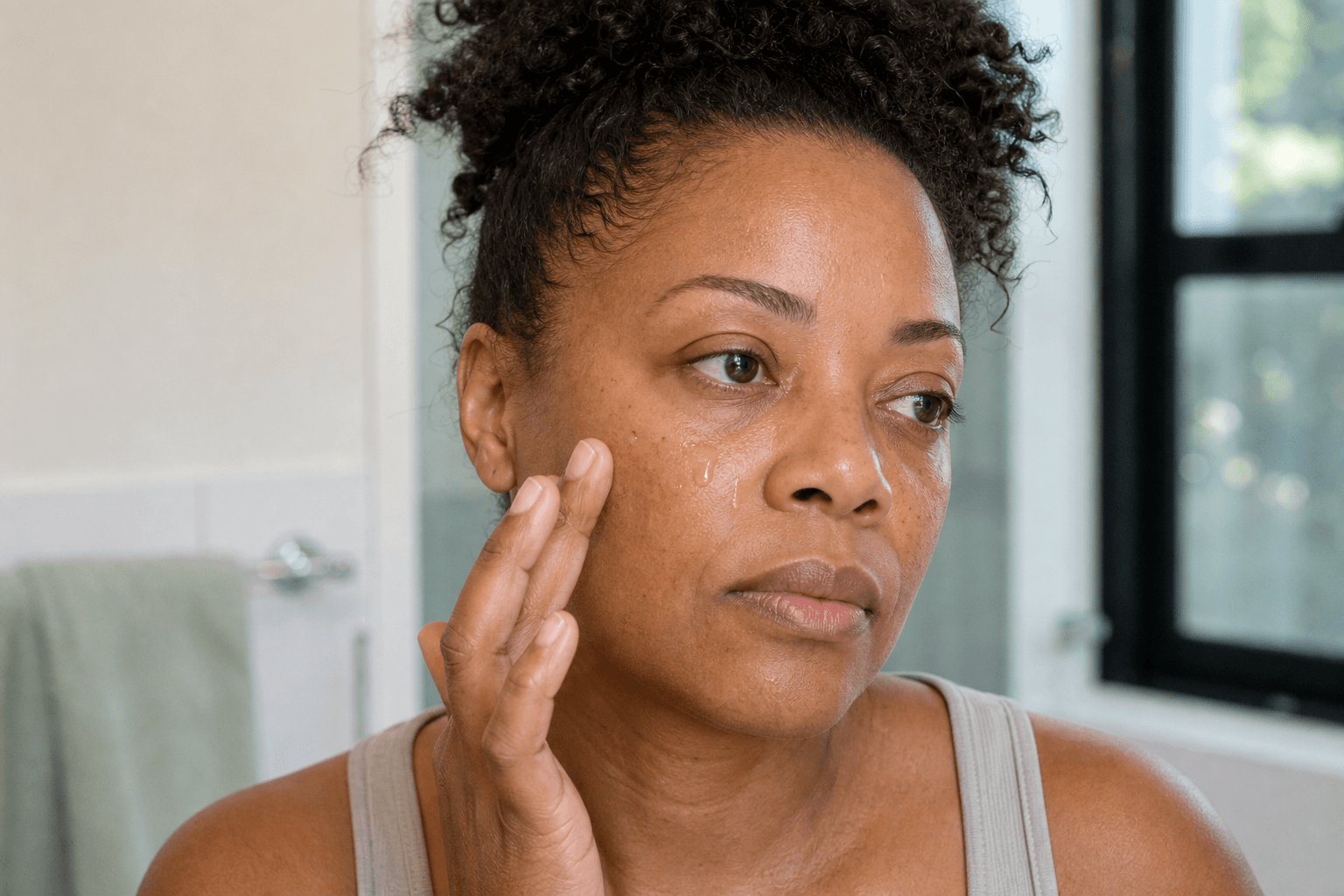
Hyaluronic acid is a humectant: it helps bind water. That can make the outer skin feel smoother and more comfortable, but a serum is not an injection, cannot replace lost facial volume, and does not permanently erase wrinkles.
Topical and injectable hyaluronic acid are different
A topical cosmetic sits on and interacts with the skin surface. Injectable hyaluronic acid filler is a medical procedure placed beneath the skin by a qualified clinician and carries a different evidence base, risk profile, and regulatory status. Marketing that blurs the two can create unrealistic expectations.
Think in moisturizer jobs, not hero ingredients
Moisturizers usually combine humectants that attract water, emollients that smooth spaces between surface cells, and occlusives that slow water loss. Hyaluronic acid can perform one useful job, while ingredients such as glycerin, ceramides, dimethicone, petrolatum, or oils may perform complementary ones. The ingredient list, vehicle, preservative system, and packaging all matter.
Apply it while skin is slightly damp
The American Academy of Dermatology recommends applying a fragrance-free moisturizer after bathing or washing while skin is still damp. Use clean hands, spread gently, and follow with sunscreen in the morning. A watery serum alone may feel insufficient for very dry skin; a cream or ointment can reduce water loss more effectively than a light lotion.
Match texture to your skin
Oily or acne-prone skin may prefer a light gel or lotion. Dry, mature, or barrier-impaired skin often needs a cream or ointment. Combination skin can use different amounts in different zones. “Oil-free,” “natural,” and “medical grade” do not guarantee tolerance, and a higher molecular-weight claim or percentage is not automatically better.
Why a serum can still sting
Hyaluronic acid itself is not the only possible trigger. Fragrance, botanical extracts, solvents, preservatives, acids, or other actives in the same formula may irritate or cause allergy. Patch-test a new product on a small area, introduce one change at a time, and stop if burning, swelling, hives, or persistent redness develops.
Southern California dryness is not only weather
Air conditioning, hot showers, frequent cleansing, acne treatments, exfoliation, swimming, wind, and sun exposure can all leave skin tight. Around Santa Ana and Orange County, a useful routine is gentle cleansing, moisturizer on damp skin, daily broad-spectrum sunscreen, and fewer competing actives when the barrier feels irritated.
When moisturizer is not enough
Dryness with cracks, bleeding, intense itch, pain, spreading redness, drainage, fever, or eye-area swelling needs medical attention. Persistent dryness may be associated with eczema, psoriasis, medication effects, or other conditions. A dermatologist can identify the cause instead of adding progressively stronger cosmetics.
Sources and editorial note
- American Academy of Dermatology: Dermatologists’ Top Tips for Relieving Dry Skin — updated 2025
- American Academy of Dermatology: How to Pick the Right Moisturizer
- Moisturizer in Patients with Inflammatory Skin Diseases — 2022
- Benefits of Topical Hyaluronic Acid for Skin Quality and Signs of Skin Aging — 2022
Evidence note: The topical hyaluronic acid review includes authors affiliated with a cosmetic company; product-specific claims should be judged by independent trials and the complete formulation.
Medical disclaimer: Educational only, not medical advice or a diagnosis.