ENCLAVE NEWS · NOVEMBER 12, 2026
Enclave News: Pete Davidson's "$200K" Tattoo Removal, and the Fizz in Bubble Serums
A $200,000 price tag is attached to Pete Davidson's tattoo removal, but nobody says where it came from. Plus bubble serums under the microscope, a keratin treatment warning, golden brows and DIY lash kits.
A six-figure number with no return address. A serum that fizzes and a dermatologist who shrugs. Eight stories today, each dated, sourced and ending with what you can actually do about it.
REMOVAL
$200,000 to Erase Pete Davidson's Tattoos? The Stories Don't Say Where That Number Came From

On Thursday morning, a six-figure price tag started following Pete Davidson around the internet.
UNILAD's November 12, 2026 story ran the headline that Davidson detailed the "brutal" reality of tattoo removal "after spending $200,000 on the process." In Touch Weekly, in a story syndicated by Yahoo Entertainment the same day, wrote that the removal has "reportedly" cost him $200,000.
Here is the catch: neither story says who reported that number. Neither quotes Davidson naming a price, and the remarks both stories quote from his E! News interview at the New York premiere of his film How to Rob a Bank are about the process, not the bill.
What Davidson did say, according to both outlets, is short. "It's brutal," he told E! News. He said he has been living in sweaters for about six months so nobody can see what is going on underneath, and he joked that the tattoos "might come back."
In Touch dated the premiere interview to Tuesday, November 10, and UNILAD reported that the film opens in theaters November 13. Davidson began his removal in 2020, both outlets said, and plans to keep two or three of his tattoos.
So the honest version of the story is this: the pain and the timeline are on the record, and the $200,000 is not. Enclave News covered the premiere interview itself on November 11; today's update is the price tag, and why you should not plan your own budget around a celebrity rumor.
HOW WE GOT HERE
In January 2025, on The Tonight Show Starring Jimmy Fallon, Davidson said he had been "burning them off" and that it felt worse than getting the tattoos, according to In Touch Weekly's recap. In that recap, he described six to eight weeks of healing between rounds, staying out of the sun, and needing "like 12 more times."
THE FIX
How to get a real tattoo removal number instead of a rumor
- Book a consultation and ask for the price per session and a realistic range of sessions for your specific tattoo, in writing.
- Ask how many weeks the provider waits between sessions; Davidson's own description was six to eight weeks of healing, which turns a dozen sessions into a timeline of a year or more.
- Ask what is and is not included: the consultation, aftercare supplies, follow-up checks, and what happens if your skin needs extra time to heal.
- Check the provider's license before you pay; in California you can search a name on the Department of Consumer Affairs license search.
- Decide early whether you want a full clearing or a fade for a cover-up, because the two goals usually mean different session counts and budgets.
Picture walking out of your consultation with a number that is actually yours: a per-session price, a session range and a calendar you can plan around, with no six-figure surprises.
The Enclave take: A tattoo removal quote should come from a consultation about your tattoo, not from a headline about someone else's: size, ink colors, age and your skin all change the number of sessions and the total.
Sources: UNILAD, Nov 12, 2026; Yahoo Entertainment (from In Touch Weekly), Nov 12, 2026
SKIN
31 Women, Eight Weeks, No Placebo: How to Tell If Your Skincare Was Really Tested
"Clinically proven" is on half the jars in your bathroom. Marie Claire UK just asked the awkward follow-up: proven how?
In a feature published November 12, 2026, beauty director Lottie Winter looked at whether brands are paying for credible evidence or using science as a marketing costume. Susie Willis, founder of the brand Romilly Wilde, put the mood plainly, citing "consumer frustration and fatigue" with claims.
The piece uses a real study as its case: an eight-week trial of an LED device from CurrentBody, published in the journal Cosmetics in October 2026 and run by the testing company Eurofins with 31 women aged 41 to 55. It reported hydration up 35.3%, elasticity up 15.4% and wrinkle depth down 9.5%.
Marie Claire also spelled out the limits: the study was single-arm and open-label, which means everyone got the device, everyone knew it, and there was no sham group to compare against.
Ellis Bradbury, head of regulatory at The Beauty Tech Group, which makes CurrentBody, defended publishing it anyway. "We'd rather publish an honest study with its limitations stated than a perfect-sounding claim no one can check," Bradbury told the magazine. He estimated a sham-controlled trial at £250,000 to £600,000 or more, taking 6 to 18 months.
Consultant dermatologist Dr Beibei Du-Harpur of King's College London gave the shortest rule in the piece: "Final formulation testing is king." In other words, a study of one ingredient in a lab is not a study of the jar you are buying.
THE FIX
Five questions that turn "clinically proven" into something you can check
- Ask how many people were in the study and for how long; a few dozen people over eight weeks is a start, not the final word.
- Look for a comparison group: a placebo, a sham device or an untreated side tells you more than everyone-got-it results.
- Check whether the finished product was tested, not just one ingredient, which is the point Dr Du-Harpur made.
- Find out who ran and published the study, and whether the results are in a journal you can actually read.
- Give any new product the time the study used before you judge it, and change one thing at a time so you know what worked.
Picture a shelf with fewer products and more confidence: each one chosen because its proof held up to five simple questions, not because the label shouted the loudest.
The Enclave take: A claim is only as strong as the study behind it: how many people, for how long, compared against what, and whether the finished product itself was tested.
Source: Marie Claire UK, Nov 12, 2026
SAFETY
"Not to Purchase and Use": The Philippines Flags a Keratin Treatment Sold Without Approval

A hair-smoothing product just landed on a government do-not-buy list, and the reason is a missing piece of paper.
The Food and Drug Administration of the Philippines posted Advisory No. 2026-1766 on November 12, 2026, warning the public and health care professionals "NOT TO PURCHASE AND USE" a product called Lightness Keratin Treatment (LI-8420).
According to the advisory, the agency confirmed through post-market surveillance that the product had not been issued a Certificate of Product Notification as of October 29, 2026, the registration a cosmetic needs before it can be sold there.
The agency warned that unauthorized cosmetics like this one may contain disallowed ingredients or heavy-metal contamination, with possible reactions ranging from skin irritation to anaphylactic shock and organ failure. The advisory does not say any specific harmful ingredient was found in this product.
Shops were told not to sell, advertise or distribute it until it is authorized, and the agency asked the public to report sellers through its eSumbong reporting channel.
Why it matters in Orange County: keratin and smoothing treatments travel in suitcases and online carts, and labels do not always list what is inside.
HOW WE GOT HERE
On November 10, Enclave News reported that the U.S. FDA had listed November 2026 as its target for proposing a ban on formaldehyde in hair-smoothing products, a rule that has missed earlier dates.
THE FIX
Before anyone puts a smoothing treatment on your hair
- Ask your stylist for the exact product name and read the ingredient label; skip it if it lists formaldehyde, formalin or methylene glycol, which the U.S. FDA has said releases formaldehyde when heated.
- Skip products bought abroad or online with no ingredient list, no company address or packaging in a language you cannot read.
- Make sure the salon is well ventilated and that you are not left breathing fumes while the flat iron is on.
- Stop the service if your eyes burn, your nose or throat feels irritated or your scalp stings, and see a clinician if symptoms last.
- Report a bad reaction to the FDA's MedWatch program so the problem is on record.
Picture smooth, glossy hair from a product you can name, read and trace, with nothing stinging in the air while it is done.
The Enclave take: A smoothing treatment with no traceable brand, no ingredient list or no registration is a product nobody has checked, no matter how good the results look online.
Source: Food and Drug Administration, Philippines, Nov 12, 2026
INDUSTRY
16 Products, 400 Ulta Stores: China's PROYA Arrives With a Peptide Cream and Lab-Made Collagen
Another big Asian skincare name just walked into the American mall.
PROYA, the Chinese beauty brand, announced on November 12, 2026 that it is launching 16 products in 400 Ulta Beauty stores across the U.S. and on Ulta.com, according to the company's press release distributed by PR Newswire.
The lineup comes from two collections. Advanced Firming centers on a nourishing cream the company calls its fourth-generation formula, built around a peptide it brands "Bicyclic Peptide PRO." Original Repair is led by a serum with recombinant Type XVII collagen, meaning collagen protein made in a lab rather than taken from animals.
The company points to its research credentials: an IFSCC research award, a European innovation center it opened in France on October 13, and a joint lab with Zhejiang University's genetics institute unveiled in September. Those are the company's own claims; the release does not include independent clinical results for the products launching at Ulta.
"Global expansion today is about far more than simply entering a new market," Yuli Cai, head of PROYA's overseas business, said in the release.
PROYA's parent, PROYA Cosmetics Co., trades on the Shanghai Stock Exchange. The launch lands in the busiest beauty-shopping stretch of the year, the same month Ulta is adding other buzzy brands to its shelves.
THE FIX
How to try a buzzy new skincare launch without wrecking your skin
- Patch-test first, the way the American Academy of Dermatology advises: a small amount on the inner arm or behind the ear for several days before it goes on your face.
- Add one new product at a time and give it a few weeks, so you know what is helping and what is irritating.
- Separate company claims from independent proof: an award or a lab partnership is not the same as a published trial of the cream in your cart.
- Keep your basics steady while you test: gentle cleanser, moisturizer and sunscreen every morning.
- Keep the receipt and check the store's return window before you open a full-size jar.
Picture adding one exciting new step to a routine that already works, and knowing within a month whether it earned its spot.
The Enclave take: New-to-you skincare is worth trying slowly: a research award belongs to the company, while how a product treats your skin is something only a patch test and a few weeks can tell you.
Source: PR Newswire (via The Manila Times), Nov 12, 2026
TREND
"The Bubbling Is for Effect!": TikTok's Fizzing Serums, Fact-Checked
It foams on contact, it tingles, it looks fantastic in slow motion. But does a serum that bubbles do anything a flat one cannot?
Fashion Times reported on November 11, 2026 that "bubble serums," mostly Korean formulas that turn to foam on the skin, are having a moment. Search interest is up 314.9% year over year, according to Spate data cited by the analytics group LUK, whose August analysis also found a 745.5% jump in TikTok interest.
That same LUK analysis found that 68.5% of the TikTok views in its dataset came from paid content, a reminder that a lot of the hype is advertising.
Two skin experts quoted in the piece were not impressed by the fizz. "The bubbling is for effect!" said dermatology nurse practitioner Jodi LoGerfo. Dermatologist Dr. Alicia Zalka advised: "Always prioritize clinical efficacy over the novelty of the delivery system."
The products named include Mixsoon's Hyalraebae Pore Bubble Serum and Medicube's Collagen Glow Bubble Serum, which lists retinal, a strong vitamin A ingredient that can irritate if you are new to it.
The article also pointed back to research presented at the EADV Congress in late September, which found that almost 95% of 38 Korean skincare and "glass skin" TikTok videos made at least one potentially misleading claim. Enclave News covered that study on November 6.
THE FIX
How to shop a viral serum like a skeptic
- Read the ingredient list before the video caption; the active ingredients, not the bubbles, decide what the product can do.
- If it contains retinal or retinol, start two or three nights a week and use sunscreen every morning.
- Check whether the video is an ad or a gifted post before you treat it as a review.
- Patch-test any new serum for several days, as the American Academy of Dermatology advises, and stop if it burns or itches.
- Ask a licensed esthetician or a dermatologist whether the serum fits your skin before you stack it with other actives.
Picture a routine that feels just as fun without the fizz, built on ingredients you understand and skin that stays calm.
The Enclave take: Judge a serum by its ingredients and evidence, not its texture: foam is a feeling, and a bubbling product with retinal still needs a slow, careful start.
Source: Fashion Times, Nov 11, 2026
BROWS
Golden Brows at 57: Uhm Jung-hwa Dyed Her Own and Called It "Really Difficult"
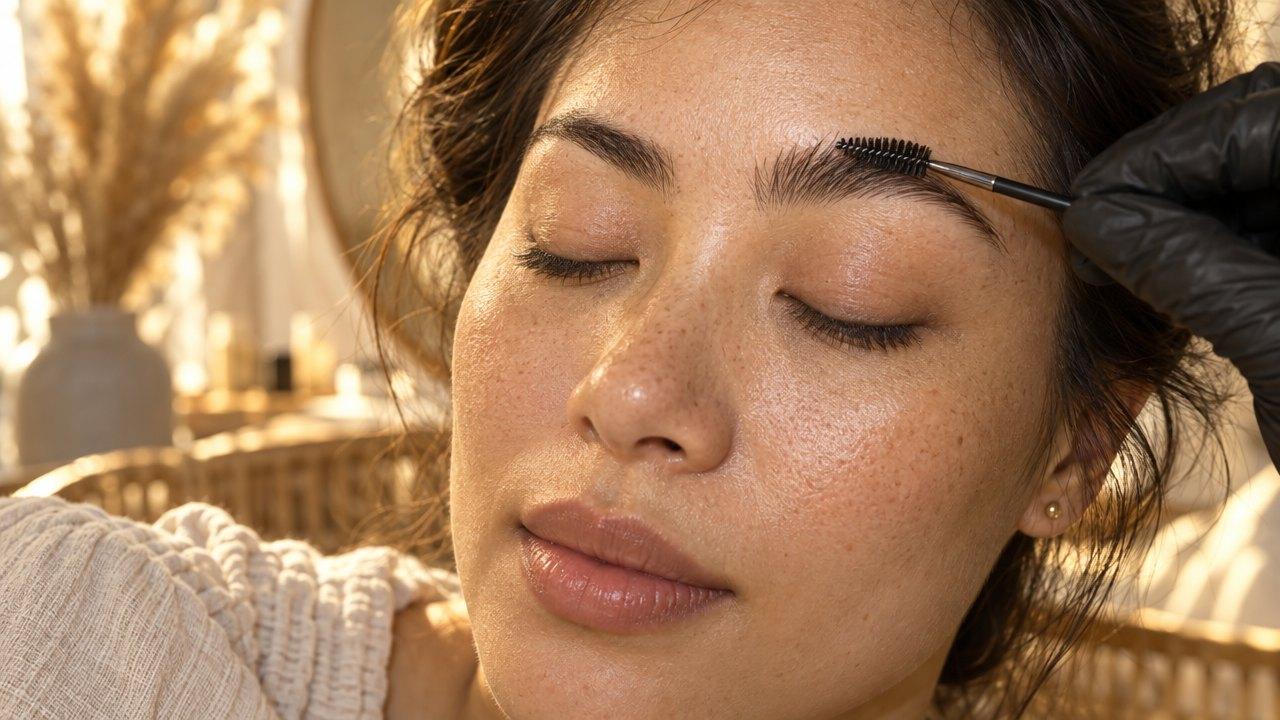
Korean pop and screen veteran Uhm Jung-hwa traded her dark brows for gold this week, and her review of the process was refreshingly honest.
On November 10, 2026, the singer and actress posted a close-up photo on her personal social media account showing newly blonde, golden brows behind a pair of glasses, according to STARNEWS and Mediafine Global.
Mediafine reported that she dyed them herself and found it harder than expected. STARNEWS translated her caption as "It's really difficult. Eyebrow dyeing," while Mediafine rendered it as "too difficult," a small difference from translating the Korean original.
Mediafine gave her age as 57 and noted she was on screens in August in the film Okay! Madam 2.
Her post lands as brows enter a looser, more personal era. In a January 29, 2026 report for Byrdie, brow experts said full tinting had become the most popular easy service, bleaching was high-maintenance and microblading had fallen out of favor. "2026 will be defined by versatility and reversibility," brow artist Jasmine Imani told the outlet.
There is a reason color near the eye deserves care. According to the American Academy of Ophthalmology, the FDA has not approved any color additives for permanent dyeing or tinting of eyelashes and eyebrows, and the FDA has said such dyes have been known to cause serious eye injuries.
HOW WE GOT HERE
The American Academy of Ophthalmology's guidance on brow and lash coloring was first published December 11, 2019 and updated in 2024. The Byrdie brow report was published January 29, 2026.
THE FIX
How to change your brow color without risking your eyes
- Skip at-home dye kits near the eyes; the American Academy of Ophthalmology notes that no color additive is FDA-approved for permanently dyeing brows or lashes.
- If you want a dramatic shade, try a tinted brow gel or brow makeup first; it washes off if you hate it.
- Ask any brow artist which product they use, how it is labeled and how they protect the eye area, and request a patch test before the first service.
- Stop right away if your eyes sting, tear or swell, rinse with clean water and see a clinician, then report the reaction to the FDA.
- Book in-studio brow services such as shaping or lamination with a licensed professional; in California you can look up a license with the Board of Barbering and Cosmetology.
Picture brows that frame your face exactly the way you want this season, done carefully enough that the only thing you notice afterward is the mirror.
The Enclave take: A brow color change is fun and reversible; a dye accident in the eye is neither. Bold brows are best done slowly, with a patch test and well away from the lash line.
Sources: STARNEWS, Nov 10, 2026; Mediafine Global, Nov 11, 2026; AOL (from Byrdie), Jan 29, 2026; American Academy of Ophthalmology, Dec 11, 2019
SKIN
November Is Healthy Skin Month, and Dermatologists' Best Advice Fits on an Index Card
Ten-step routines, fizzing serums, $200 masks. Then the dermatologists speak, and the advice could fit on a sticky note.
November is National Healthy Skin Month, and the American Academy of Dermatology opened it with a November 2, 2026 release about the skin barrier, the outer layer that keeps moisture in and irritants, pollution and germs out. "Healthy skin is skin that can do its job well," dermatologist Dr. Rachel Nazarian said in the release, republished by News-Medical on November 3.
The academy listed the usual barrier wreckers: over-cleansing, harsh products, hot water, too much sun, over-exfoliating and layering too many active ingredients. Its fix is a gentle cleanser, a moisturizer, broad-spectrum sunscreen of SPF 30 or higher, warm instead of hot water, and new ingredients introduced gradually.
A weakened barrier can make eczema, psoriasis, rosacea and acne worse, the release said.
Cleveland Clinic followed on November 9 with the same message from dermatologist Dr. Jennifer Lucas: never skip sunscreen, sunny or cloudy, keep the routine simple, and be wary of products promising instant results. "Constantly switching products or trying too many at once can irritate your skin," she said.
Read together, the two releases say what most skin-care marketing will not: consistency beats novelty, and the most underrated step is the one you do every single morning.
THE FIX
The index-card routine dermatologists keep recommending
- Morning: a gentle cleanser, a moisturizer and broad-spectrum sunscreen of SPF 30 or higher, every day, as the American Academy of Dermatology advises.
- Wash with warm water, not hot, and pat your face dry instead of rubbing.
- Pause scrubs, peels and stacked actives if your skin stings; add new ingredients back one at a time.
- Give any product several weeks before deciding it does not work, as Cleveland Clinic's Dr. Lucas advises.
- See a board-certified dermatologist if redness, flaking or breakouts do not settle with a simple routine.
Picture skin that feels comfortable by the end of the day, with a routine short enough that you never skip it.
The Enclave take: If your skin feels tight, stingy or suddenly reactive, the answer is usually fewer products for a while, not more.
Sources: American Academy of Dermatology, Nov 2, 2026; News-Medical, Nov 3, 2026; Cleveland Clinic Newsroom, Nov 9, 2026
LASHES
A Dh30 Lash Kit and a Waiting Room: UAE Eye Doctors Report More Lash-Extension Patients
Reader note: This story describes eye infections and injuries linked to lash extensions. It is general information, not medical advice.
This one is from earlier this year, and it has aged into a holiday-season warning: the cheapest lashes can end up costing the most.
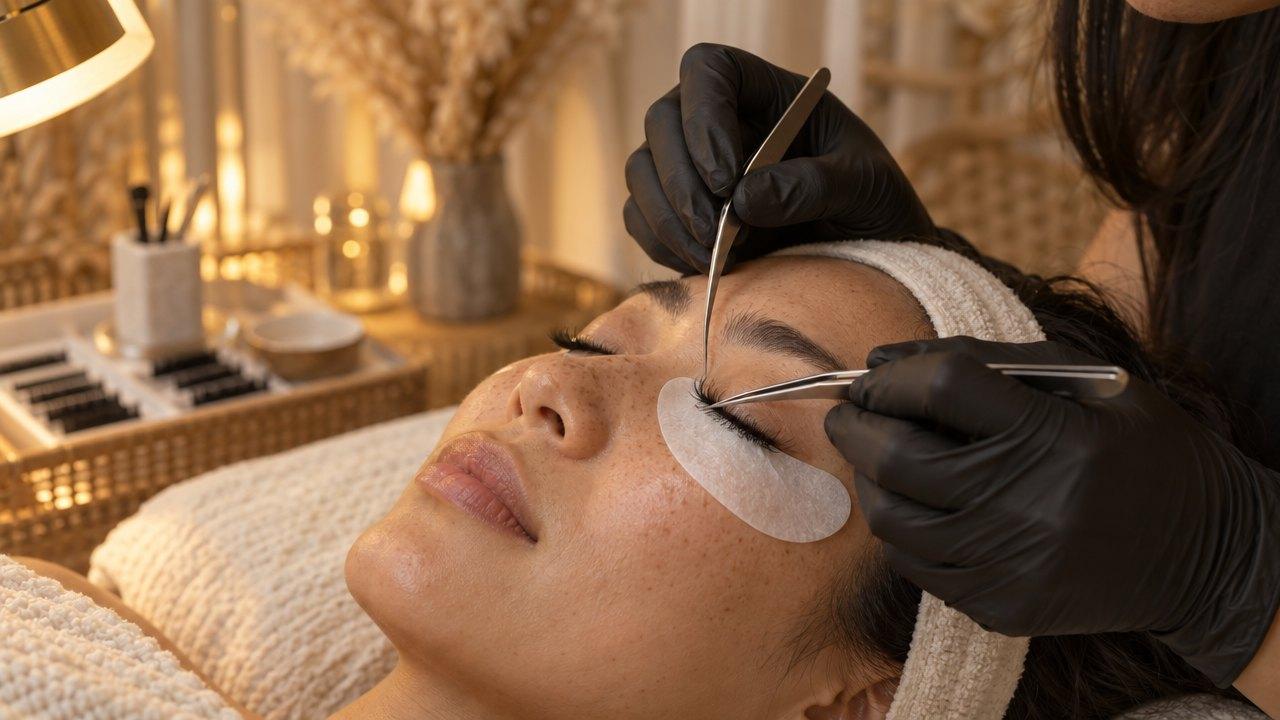
In a report published January 24, 2026, Khaleej Times spoke with clinicians and lash technicians in the United Arab Emirates about at-home extension kits. Salon extensions there run about Dh200 to Dh500, the paper reported, while DIY kits sell online for as little as Dh30.
Dr Nikulaa Parachuri, an ophthalmology and retinal surgery specialist at Aster Hospital Qusais in Dubai, told the paper her clinic was seeing more patients with lash-extension complications, from blepharitis, dry eye, lash loss and conjunctivitis to keratitis. In severe cases, she said, problems can include corneal ulcers and scarring.
The risky habits named in the report: heavy extensions, too many layers, unsterile tools and glue placed too close to the lid margin. Dr Parachuri also warned that formaldehyde-based glues can cause severe allergic reactions.
Some people treat sore, red eyes as part of the deal. Dr Parachuri disagreed: "No, it is not normal. It is common — but that doesn't make it acceptable."
One eyelash technician interviewed, identified as Olga V., said at least a few clients come in every week with problems from at-home extensions.
THE FIX
How to get the lashes without the eye doctor visit
- Book a licensed lash artist instead of gluing a kit at home; in California you can check a license with the Board of Barbering and Cosmetology.
- Ask how the artist keeps glue off your eyelid skin and how they isolate one natural lash at a time.
- Tell the artist about sensitive eyes or past reactions and ask about a patch test before a full set.
- Choose a weight and length your natural lashes can carry; heavy, stacked sets are one of the risks the UAE clinicians named.
- Have extensions removed professionally, and see an eye doctor for pain, swelling, discharge or any change in vision.
Picture waking up to soft, light lashes that feel like nothing at all, applied by someone who kept the glue where it belongs and your eyes comfortable from the first minute.
The Enclave take: Lash extensions should never hurt, sting for days or sit on your eyelid skin. Redness, pain or blurry vision after a set means seeing an eye doctor, not waiting it out.
Source: Khaleej Times, Jan 24, 2026
Before you go
Wondering what lashes, brows, skin care or tattoo removal would really take for you? Bring your questions to a free 45-minute consultation at Enclave in Santa Ana. Honest answers, real timelines, no pressure.
Book a free 45-minute skin consultation
Sources
- UNILAD, “Pete Davidson details 'brutal' reality of tattoo removal after spending $200,000 on the process” (Nov 12, 2026): https://www.unilad.com/celebrity/pete-davidson-tattoo-removal-update-766972-20261112
- Yahoo Entertainment (from In Touch Weekly), “Pete Davidson Reveals 'Brutal' Consequence of Burning Off His Skin in $200K Tattoo Removal” (Nov 12, 2026): https://www.yahoo.com/entertainment/articles/pete-davidson-reveals-brutal-consequence-042625472.html
- Marie Claire UK, “The Evidence Revolution: Is Skincare Finally Taking Testing Seriously?” (Nov 12, 2026): https://www.marieclaire.co.uk/beauty/skincare/the-evidence-revolution-is-skincare-finally-taking-testing-seriously
- Food and Drug Administration, Philippines, “FDA Advisory No.2026-1766 || Public Health Warning Against the Purchase and Use of the Unauthorized Cosmetic Product "LIGHTNESS KERATIN TREATMENT (LI-8420)"” (Nov 12, 2026): https://www.fda.gov.ph/fda-advisory-no-2026-1766-public-health-warning-against-the-purchase-and-use-of-the-unauthorized-cosmetic-product-lightness-keratin-treatment-li-8420/
- PR Newswire (via The Manila Times), “PROYA Debuts at Ulta Beauty, Bringing Science-Driven Prestige Skincare to U.S.” (Nov 12, 2026): https://www.manilatimes.net/2026/11/12/tmt-newswire/pr-newswire/proya-debuts-at-ulta-beauty-bringing-science-driven-prestige-skincare-to-us/2468769
- Fashion Times, “Bubble Serums Are Going Viral on TikTok, but Experts Say the Fizz Adds No Proven Benefit” (Nov 11, 2026): https://www.fashiontimes.co.uk/bubble-serums-no-proven-skincare-benefit-1767494
- STARNEWS, “Is that Uhm Jung-hwa?.. Bold blonde eyebrows: "It's so hard"” (Nov 10, 2026): https://starnewskorea.com/en/star/2026/11/10/2026111016102424489
- Mediafine Global, “Uhm Jeong-hwa attempts bold golden eyebrow transformation” (Nov 11, 2026): https://global.mediafine.co.kr/news/uhm-jeong-hwa-golden-eyebrows-transformation
- AOL (from Byrdie), “What the Heck Are We Doing With Our Eyebrows in 2026?” (Jan 29, 2026): https://www.aol.com/articles/heck-doing-eyebrows-2026-113000456.html
- American Academy of Ophthalmology, “Know the Risks of Eyebrow and Eyelash Enhancement” (Dec 11, 2019): https://www.aao.org/eye-health/news/eyebrow-eyelash-coloring-could-harm-your-vision
- American Academy of Dermatology, “National Healthy Skin Month: Wellness is more than skin deep” (Nov 2, 2026): https://www.aad.org/news/national-healthy-skin-month-2026
- News-Medical, “Skin barrier disruption exacerbates chronic dermatological and systemic conditions” (Nov 3, 2026): https://www.news-medical.net/news/20261103/Skin-barrier-disruption-exacerbates-chronic-dermatological-and-systemic-conditions.aspx
- Cleveland Clinic Newsroom, “Dermatologist-Approved Tips for Healthier Skin” (Nov 9, 2026): https://newsroom.clevelandclinic.org/2026/11/09/dermatologist-approved-tips-for-healthier-skin
- Khaleej Times, “Using DIY lash extensions? UAE experts say 'not worth the risk' amid rise in eye issues” (Jan 24, 2026): https://www.khaleejtimes.com/lifestyle/health/diy-lash-extensions-home-kit-eye-issues
Enclave News summarizes and fact-checks reporting from the outlets listed above in our own words. Dates shown are the dates of each development; older events are labeled as background. Spot an error? Call or text (310) 666-8298 and we will correct it.