FIRST LASH APPOINTMENT · CONSULTATION GUIDE
What should I ask for at my first lash appointment?
Do not start with “the fullest set.”
The useful first question is not “classic, hybrid or volume?” It is “what can my natural lashes support—and how will this design fit my eyes, comfort and routine?”
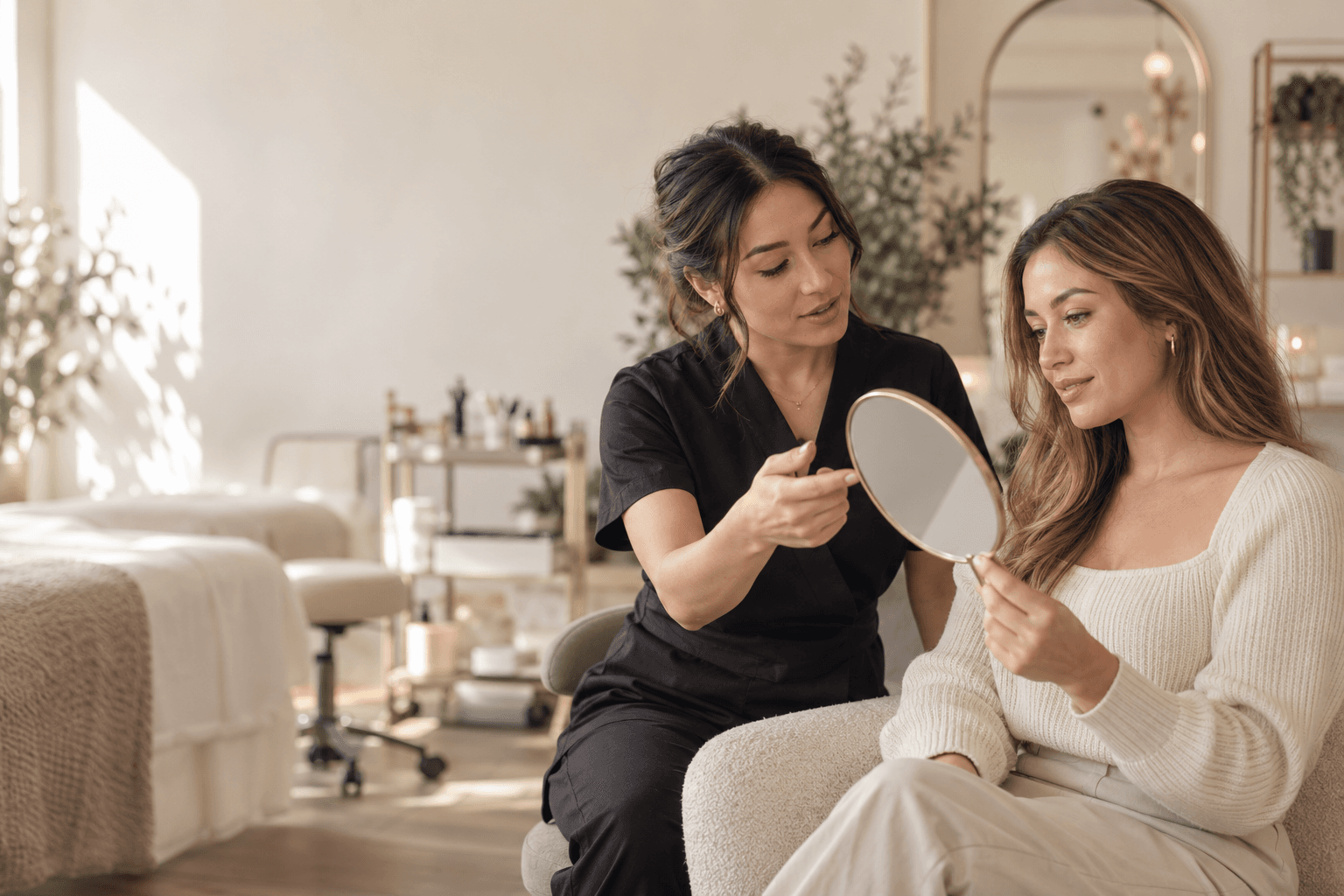
At a first lash appointment, ask for a consultation before any adhesive is opened. Bring two or three reference photos, explain what you like about each one, and ask the artist to recommend a curl, length, density and map that fit your natural lashes. A photograph is inspiration—not a promise that the same fibers will suit every eye.
What are eyelash extensions?
Eyelash extensions are individual fibers attached to natural lashes with cosmetic adhesive. They can add visible length, darkness or fullness without daily strip lashes. They do not change your eye anatomy, make natural lashes grow, or guarantee one exact look on every person.
Your result depends on more than a style label. Natural-lash length and density, eyelid space, eye shape, curl, fiber weight, placement and the number of extensions all affect the finished design.
The first mistake: asking for a category instead of an effect
“Classic,” “hybrid” and “volume” describe application approaches, but salons may use those words differently. Tell the artist what you want people to notice: softer definition, a darker lash line, a lifted outer corner, an open-eye effect or visible fullness. Also say what you do not want—heavy, spiky, very long, difficult to clean or touching the eyelid.
Ten questions to ask before the set begins
- What license do you hold? In California, applying eyelash extensions for compensation is within the scope of licensed cosmetologists and estheticians. A short lash certificate alone is not the state license.
- What can my natural lashes safely support? Ask the artist to assess length, thickness, density and any visible breakage before choosing fiber weight.
- What map fits the effect I want? A thoughtful answer should connect placement to your eye area and preferences—not simply copy a chart.
- Which curl, length and diameter are you proposing? You do not need to memorize the numbers. You do need an explanation of why the choices fit your lashes.
- How will this set feel? Properly placed extensions should not pull, pinch, poke or glue neighboring natural lashes together.
- What adhesive and eye-area products will you use? The FDA advises checking adhesive ingredients because eyelid skin is delicate and reactions can be especially troublesome.
- What is your plan for sensitive eyes, allergies or a past reaction? Disclose symptoms and prior reactions. A screening or spot test cannot guarantee that a later reaction will not happen.
- How do you clean and prepare the work area? Look for clean hands, a clean station, properly disinfected reusable tools and single-use items where appropriate.
- What maintenance will this design require? Ask how to clean the lash line, when fills are usually assessed, and what happens if you choose not to maintain the set.
- How should extensions be removed? The safe answer is professional assessment and removal—not pulling, picking or dissolving adhesive with household products.
What should you bring?
- Two or three realistic reference photos, including one that shows your preferred density.
- A list of known allergies and any previous eye-area or adhesive reaction.
- Your glasses, if you wear them, so the artist can consider lens clearance.
- A clean eye area without mascara, strip-lash glue or heavy eye cream.
- A short description of your routine: workouts, swimming, contact lenses, sleep position and how much upkeep you want.
When should the appointment pause?
Postpone if you have an active eye infection, inflamed eyelid skin, unexplained swelling, discharge, significant redness or a recent eye procedure without medical clearance. The FDA advises avoiding eye cosmetics while an eye infection or surrounding inflammation is present and waiting until the area has healed.
A careful artist should also pause when your request would require more weight or length than the natural lashes can reasonably support. Saying “not today” can be a sign of professional judgment.
Warning signs after application
Mild awareness of a new set is different from worsening pain, marked swelling, intense itching, discharge, persistent redness, light sensitivity or a change in vision. Do not try to treat a significant reaction or remove the set by pulling. Contact the provider, and seek prompt medical or eye care for concerning symptoms. Sudden vision change, severe pain or light sensitivity deserves urgent evaluation.
How to choose a provider around Santa Ana
For clients coming from Santa Ana, Tustin, Orange, Garden Grove, Costa Mesa, Irvine, Anaheim and nearby Orange County communities, verify the individual license through the California Board of Barbering and Cosmetology. Then ask about lash-specific experience, hygiene, consultation time, aftercare and professional removal. Location convenience matters; transparent answers matter more.
Related guidance
Learn when extensions can damage natural lashes, compare classic, hybrid and volume approaches, and use the curl, length and diameter guide to understand the artist’s recommendation.
Sources
- U.S. FDA — Eye Cosmetic Safety
- American Academy of Ophthalmology — Eyelash Extension Facts and Safety
- California Board of Barbering and Cosmetology — Eyelash and Eyebrow Services Bulletin
- California Board of Barbering and Cosmetology — Consumer and License FAQs
Evidence note: Reference photos and community questions identify what clients want to understand; they do not prove that one design or screening method prevents every adverse outcome.
Medical disclaimer: Educational information only; not medical advice, diagnosis or treatment. An eye-care professional should assess significant or persistent eye symptoms.