LASH LIBRARY · NATURAL-LASH HEALTH
Do eyelash extensions damage natural lashes?
They can—but one fallen lash is not the whole story.
Weight, repeated pulling, poor separation, picking and rough removal can raise risk. Normal shedding can also make an extension leave with its natural lash.
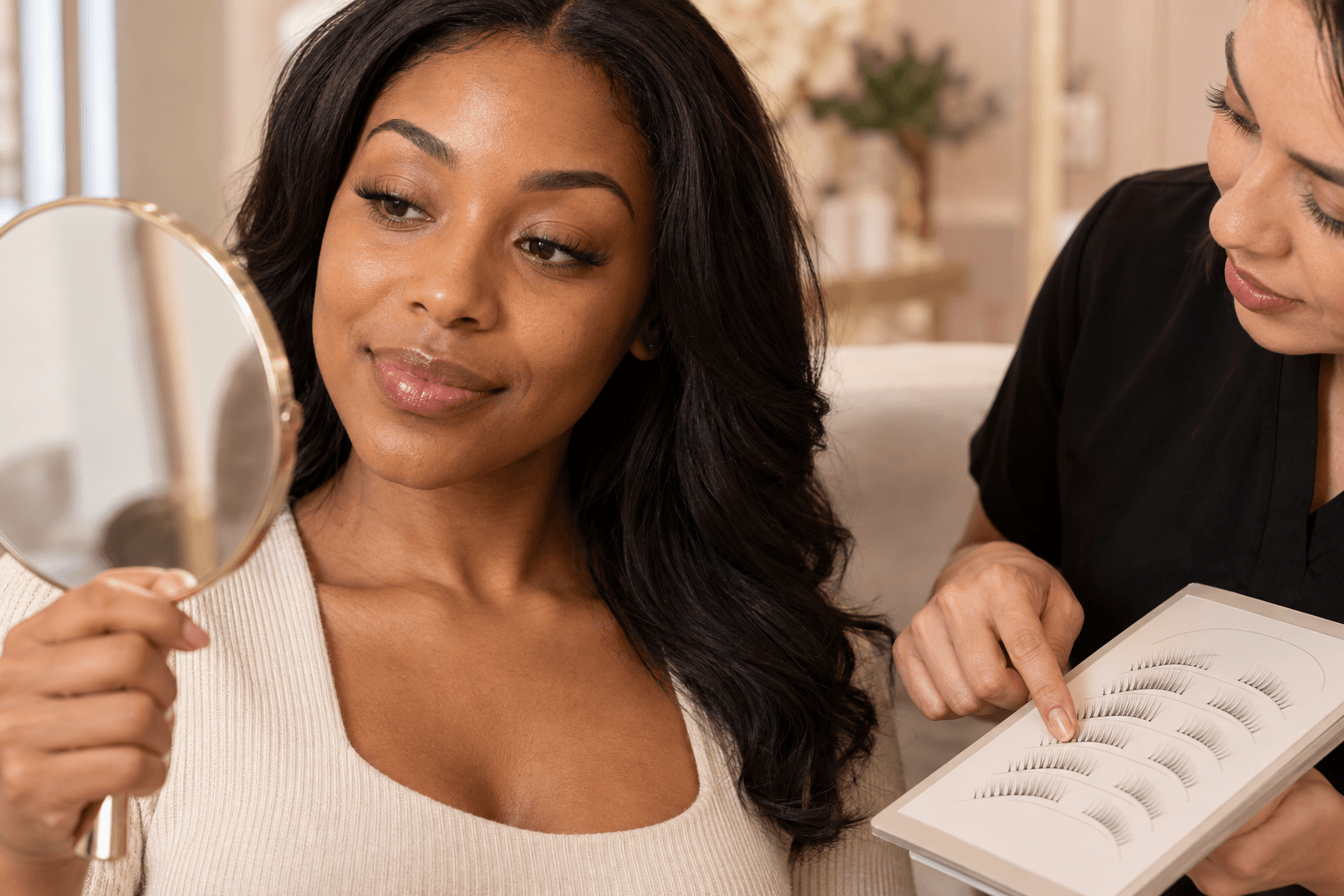
Eyelash extensions do not prove damage simply because a natural lash sheds with a fiber attached. Natural lashes cycle and fall. But extensions can contribute to breakage, traction-related loss, irritation or eye complications when the design is too demanding, lashes are pulled, removal is rough, or application and hygiene are poor.
What problem can extensions help with?
Extensions add temporary visible length, darkness, texture or fullness without daily strip-lash application. They are for adults who want a customized cosmetic effect and whose current lashes and eye area can tolerate the planned service. They do not treat sparse lashes, hair loss, dry eye or an eye condition.
Normal shedding versus a warning pattern
A fallen extension with one full-length natural lash may reflect the normal lash cycle. Concern rises when many lashes look snapped, short or thinned; several natural lashes remain glued together; the set feels persistently heavy or painful; or gaps worsen rather than cycling gradually. Our shedding-versus-breakage guide explains what to document.
How damage can happen
- Traction: repeated pulling force can contribute to traction alopecia. AAO’s EyeWiki lists traction-related lash loss among reported complications.
- Mechanical breakage: rubbing, tugging, curling, picking or pulling can fracture natural lashes.
- Rough removal: squeezing, peeling or using tweezers at home can pull out lashes and injure the eye area.
- Adhesive or product reaction: redness, itching, swelling and pain may reflect irritation or allergy—not a retention problem.
- Poor hygiene or application trauma: tools and products are used close to the eye, so sanitation and controlled technique matter.
Does a heavier set automatically cause damage?
There is no universal length or diameter that is safe for every person. A lash artist should evaluate natural-lash length, direction and apparent strength, then adjust extension length, curl and density. “Volume” is a construction category, not permission to overload weak lashes, and a dramatic reference photo should never outrank comfort or lash condition.
Five questions to ask before booking
- How will you adapt length and density to my natural lashes?
- How do you prevent neighboring natural lashes from being bonded together?
- Which adhesive and products will be used, and what reactions should postpone service?
- What is your professional removal process?
- What symptoms mean I should contact you or an eye-care professional?
When to pause extensions
Postpone when the eyelids are red, swollen, painful, crusted or actively irritated, or when you have a current eye infection or recent eye procedure without clearance. Unexplained lash loss can have causes unrelated to extensions and deserves medical evaluation rather than camouflage.
Seek prompt eye care for eye pain, vision change, marked swelling, light sensitivity, discharge, a foreign-body sensation that persists, or worsening redness. Do not self-treat a suspected allergic reaction or remove extensions by pulling.
What should you do next?
Choose a provider who is licensed for the service in California, works in a sanitary setting and is willing to recommend a lighter design—or no service—when the natural lashes or eye area are not ready. Santa Ana clients and nearby Orange County communities can review ENCLAVE’s documented lash extension options, compare classic, hybrid and volume construction, and request a consultation.
Sources
- American Academy of Ophthalmology — Eyelash Extension Facts and Safety
- AAO EyeWiki — Eyelash Extensions
- University of Miami Health — The Health Risks of Eyelash Extensions
Educational information only; not medical advice or a diagnosis. An optometrist or ophthalmologist should evaluate significant or persistent eye symptoms.