LASH DESIGN · CONSULTATION GUIDE
Curl, length and diameter:
what actually shapes a lash set?
A style photo is the starting point. The safer, more useful conversation is how several design choices work together on your natural lashes.
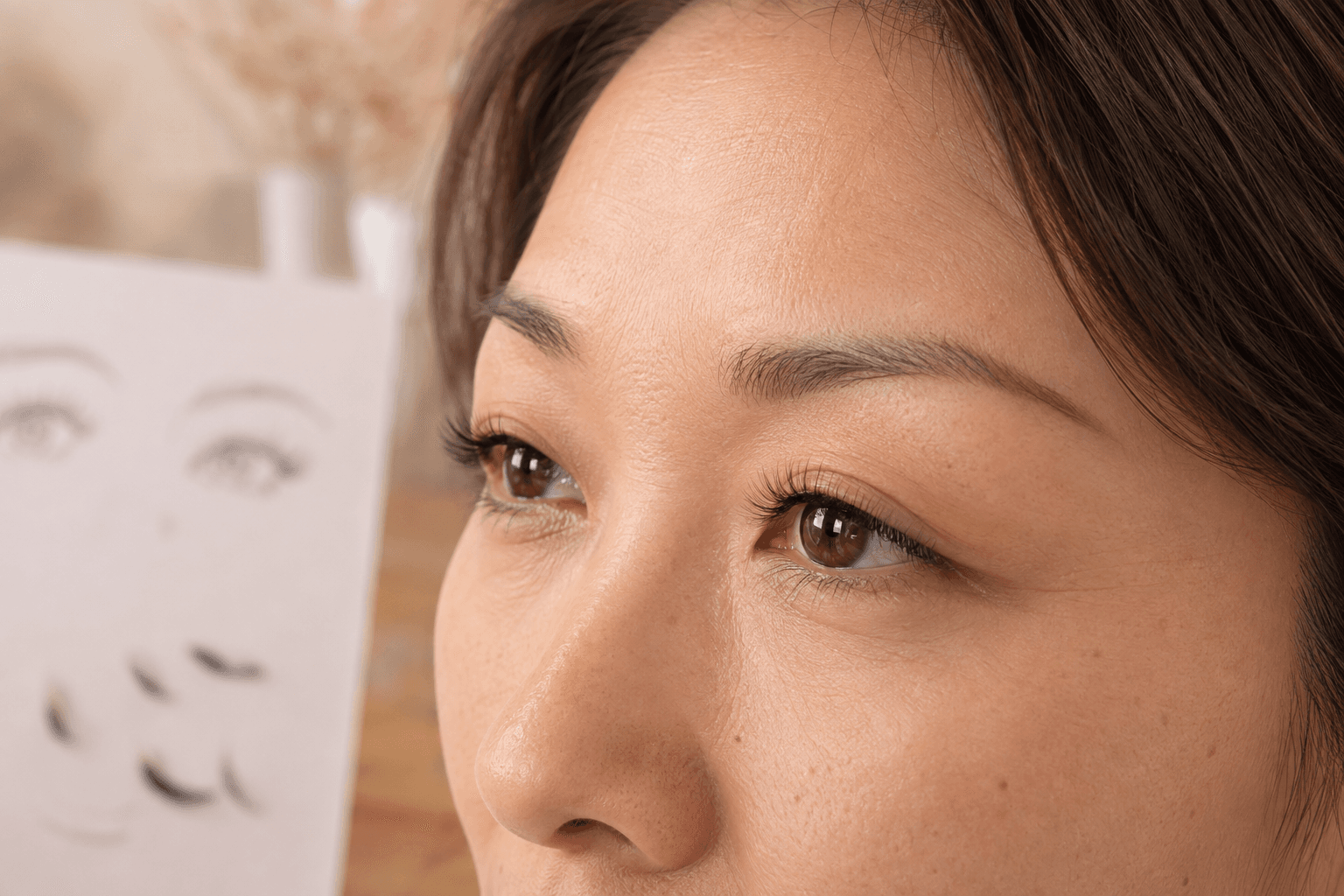
Short answer: curl describes the fiber’s curve, length describes how far it extends and diameter describes the thickness of an individual fiber. None of those labels alone predicts the final look, comfort, weight or retention. Natural-lash strength and direction, the number of fibers, fan construction, placement and the map all matter.
Curl is shape—not an eye-shape prescription
Letter names such as C, CC, D, L or M are professional shorthand used by brands and artists. They are not a universal promise: curves can differ across manufacturers, and the same curl can look different on downward-growing versus upward-growing natural lashes. Lid clearance, glasses and the effect seen with eyes open also matter.
Instead of asking for “the strongest curl,” describe the result: visible from the front, softly lifted, straighter at the base, or more relaxed. A curl that photographs dramatically may not be the most comfortable or harmonious choice for every lash line.
Length changes proportion and leverage
Millimeter labels describe fiber length, but a number copied from a social post does not transfer perfectly to another person. Eye size, natural-lash length, curl, placement and viewing angle change how long an extension appears. Longer is not automatically more flattering, and shortening a set does not turn volume construction into hybrid construction.
Length can also increase leverage on the natural lash. The relevant question is not “What is the longest available?” but “What range supports the requested effect while respecting the lashes carrying it?”
Diameter is only one part of total weight
Diameter refers to fiber thickness. Fine fibers may be combined in a fan; a classic application generally uses one extension on one isolated natural lash. That means one diameter number cannot describe the weight of an entire fan or set. Material, taper, length and fiber count change the load.
A consumer chart is helpful for vocabulary, but it cannot inspect natural-lash condition or calculate a suitable fan. Ask the artist to explain how the complete design—not merely the printed tray size—was selected.
Density and mapping create the visible style
Density describes how full the set appears; mapping describes where lengths, curls and texture are distributed. Two sets can use similar lengths yet look different because one has a centered peak and another gradually elongates the outer third. Review our cat-eye, kitten and doll mapping guide and classic, hybrid and volume comparison for those separate decisions.
A useful consultation has more than one reference photo
- Bring two or three photos and name what you like in each: softness, texture, lift, darkness or outer-corner emphasis.
- Show the look with eyes open, not only a closed-eye application photo.
- Discuss glasses, contact lenses, makeup habits and maintenance.
- Ask how the artist will adjust if natural lashes vary in strength across the lash line.
- Agree on what should be changed at the next appointment rather than chasing an exact copy.
Comfort and eye health outrank a chart
California places eyelash-extension application within licensed cosmetology and esthetics scope. The state also advises consumers to verify a professional’s license and describes extensions as being placed close to the root without touching skin. Ask about isolation, hygiene, adhesive, tape or pad placement and professional removal.
Published ophthalmic literature has reported problems including irritation, allergic eyelid inflammation, ocular-surface injury and natural-lash loss. A style chart cannot screen an eye condition. Postpone service for active redness, discharge, swelling, pain or infection; seek prompt eye care for significant pain, light sensitivity, vision change, chemical exposure or rapidly worsening symptoms.
Frequently asked questions
Does a curl letter guarantee the same look?
No. Brand, natural-lash direction, lid anatomy, placement and mapping change the result.
Are longer extensions always heavier?
Length affects leverage, but diameter, material, fan construction and fiber count also contribute. The full design needs assessment.
Can I choose diameter from an online chart?
Use charts to understand terms, not to prescribe your set. Your artist should inspect the natural lashes and explain the complete load and design.
Sources and editorial note
- California Board of Barbering and Cosmetology: Eyelash Extension Safety Tips — Fall 2022; checked September 3, 2026
- California Board of Barbering and Cosmetology: eyelash and eyebrow services scope — checked September 3, 2026
- Amano et al.: Ocular disorders due to eyelash extensions — 2012; checked September 3, 2026
- U.S. FDA: Eye Cosmetic Safety — checked September 3, 2026
Editorial note: Current 2026 product guides and community questions established demand for curl, length and diameter language. They were not used to prescribe universal numbers or claim guaranteed retention.
Medical disclaimer: Educational only, not medical advice, diagnosis or treatment for an eye or lash condition.