LASHES · QUESTIONS PEOPLE ASK
Lash extensions while pregnant?
What we know, and what nobody has studied.
The baby shower is booked for December. The maternity photos are in three weeks. You are tired in a way no concealer fixes, and a set of soft lashes sounds like the one easy win left. Then someone in the group chat says, “Wait, isn't the glue toxic?” Here is the honest version: what the 2026 lash-glue tests found, what pregnancy does to your eyes, why the table matters as much as the glue, and how to decide calmly.

Short answer: no study has tested eyelash extension glue in pregnancy, so anyone who promises it is “100% safe” or “dangerous for the baby” is guessing. What the evidence does support is narrower and more useful. The glue goes on the lashes, not the skin. Official pregnancy guidance on similar salon chemicals, such as hair dye, says the amount your body absorbs is small. And the real, controllable risks are the fumes in the room, eyes that are often drier and more sensitive in pregnancy, and lying flat on your back for up to two hours after about 20 weeks. If your pregnancy is high-risk, your eyes are irritated, or you have reacted to lash glue before, talk to your OB first and wait.
The honest headline: this is a research gap, not a verdict
We looked for pregnancy studies on lash extensions, lash lifts and brow lamination. We did not find one. The official pregnancy pages that do exist talk about neighboring services instead. Pregnancy, Birth and Baby, the Australian government-funded service run by Healthdirect (last reviewed October 2025), covers hair dye, waxing, spray tans, nails, Botox, fillers and tattoos. It lists hair dye and nail treatments as “generally considered safe” and says it's generally recommended to avoid getting a tattoo while pregnant or breastfeeding. Lash extensions are not on the list.
The closest cousin with real guidance is hair dye. The NHS says “most research shows that it's safe to dye or colour your hair while pregnant,” because your scalp doesn't absorb much of it. MotherToBaby, the U.S. teratology information service (fact sheet dated June 1, 2026), says the amount absorbed through healthy skin is small, and that highlights, which keep dye off the skin, reduce contact further. Its advice for salons is simple: a well-ventilated room.
Lash glue is a different chemical than hair dye, so this is an analogy, not proof. But it points to the same three levers: keep chemicals off the skin, keep the air moving, and keep the appointment short enough to be comfortable.
The glue: what the 2026 tests actually found
This year gave us two of the most detailed looks yet at what is inside lash adhesives. Neither one studied pregnancy, but both explain why the glue question keeps coming up.
Denmark, June 2026. The Danish Environmental Protection Agency published a survey and risk assessment of 32 transparent beauty adhesives bought in 2025: 13 for nails, 13 for lashes, 5 for skin and one for both lashes and skin. Thirteen of the 32 released more than 10 ppm of formaldehyde, and one of those listed formaldehyde on its label. The risk assessment found no risk of sensitisation from formaldehyde or the three acrylates it measured, except for two nail adhesives with very high formaldehyde release. It also noted that some adhesives with a lot of cyanoacrylate may irritate the airways in a room without local exhaust ventilation. Its exposure scenarios modeled private users applying adhesive themselves, not salon clients, and it recommended treating these adhesives as cosmetics, limiting some to professional use, or adding clearer allergy warnings.
Shanghai, August 2026. Hong Kong's The Standard reported on August 9, 2026, that the Shanghai Consumer Council tested 28 popular eyelash glues and found hydroquinone in 24, formaldehyde in 20, methyl methacrylate in 22 and toluene in 9, with some substances above limits “by thousands of times.” Investigators called some “formaldehyde-free” claims marketing gimmicks and advised buying products with a cosmetic registration number. We could read the news report, not the Council's full report, so we cite only what the article states.
The American Academy of Ophthalmology has long said some lash glues have contained formaldehyde, and it lists an allergic reaction to the glue among the known risks of extensions. In the U.S., the FDA treats eyelash adhesives as cosmetics.
What this means for you: the product your artist uses matters more than the word “pregnant.” A glue with a full ingredient list, a known manufacturer and a printed expiry date, used in a ventilated room by someone who keeps it off your skin, is the version of this appointment you want, pregnant or not.
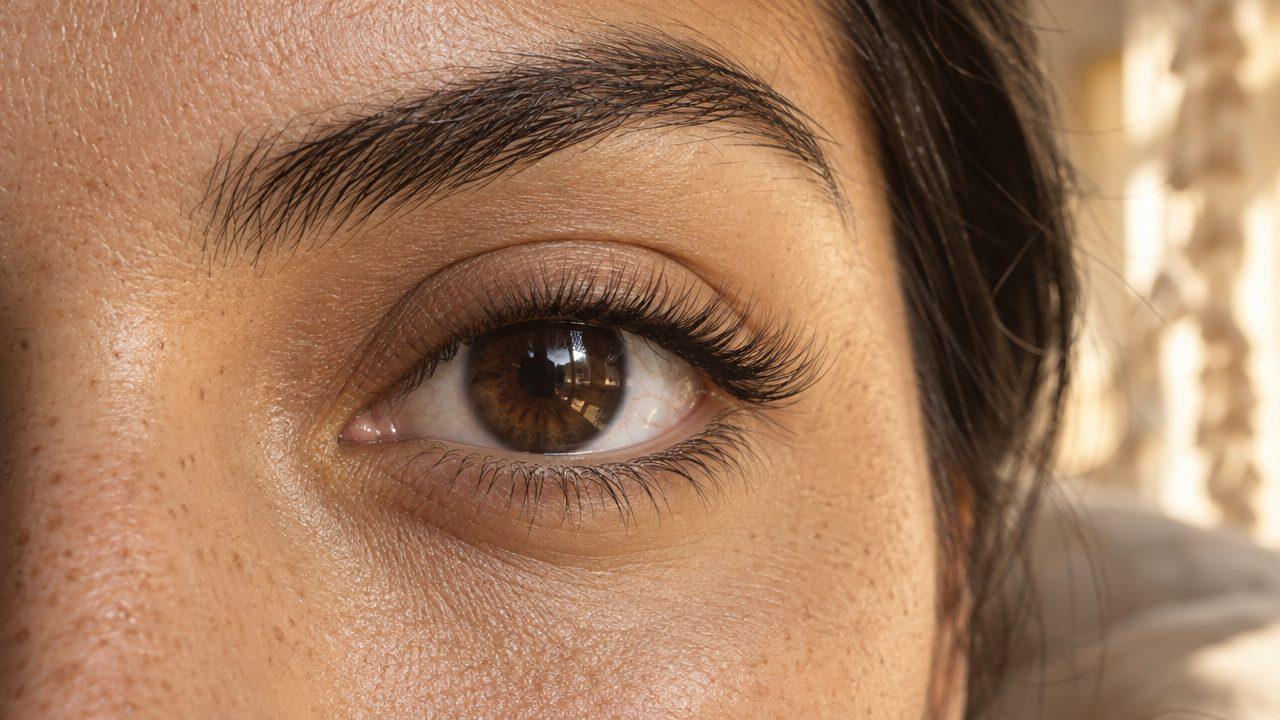
Your eyes are not the same eyes this year
This part rarely makes it into lash blogs, and it matters. In an April 7, 2025 article from the University of Colorado's Department of Ophthalmology, optometrist Brittany Wright explains that changing estrogen, progesterone and testosterone can cause dry eye and changes in tear production during pregnancy. The cornea can hold a little extra fluid and swell slightly, which can shift your prescription, and contact lenses may suddenly feel uncomfortable. These changes are usually temporary, and dry eye can linger while breastfeeding.
Why that matters for lashes:
- Dry, sensitive eyes are more likely to sting or water during a long appointment with your eyes closed near curing glue.
- Itchy eyes get rubbed, and rubbing is how extensions twist, pull and come out early.
- Eye drops are not automatic. The same article says over-the-counter drops may help, but pregnant patients should check with their obstetrician first.
- Contacts out. If your lenses already feel wrong this trimester, wear glasses to the appointment.
One line we want every pregnant reader to remember: the same article notes that preeclampsia can affect the retina and optic nerve. New blurred vision, spots or flashing lights in pregnancy are a call to your OB today, not something to fix with a lash appointment or eye drops.
The part nobody talks about: the table
A full set of extensions can take up to two hours, according to the American Academy of Ophthalmology. For most of that time you are lying still on your back. In early pregnancy that is usually fine. Later, it is the part we would plan around most carefully.
Cleveland Clinic explains that by around 20 weeks, a larger uterus can press on the aorta and the inferior vena cava when you lie flat. Its ob-gyn says short periods of an hour or two probably do no harm, but a safe amount of time can't be precisely measured, and even a 20- to 30-degree incline relieves the pressure. If you feel light-headed, uncomfortable, short of breath or notice a racing heartbeat, roll onto your side.
So, practically:
- Ask for an incline or a wedge pillow, plus a small pillow under one hip.
- Choose a lighter, faster set. A classic set usually takes less time than a dense volume set. Ask your artist for their realistic time estimate before you book.
- Plan breaks. A bathroom break and a stretch halfway through is normal, not a problem.
- Say something early. Dizzy, hot or short of breath? Tell your artist and sit up or roll to your side. The lashes can wait.

Lash lifts, tints and brow lamination while pregnant
These are chemical services, and the research gap is the same. A lash lift and brow lamination use perming and setting lotions (thioglycolate chemistry, the same family MotherToBaby describes for hair perms, which use ammonium thioglycolate). MotherToBaby's fact sheet covers hair, not lashes or brows, and gives no pregnancy-specific guidance for these services.
Three rules still apply, pregnant or not:
- Patch test first. California's Board of Barbering and Cosmetology tells licensees to patch test 48 to 72 hours before lash or brow perming, and never to use hair perm solution on lashes or brows.
- Tint matters. The FDA permits only silver nitrate for lash and brow color, in professional-use products; California's board says only silver-nitrate-based lash and brow tints are compliant. Ask what is in the tint.
- A reaction history changes the answer. If you have reacted to hair dye, black henna or lash glue, read our guide to lash lift and tint reactions and see a dermatologist before any lash chemical service.
Our candid take: if a lift or lamination is not important to you right now, the second trimester to after delivery is a perfectly reasonable pause. If it is important, do it with a patch test, good ventilation and a licensed professional, not with a kit in your bathroom (here's why we feel strongly about DIY lift kits).
After the baby: breastfeeding and the 3 a.m. eye rub
For breastfeeding, the official guidance again covers neighbors, not lashes. MotherSafe at Sydney's Royal Hospital for Women says it is safe to have hair, nail or tanning treatments while breastfeeding, and MotherToBaby says that hair dye used as directed on healthy skin is unlikely to reach breast milk in large amounts. Lash glue goes on the lashes and cures quickly, but no study has measured it in milk.
The bigger postpartum issue is practical. Dry eye can linger while breastfeeding, sleep is short, and tired eyes get rubbed. If you know you will be rubbing your eyes at every night feed, a light classic set or a lift may suit this season better than a dense volume set.
The seven mistakes we see before a pregnancy lash appointment
- Believing either headline. “Totally safe” and “toxic for the baby” are both claims no study supports.
- Not mentioning the pregnancy. Your artist can't plan positioning, timing or breaks for something they don't know about.
- Booking the biggest set right before the due date. The longest appointment, at the hardest stage to lie flat, is the wrong combination.
- Ignoring dry or itchy eyes. Pregnancy dry eye is common. Booking on top of it invites stinging, rubbing and early fallout.
- Skipping the ingredient question. “Sensitive” and “formaldehyde-free” are marketing words. Ask for the product name and the ingredient list.
- Choosing a studio with stale air. Fumes are the one exposure you can feel. A ventilated room, glue kept away from your nose and closed bottles matter.
- Trying DIY clusters or a lift kit at home. No licensed professional, no patch test, glue close to the eye: it is the riskiest version of the service.
Who should wait, and when to talk to a doctor first
- Talk to your OB first if your pregnancy is high-risk, you have had preeclampsia or blood pressure concerns, or you feel faint lying back.
- Wait if your eyes are currently red, sore, crusty or infected, or you have a stye. See your eye doctor first.
- Wait and see a dermatologist if you have ever reacted to lash glue, lash tint, hair dye or black henna.
- Call your OB the same day for sudden vision changes, severe headache or swelling in pregnancy.
- See a doctor promptly if your eyes swell, hurt or your vision changes after any lash service. The AAO advises seeing an ophthalmologist right away for an allergic reaction and not removing the lashes yourself. Our guide to irritation, allergy and infection explains the difference.
Questions to ask before you book
| Ask this | Why it matters |
|---|---|
| Which adhesive do you use, and can I see the ingredient list and expiry date? | The 2026 tests showed real differences between products. The AAO recommends checking ingredients and expiry. |
| How is the room ventilated? | The Danish report flagged airway irritation from some cyanoacrylate adhesives without local exhaust ventilation. |
| How long will my set take, realistically? | Time on your back is the main pregnancy-specific factor after about 20 weeks. |
| Can I recline instead of lying flat, and take a break? | Cleveland Clinic says a 20- to 30-degree incline relieves pressure on the vena cava. |
| Can I do a patch test first? | The AAO suggests a spot test for glue; California requires patch testing 48 to 72 hours before lash or brow perming. |
| Are you licensed for lash services in California? | California limits lash extensions to licensed cosmetologists and estheticians. Here's how to check a license in two minutes. |
| How will we remove them if my eyes get irritated? | Removal should be done by a professional, not by pulling at home. See how to remove extensions safely. |
Do / Don't
| Do | Don't |
|---|---|
| Tell your artist you're pregnant and how far along you are. | Keep it to yourself and hope the table is comfortable. |
| Choose a lighter classic set if you want a shorter appointment. | Book a dense volume set for the week before your due date. |
| Wear glasses if your contacts feel uncomfortable this trimester. | Sit through a two-hour appointment with stinging lenses. |
| Ask about glue ingredients, expiry and ventilation. | Trust “sensitive” or “formaldehyde-free” on a label alone. |
| Ask your OB before using eye drops in pregnancy. | Ignore sudden vision changes; call your OB. |
| Patch test before a lift, tint or lamination. | Use a DIY lift kit or hair perm solution on lashes or brows. |
What a calm appointment looks like
You walk in wearing glasses because your contacts have felt scratchy since the second trimester, and you say so. Your artist asks how far along you are, props the bed up so you are not lying flat, tucks a pillow under your hip and tells you how long the set will take. The window is cracked and the air moves. Halfway through, you take a bathroom break without apologizing. You leave with a soft classic set that looks like your lashes on a well-rested day.
Two weeks later, at the baby shower, someone asks if you slept. You did not. Your lashes did the work. If the Santa Ana winds are blowing that week and your eyes feel dry, you know to keep your hands off them and call if anything feels wrong.
If you're coming from Garden Grove, Westminster or Irvine and want to talk it through first, book the free consultation or call or text (310) 666-8298. At Enclave Beauty in Santa Ana, Classic Lash Extension Sets start from $95, Wispy or Wet-Look sets from $125 and Volume sets from $145; Lash Lift & Tint and Brow Lamination & Tint each start from $80. See lash extensions in Santa Ana, and if your skin is changing too, read our guide to facials during pregnancy.
Questions people ask
Is it safe to get lash extensions while pregnant?
There is no study that has tested eyelash extension glue in pregnant people, so no one can honestly say it is proven safe or proven harmful. What we do know: the glue is applied to the lashes, not the skin, and official pregnancy guidance on similar salon chemicals such as hair dye says the amount absorbed is small. The practical risks are the ones you can control: glue fumes in a poorly ventilated room, eyes that are drier or more sensitive in pregnancy, and lying flat on your back for a long appointment later in pregnancy. If your pregnancy is high-risk or your eyes are irritated, ask your OB first and wait.
Does lash glue contain formaldehyde?
Some can release it. The American Academy of Ophthalmology says some lash glues have contained formaldehyde in the past. In a June 2026 Danish Environmental Protection Agency survey of 32 beauty adhesives (13 of them for lashes), 13 of the 32 released more than 10 ppm of formaldehyde. In August 2026, Hong Kong's The Standard reported that a Shanghai Consumer Council test found formaldehyde in 20 of 28 eyelash glues. Neither study looked at pregnancy, and the Danish risk assessment did not find a sensitisation risk from formaldehyde except in two nail adhesives.
Can I get a lash lift or brow lamination while pregnant?
There is no pregnancy research on lash lifts or brow lamination either. Both use perming lotions (thioglycolate chemistry). MotherToBaby, which covers hair perms, does not give a specific number for lash or brow perms. California's beauty board tells licensees to patch test 48 to 72 hours before lash or brow perming, which matters more in pregnancy because skin can react differently. Many people simply pause chemical lash and brow services until after the baby; if you go ahead, choose a licensed professional, a patch test and a well-ventilated room.
Can I lie on my back for a lash appointment while pregnant?
Early in pregnancy, usually yes. Cleveland Clinic explains that by about 20 weeks a larger uterus can press on major blood vessels when you lie flat, and that short periods of an hour or two probably do no harm, but a 20- to 30-degree incline relieves the pressure. If you feel light-headed, short of breath or your heart races, roll onto your side and tell your artist. Ask for an incline, a pillow under one hip and breaks.
Why do my eyes feel different during pregnancy?
According to the University of Colorado's Department of Ophthalmology (April 7, 2025), hormone changes can cause dry eye and changes in tear production, temporary swelling of the cornea and contact lens discomfort. These changes are usually temporary. Dry, sensitive eyes can make a long lash appointment less comfortable and may make you rub your lashes, so mention it before you book. Sudden vision changes in pregnancy are a reason to call your OB right away, not to book a beauty service.
Does Enclave Beauty do lash extensions for pregnant clients in Santa Ana?
Enclave Beauty in Santa Ana offers Classic Lash Extension Sets from $95, Wispy or Wet-Look sets from $125, Volume sets from $145, Lash Lift & Tint from $80 and Brow Lamination & Tint from $80, plus a free consultation. If you are pregnant, start with the consultation so you can talk through how your eyes feel, your due date and positioning before choosing a service, and check with your OB if your pregnancy is high-risk.
Sources and evidence note
- Danish Environmental Protection Agency — Survey and risk assessment of beauty product adhesives (Mapping of chemical substances in consumer products No. 204, June 2026; 32 adhesives incl. 13 lash; 13 of 32 released >10 ppm formaldehyde; no sensitisation risk found for formaldehyde or three acrylates except two nail adhesives; possible airway irritation from some high-cyanoacrylate adhesives without local exhaust ventilation; read November 21, 2026)
- The Standard (Hong Kong) — Shanghai Consumer Council finds toxic chemicals in 80pc of eyelash glue samples (August 9, 2026; 28 glues; hydroquinone 24, formaldehyde 20, methyl methacrylate 22, toluene 9; read November 21, 2026)
- American Academy of Ophthalmology — Eyelash extension facts and safety (up to two hours; risks incl. glue allergy and infection; some glues have contained formaldehyde; ask for ingredients, check expiry, spot test; see an ophthalmologist for a reaction; read November 21, 2026)
- U.S. FDA — Eye Cosmetic Safety (adhesives are cosmetics; silver nitrate is the only permitted lash and brow color additive, professional use; verified November 17, 2026 for an earlier Enclave guide)
- University of Colorado Anschutz, Department of Ophthalmology — How Pregnancy Changes Vision and Eye Health (April 7, 2025; dry eye, corneal swelling, contact lens discomfort, check with obstetrician before drops, preeclampsia eye effects; read November 21, 2026)
- Cleveland Clinic — Is It Really All That Bad To Sleep on Your Back While Pregnant? (September 23, 2024; about 20 weeks; an hour or two probably no harm; 20–30 degree incline; warning signs; read November 21, 2026)
- Pregnancy, Birth and Baby (Healthdirect Australia) — Cosmetic procedures and beauty treatments during pregnancy and breastfeeding (last reviewed October 2025; does not cover lash services; read November 21, 2026)
- NHS — Using hair dye in pregnancy: is it safe? (scalp absorbs little; well-ventilated room; patch test; read November 21, 2026)
- MotherToBaby — Hair Treatments (June 1, 2026; small absorption through healthy skin; ventilation; perms use ammonium thioglycolate; breastfeeding; read November 21, 2026)
- MotherSafe, Royal Hospital for Women (NSW) — Skin Care, Hair Care and Cosmetic Treatments in Pregnancy and Breastfeeding (updated April 2021; hair, nail and tanning treatments while breastfeeding; read November 21, 2026)
- California Board of Barbering and Cosmetology — Industry Bulletin: Lash and Brow Perming (patch test 48–72 hours; no hair perm solution on lashes or brows; verified November 9, 2026 for an earlier Enclave guide)
- California Board of Barbering and Cosmetology — Industry Bulletin: Eyelash and Eyebrow Tinting (July 2022; only silver-nitrate-based products compliant; verified November 17, 2026)
- California Board of Barbering and Cosmetology — Industry Bulletin: Eyelash and Eyebrow Services (July 2022; lash extensions by licensed cosmetologists and estheticians; verified November 17, 2026)
- Enclave Beauty — Services (Classic $95, Wispy or Wet-Look $125, Volume $145, Lash Lift & Tint $80, Brow Lamination & Tint $80, free consultation; starting prices checked November 21, 2026; prices may change)
Evidence note: Photos in this guide are styled illustrations; they do not show Enclave clients or treatment results. We found no study of eyelash extensions, lash lifts, lash tints or brow lamination in pregnancy or breastfeeding, so this guide uses official guidance on related services (hair dye, perms) as an analogy and says so. Neither 2026 adhesive test studied pregnancy. The Danish report is long and was read in part; we report only its scope, formaldehyde screening and stated conclusions. For the Shanghai test we read a news report, not the Council's own publication. The AAO page shows no date. No archive, cache or mirror copies were used.
Medical disclaimer: This article is educational and is not medical advice, diagnosis or treatment. Enclave Beauty services do not replace care from your obstetrician, eye doctor or another licensed medical professional. This article is for general information and isn't medical advice.
Republishing: please credit Enclave Beauty (enclavebeauty.com).