LASHES · NEWS + HOW TO
Swollen eyes after a lash lift and tint?
Meet the three usual suspects.
The lift looked perfect in the mirror. Curled, dark, wide awake. The next morning your eyelids are puffy and itchy, and by lunch they feel tight and hot. Was it the tint? The lotion? The glue? You had this exact service last spring and nothing happened. Here is what published cases, the FDA and California's beauty board say about lash lift and tint reactions, what to do in the first hour, when to see a doctor, and how to make your next appointment the calm one.

Short answer: swelling, itching, redness or a rash on the eyelids after a lash lift and tint is most often contact dermatitis, either irritation or a true allergy, and a lift and tint can expose you to three different chemical groups in one sitting: the tint (some contain para-phenylenediamine, or PPD), the perming and setting lotions (thioglycolates) and the adhesive that holds lashes on the shield ((meth)acrylates). Rinse gently with cool water, stop all eye makeup, don't rub, and see a doctor the same day for significant swelling, eye pain, blisters, discharge or vision changes. Call 911 for trouble breathing or a swelling tongue or throat. Before your next lift, a dermatologist's patch test can tell you which suspect it was, and in California, the only lash and brow tints the state board calls FDA-compliant are silver-nitrate based.
The news: one appointment, three allergens
In 2026, dermatologists Alys Hamilton Hunter and Livia Francine Soriano presented a case in a British Journal of Dermatology conference supplement with a title that says it all: “The eyes have it.” A 20-year-old woman with a history of atopy developed marked redness and swelling around both eyes within 24 hours of an eyelash lift and tint. It settled within a week. Her earlier lash lifts had caused no reaction. She had, however, once reacted to a black henna tattoo.
Patch testing found three separate allergies. She reacted strongly to PPD, which the authors linked to the eyelash tint; mildly to glyceryl monothioglycolate, which they linked to the lash-lift solution; and to several (meth)acrylates, which they linked to the adhesive, fixing and laminating products. Once she avoided those allergens strictly, the reaction did not come back.
It is one case, published as a conference abstract rather than a full paper, so it tells us what can happen, not how often. But it is a near-perfect map of the service: every major step of a lash lift and tint has its own possible allergen. When your eyelids swell, the question is not “what went wrong?” but “which of the three was it?”
Suspect one: the tint
Lash tint is where the regulators are most pointed. The FDA's eye cosmetic safety page says plainly that “permanent eyelash and eyebrow tints and dyes have been known to cause serious eye injuries, including blindness,” and its safety checklist tells consumers to avoid color additives not approved for the eye area, naming “permanent” eyelash tints.
The rules are strict. FDA's hair dye page (updated September 2025) says coal-tar hair dyes are not eyebrow or eyelash dyes, and federal law requires their labels to carry this warning: “This product must not be used for dyeing the eyelashes or eyebrows; to do so may cause blindness.” The one color additive FDA lists for lash and brow coloring is silver nitrate (21 CFR 73.2550), and only on narrow terms: no more than 4% by weight in a gel, professional use only and not sold to consumers, not for anyone under 16, and applied for no longer than one minute. FDA also has an import alert for eyelash and eyebrow dyes containing coal-tar colors.
California's Board of Barbering and Cosmetology spelled out what that means for salons in its July 2022 industry bulletin: “Only silver-nitrate based products for eyelash and brow services are compliant with the FDA requirements at this time.” The board adds that it does not approve products or manufacturers, so licensees are expected to confirm compliance with the manufacturer.
Why does PPD keep coming up? It is one of the best-known hair-dye allergens. DermNet, the dermatology reference, describes a mild PPD reaction as “an itchy dry rash on the upper eyelids,” and a severe one as marked reddening, blistering and swelling of the eyelids, face and neck. The published lash cases match that picture:
- Ali, Foulds and Abdul Ghaffar, Contact Dermatitis, 2017: two case reports of severe eyelid allergic contact dermatitis caused by eyelash tint, indexed under PPD.
- Awan, Lockington and Ramaesh, Eye, 2010: severe allergic blepharoconjunctivitis (inflamed lids and eye surface) after eyelash coloring with a chloro-PPD dye. The authors called the reaction very rare, noted only one earlier published case, and said underreporting may be part of the reason.
- Akdur, Bardakci and Das, Acta Marisiensis – Seria Medica, December 2024: a 21-year-old woman went to an emergency department with swelling and redness around both eyes that began three days after a “permanent” eyelash dye containing PPD at a beauty center. She needed IV and then oral steroids plus an antihistamine; the lesions faded after about two weeks.
Notice the timing in that last case: three days. Allergic contact dermatitis is a delayed reaction, which is why so many people leave the salon happy and wake up swollen.
Suspect two: the perming lotion
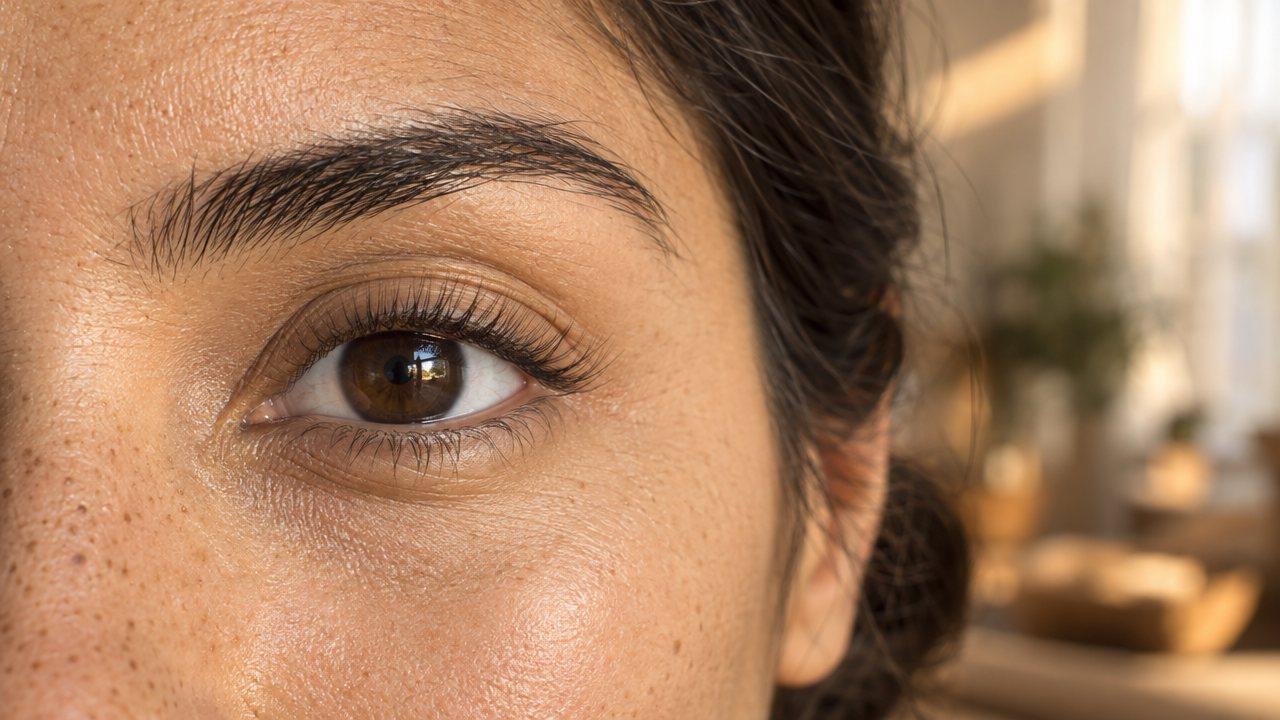
A lash lift is a perm for your lashes. The first lotion breaks bonds in the hair so it can be reshaped over a silicone shield; the second sets the new curl. Thioglycolates, the same family used in hair perms, are common in that first step. DermNet notes that glyceryl monothioglycolate is used in acid perming solutions and that hairdressers can become allergic on their hands, while clients who are sensitive may react where the product touches skin. It is found less commonly in clients than in hairdressers, but the eyelid is a far more delicate place to find out.
Perming lotions are also irritants, which is a different problem from allergy. Too much product, too long on the lash, or lotion creeping onto the lid or into the eye can cause stinging, redness and, in the worst cases, eye-surface injury. We walked through one published at-home case in our DIY lash lift kit guide.
Suspect three: the glue
Most lifts use an adhesive to hold the natural lashes against the shield while the lotions work. In the 2026 case, patch tests were positive to several (meth)acrylates, the chemical family behind many adhesives and nail products, and the authors linked them to the adhesive, fixing and laminating products. The FDA classes false eyelashes, extensions and their adhesives as cosmetics, which means they must meet the same safety and labeling rules as other cosmetics. If you have reacted to lash-extension glue or acrylic or gel nails before, say so before a lift.
Allergy or irritation? How to read your eyelids
DermNet's page on eyelid contact dermatitis explains the underlying problem: “The thin skin of the eyelids is particularly sensitive to irritants and allergens.” Both irritation and allergy can look red and puffy. A few rough patterns, which are clues rather than a diagnosis:
- Burning or stinging in the chair or within minutes, often where product touched, tends to point to irritation, or product getting where it should not.
- Itching and swelling that build over hours to days, often on both upper lids and sometimes spreading, fits a delayed allergic reaction.
- A reaction after a service you tolerated before is typical of allergy: you can become sensitized over repeated exposures.
- Pain inside the eye, light sensitivity, blurred vision or discharge is about the eye itself, not just the skin. That needs a doctor quickly.
Only patch testing tells you which chemical is responsible. DermNet describes the standard method: small amounts of allergens are taped to the back for 48 hours and read again at about 96 hours, because reactions usually take 48 to 96 hours to develop. That is a dermatologist's or allergist's job, not a salon's.
What to do in the first hour
- Rinse gently. Cool, clean water over closed lids and lashes. No scrubbing.
- If anything got into the eye itself, flush. Prevent Blindness advises flushing a chemical exposure with water for at least 15 minutes, flushing even over contact lenses, not bandaging the eye, getting emergency care and bringing the product label.
- Take out contact lenses once the eye has been flushed, and leave them out until your eyes are calm.
- Stop everything else. No mascara, eyeliner, lash serum or new creams on the lids. DermNet's advice for active eyelid dermatitis is to avoid eyelid cosmetics while it lasts.
- Get the product names. Text the studio and ask for the tint, lotions and adhesive used. Your doctor will want them.
- Take photos morning and evening. Swelling changes fast and pictures help a clinician.
- Don't self-treat with leftover steroid creams. DermNet notes that short courses of mild topical steroids or other prescription creams may be needed for eyelid dermatitis, and severe cases may need oral steroids. Around the eyes, that decision belongs to a doctor.
When to see a doctor (and when to call 911)
- Call 911 for trouble breathing, wheezing, or swelling of the lips, tongue or throat. DermNet notes that PPD has been suspected in rare systemic reactions, including anaphylaxis.
- Same day, urgent care or an eye doctor: eye pain, light sensitivity, blurred vision, discharge, blisters, or swelling that keeps your eyes from opening normally.
- Within a few days, your doctor or a dermatologist: itching and puffiness that are not settling, or any reaction you want explained before your next service.
- Before any future lift or tint: a dermatologist for patch testing if you have had a significant reaction. DermNet advises that allergens found on patch testing should be avoided for life.
The seven mistakes that set up a bad reaction
1. Not mentioning the black henna tattoo from that beach vacation
“Black henna” temporary tattoos often contain PPD. DermNet says high concentrations can cause intense blistering reactions within one to two days, and that afterward “lifelong sensitisation to PPD is likely.” The 2026 patient had reacted to one. If you have, that is the single most important thing to tell your lash artist.
2. Assuming “I've done this before” means “I'm safe”
Allergy is built by exposure. A reaction after your fifth lift is entirely consistent with how contact allergy works.
3. Forgetting hair-dye history
An itchy scalp, ears or eyelids after coloring your hair can be a PPD clue. Mention it, even if it was years ago.
4. Booking a box-dye tint at home
Federal law makes coal-tar hair dye labels warn against use on lashes and brows because it may cause blindness. A hair dye is not a lash tint, and silver-nitrate lash tints are professional-use products that are not sold to consumers.
5. Treating a patch test as a guarantee
A small skin test before a service can help, and FDA tells hair-dye users to do one before every use. But FDA also says passing a skin test does not rule out a reaction, and DermNet warns that a negative home test “does not guarantee freedom from reaction,” and that testing itself can rarely sensitize. A history-based conversation matters as much as the dab of product.
6. Booking chemistry right before a big day
Since reactions can take up to a few days to show, a first-ever lift the day before a wedding, a holiday dinner or photos leaves no room to recover. Give yourself at least a week, especially for a first appointment.
7. Going back for a “fix” while the lids are still reactive
Another round of lotion or tint on inflamed skin is more exposure to the same suspects. Wait until a clinician has seen you and your skin has fully settled.
Six questions to ask before your next lash lift and tint
- “Which tint do you use, and is it silver-nitrate based?” (California's board says those are the compliant products right now.)
- “What is in the lifting and setting lotions, and which adhesive do you use?”
- “Can I see the labels or ingredient lists?” Bring them to your dermatologist if you are being patch tested.
- “Can we skip the tint and do the lift only?” If the tint is the suspect, a lift alone, or a lift with no tint plus mascara, is an option.
- “Are you a licensed cosmetologist or esthetician?” In California, lash and brow tinting and perming fall within those licenses under Business and Professions Code section 7316, and you can check a license with the Department of Consumer Affairs. Our studio-vetting guide shows how.
- “What happens if I react afterward?” A good studio will tell you to rinse, stop products and see a doctor, and will give you the product names without fuss.
Who should postpone a lash lift and tint
- Anyone with active eyelid redness, swelling, eczema, a stye or an eye infection.
- Anyone with a known or suspected allergy to PPD, black henna, hair dye, perm solutions or lash or nail adhesives, until a dermatologist has advised.
- Anyone who reacted to a previous lift or tint and has not been patch tested.
- Anyone under 16 for tinting: FDA's silver nitrate listing excludes them.
- Anyone recovering from eye surgery or under an eye doctor's care, until that doctor clears it. Our guide to sensitive eyes and lash services covers the conversation.
Do and don't
- Do tell your artist about black henna, hair-dye, perm and glue reactions, however long ago.
- Do ask for product names before the service, not after a reaction.
- Do book first-time lash chemistry at least a week before an event.
- Do see a doctor for eye pain, vision changes, blisters or swelling that is getting worse.
- Don't use hair dye or a box kit on your lashes or brows.
- Don't rub, steam or cover a reacting eyelid with makeup.
- Don't book another lift or tint until you know which suspect it was.
The Santa Ana calendar factor
This time of year, a lot of lash lifts in Orange County are booked for a reason: Thanksgiving photos, holiday parties, a December wedding at a venue in Newport Beach or a family gathering in Little Saigon. That is exactly when a delayed reaction hurts most. If you are coming from Garden Grove, Irvine or Huntington Beach for a first lift before the holidays, book it with a week or more to spare, and if you have any of the history above, book the consultation first, then the service.
How we approach lash lift and tint at Enclave
We are a beauty studio, not a medical clinic, and we do not diagnose allergies. What we can do is ask before we apply anything. Our Lash Lift & Tint (from $80) on the lash menu is the right moment to tell us about your eyes, past reactions, black henna, hair dye and adhesives, and you are welcome to ask us which products we use, as you should anywhere. If your history points to a possible allergy, we will suggest seeing a dermatologist for patch testing first, or a lift without tint. If you are deciding between services, our guide to lash lift vs. extensions and our lash lift aftercare guide explain what each one involves.
What a good outcome looks like
Picture the morning after. You wake up, wash your face and your eyelids feel like eyelids: no itch, no tightness, nothing puffy. Your lashes curl up on their own and look a shade darker, so you skip mascara on the way to work along the 5. You know what is in the products, you told your artist about that henna tattoo from years ago, and if anything had flared, you knew exactly who to call. That is what a lash lift and tint is supposed to feel like: easy.
Want to talk through your history first? Book the free consultation or call or text (310) 666-8298. Enclave Beauty is at 2231 W 5th St Unit K, Santa Ana.
Questions people ask
Can you be allergic to a lash lift and tint?
Yes. A lash lift and tint can involve three different chemical groups: the lash tint (some contain para-phenylenediamine, or PPD, a well-known hair-dye allergen), the perming and setting lotions (thioglycolates) and the adhesive that holds lashes on the shield ((meth)acrylates). A 2026 British Journal of Dermatology conference abstract described a 20-year-old woman whose patch tests were positive to all three after a lash lift and tint. Reactions are uncommon, but the eyelids are thin and react easily.
What does an allergic reaction to lash tint look like?
DermNet describes a mild PPD reaction as an itchy, dry rash on the upper eyelids, and a severe one as marked redness, blistering and swelling of the eyelids and face. Published lash-tint cases describe swelling and redness around both eyes, sometimes with conjunctivitis. Allergic reactions often appear hours to a few days later, not in the chair: in one 2024 case report, swelling started three days after an eyelash dye.
What should I do if my eyes swell after a lash tint?
Rinse the lashes and lids gently with cool, clean water, take out contact lenses, do not rub, and do not apply more products or mascara. If dye or lotion got into the eye itself, flush with water for at least 15 minutes and get urgent care. See a doctor the same day for significant swelling, eye pain, vision changes, discharge or blisters, and call 911 for trouble breathing or swelling of the lips, tongue or throat. Bring the product name if you can get it from the studio.
I've had lash lifts before with no problem. Can I still react?
Yes. Allergy develops after exposure, so a product you tolerated before can cause a reaction later. In the 2026 BJD abstract, the patient's earlier lash lifts had caused no reaction. A past reaction to a black henna tattoo or hair dye is a strong warning sign for PPD allergy, and DermNet notes that sensitisation after a black henna reaction is likely to be lifelong.
Is lash tinting legal in California?
California's Board of Barbering and Cosmetology lists tinting and perming of lashes and brows within the scope of licensed cosmetologists and estheticians (and lash perming for barbers). In its July 2022 bulletin, the Board says only silver-nitrate-based products for eyelash and brow services are compliant with FDA requirements at this time. The FDA permits silver nitrate for lash and brow color only in professional-use products of no more than 4% by weight, for people 16 and older, applied for no longer than one minute.
Does Enclave Beauty offer lash lift and tint in Santa Ana?
Yes. Enclave Beauty in Santa Ana offers a Lash Lift & Tint from $80. If you have had a reaction before, or a history of black henna, hair-dye or glue reactions, start with the free consultation so we can talk through your history first; a past severe reaction is a reason to see a dermatologist for patch testing before any lash chemical service.
Sources and evidence note
- Hunter AH, Soriano LF. CD19 “The eyes have it”: lash lift dermatitis due to triple cosmetic allergen sensitization to para-phenylenediamine, thioglycolates and (meth)acrylates. Br J Dermatol. 2026; Supplement 1 (conference abstract; 20-year-old woman, reaction within 24 hours, resolved within a week, prior lifts uneventful, prior black henna reaction, patch tests positive to PPD, glyceryl monothioglycolate and several (meth)acrylates; read November 17, 2026)
- U.S. FDA — Eye Cosmetic Safety (content current as of June 28, 2022; permanent lash and brow tints have caused serious eye injuries including blindness; silver nitrate under 21 CFR 73.2550 with 4%, professional-use, age 16+ and 1-minute limits; import alert on coal-tar lash and brow dyes; adhesives are cosmetics; read November 17, 2026)
- U.S. FDA — Hair Dyes (content current as of September 25, 2025; required caution statement against dyeing lashes or brows; coal-tar hair dyes are not lash or brow dyes; patch test before every use, passing does not rule out a reaction; read November 17, 2026)
- California Board of Barbering and Cosmetology — Industry Bulletin: Eyelash and Eyebrow Tinting (July 2022; only silver-nitrate-based products compliant with FDA requirements; Board does not approve products; read November 17, 2026)
- California Board of Barbering and Cosmetology — Industry Bulletin: Eyelash and Eyebrow Services (July 2022; B&P Code 7316 tinting and perming of lashes and brows; who may perform; read November 17, 2026)
- Ali L, Foulds JS, Abdul Ghaffar S. Severe eyelid allergic contact dermatitis secondary to eyelash tint: two case reports. Contact Dermatitis. 2017;77(1):59–60 (PubMed record; no abstract available, details limited to title and indexing)
- Awan MA, Lockington D, Ramaesh K. Severe allergic blepharoconjunctivitis after eyelash colouring. Eye. 2010;24:200–201 (published online March 20, 2009; chloro-PPD; very rare, one earlier report, possible underreporting; full case details paywalled)
- Akdur G, Bardakci O, Das M. Allergic contact dermatitis and periorbital oedema after permanent eyelash dye. Acta Marisiensis – Seria Medica. 2024;70(4):270–272 (December 2024; 21-year-old woman, onset 3 days after PPD eyelash dye, emergency treatment, resolved in about 2 weeks)
- DermNet — Paraphenylenediamine and hair dye contact allergy (updated August 2018; eyelid presentation, severe reactions, rare systemic reactions, black henna and lifelong sensitisation, limits of home testing; read November 17, 2026)
- DermNet — Eyelid contact dermatitis (thin eyelid skin, causes including hair dye, avoid eyelid cosmetics while active, lifelong avoidance of patch-test allergens, treatment options; read November 17, 2026)
- DermNet — Glyceryl monothioglycolate allergy (acid perming solution) (perming solutions; hairdressers and, less commonly, clients; read November 17, 2026)
- DermNet — Patch tests (updated December 2021; 48-hour application, reading at 96 hours; read November 17, 2026)
- Prevent Blindness — First aid for eye emergencies (chemical exposure: flush at least 15 minutes, flush over contact lenses, do not bandage, seek emergency care, bring the label; verified November 9, 2026 for an earlier Enclave guide)
- Enclave Beauty — Services (Lash Lift & Tint $80, free consultation; starting price checked November 17, 2026; prices may change)
Evidence note: Photos in this guide are styled illustrations; they do not show Enclave clients or treatment results. Lash lift and tint reactions are documented mainly in case reports and one conference abstract, so this guide can describe what has happened but cannot say how often it happens; we found no reliable rate for the U.S. The 2026 BJD item is a conference abstract, not a full peer-reviewed paper. For the 2017 and 2010 case reports we could read only the indexing and the publicly visible text, and we report only those details. The Prevent Blindness page could not be re-read in this session, so we rely on our November 9, 2026 reading. An American Academy of Dermatology hair-dye page could not be read and was not used. All other pages were readable on November 17, 2026; no archive, cache or mirror copies were used.
Medical disclaimer: This article is educational and is not medical advice, diagnosis or treatment. Enclave Beauty services do not replace care from a licensed medical professional.