LASH LIBRARY · SENSITIVE EYES
Lash extensions for sensitive eyes:
what to ask before booking.
“Sensitive” can mean dryness, allergy, irritation, an eye condition or a past reaction. The right first step is clarity—not a glue promise.
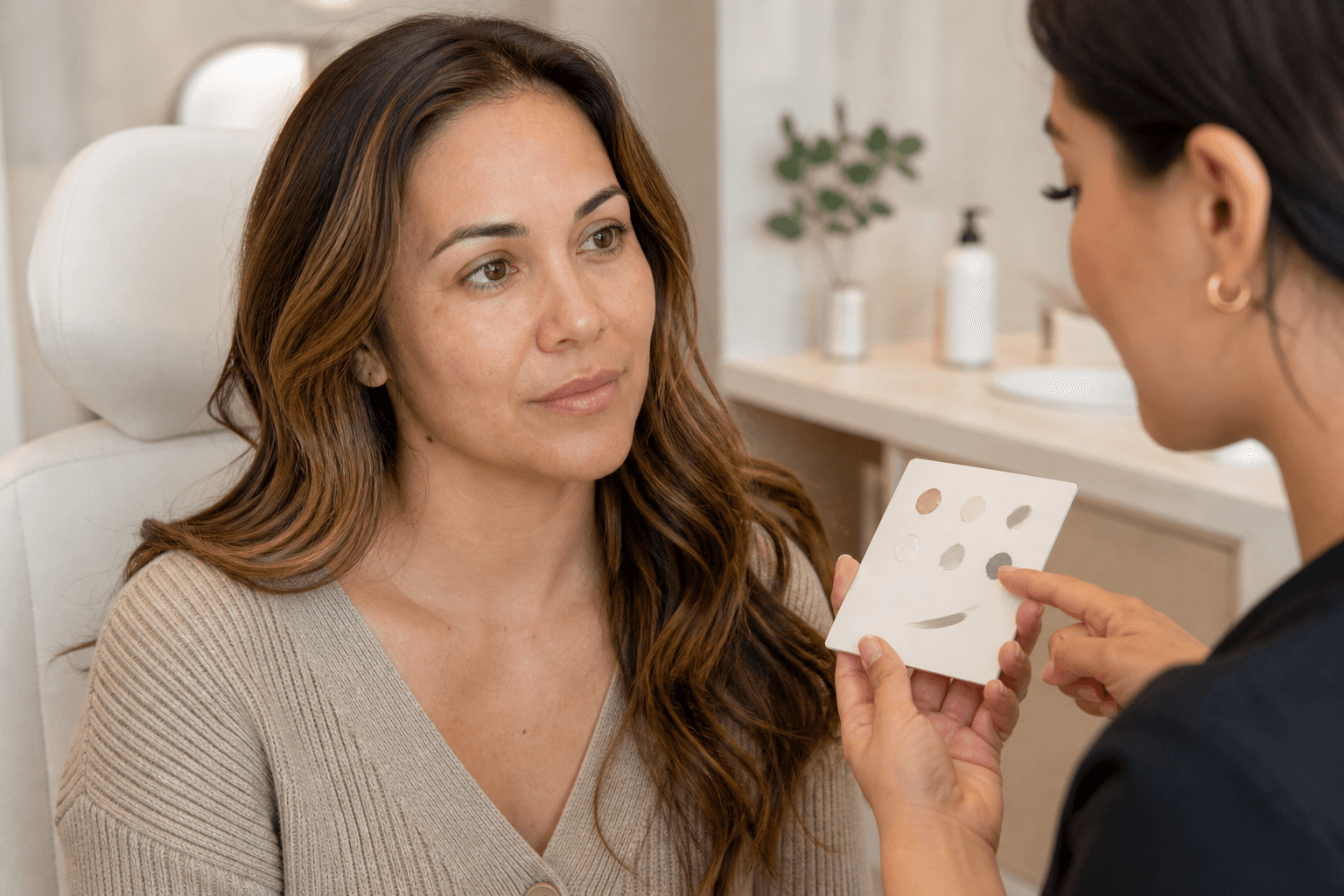
Short answer: do not treat “sensitive eyes” as a lash style or a guarantee that a special adhesive will solve the problem. Identify whether you have active symptoms, previous allergy, dry eye, contact-lens discomfort or an eye condition, then decide whether a salon consultation or medical advice belongs first.
What “sensitive eyes” may describe
- Eyes that water or feel dry with wind, screens or contact lenses.
- Seasonal allergy symptoms such as itching and tearing.
- Eyelid skin that reacts to tape, pads, cosmetics or adhesives.
- A previous delayed reaction after extensions.
- Active redness, pain, discharge or light sensitivity.
These are not interchangeable. A lash professional can document what you report, but cannot diagnose allergy, dry eye, infection or corneal injury.
When to postpone
FDA advises avoiding eye cosmetics while an eye infection is present or the surrounding skin is inflamed. Do not begin a lash service when eyes are red, painful, swollen, producing discharge or unusually light-sensitive. Recent eye surgery, active eye disease or recurring unexplained symptoms should be discussed with an optometrist or ophthalmologist.
AAO EyeWiki notes reported complications associated with extensions, including keratoconjunctivitis, allergic blepharitis, conjunctival injury and traction alopecia, and advises people with existing eye disease or allergy history to avoid extensions.
“Hypoallergenic” is not a guarantee
FDA says terms such as hypoallergenic and for sensitive skin have no federal definition governing cosmetic use. Ask for the manufacturer, full ingredient and safety information for adhesive, tape, gel pads, cleanser and primer. A different formula may change exposure, but it cannot promise zero reaction.
FDA also reports allergic reactions involving cosmetics that commonly contain natural rubber latex, including eyelash adhesives, and advises checking ingredient information each time because formulations can change.
What a salon patch test can and cannot show
A small screening test may reveal some obvious skin reactions, but it does not recreate closed eyes, adhesive vapor, tape placement or full exposure. It cannot guarantee that a delayed eyelid allergy or eye-surface irritation will not occur. Medical patch testing for contact dermatitis is a clinician-directed process with timed readings; it is not the same as applying a dot of lash adhesive before an appointment.
Questions to ask the lash professional
- Which licensed cosmetologist or esthetician will perform the service?
- What exact adhesive, tape, pads, cleanser and primer will touch or sit near me?
- How are tools, hands, surfaces and reusable items cleaned or disinfected?
- How will you respond if my eyes water, burn or cannot remain comfortably closed?
- Will you stop rather than push through symptoms?
- What removal plan is available if a delayed reaction develops?
California states that paid eyelash-extension services fall within the scope of licensed cosmetologists and estheticians. License verification is a basic check, not a promise of medical safety or retention.
During and after the appointment
Burning, sharp discomfort or escalating tearing should not be normalized. Tell the artist immediately. Afterward, stop using the suspected cosmetic and contact a clinician if irritation persists, as FDA advises. Do not self-treat with someone else’s prescription drops, add adhesive or use remover near an irritated open eye.
Seek prompt eye care for pain, significant redness, foreign-body sensation, discharge, light sensitivity or vision change. Trouble breathing, facial or throat swelling, faintness or other signs of a severe allergic reaction require emergency care.
Choosing a look without overloading the natural lashes
Sensitivity does not automatically dictate classic, hybrid or volume. The design still depends on natural-lash strength, desired texture and the weight of the finished set. Ask for a conservative, comfortable plan and realistic maintenance rather than a universal “sensitive-eye style.” See our style comparison and eye-safety guide.
Frequently asked questions
Can sensitive adhesive prevent allergy?
No product name can guarantee prevention. Review exact ingredients and previous reactions with an appropriate clinician when needed.
If I reacted once, can I try again?
Do not assume a milder formula makes re-exposure safe. Discuss the prior timing and symptoms with an optometrist, ophthalmologist, dermatologist or allergist before deciding.
Are watery eyes just bad for retention?
Watery eyes can also signal allergy, irritation, dryness or another eye issue. Treat the symptom as health information first, not merely a retention problem.
Sources and editorial note
- American Academy of Ophthalmology EyeWiki: Eyelash Extensions — checked September 1, 2026
- FDA: Allergens in Cosmetics — checked September 1, 2026
- FDA: Latex in Cosmetics — checked September 1, 2026
- FDA: Eye Cosmetic Safety Q&A — checked September 1, 2026
- California Board: Eyelash and Eyebrow Services bulletin — checked September 1, 2026
Editorial note: Current search results and community questions were used only to identify consumer language. Health and licensing claims rely on ophthalmology, FDA and California Board sources.
Medical disclaimer: Educational only, not medical advice or a diagnosis.