PERMANENT EYELINER · SAFETY & CANDIDACY
Is permanent eyeliner safe?
It is a tattoo near the eye—not risk-free makeup.
Safety depends on candidacy, sterile practice, pigment handling, placement, consent, aftercare and knowing when an eye symptom needs medical care.
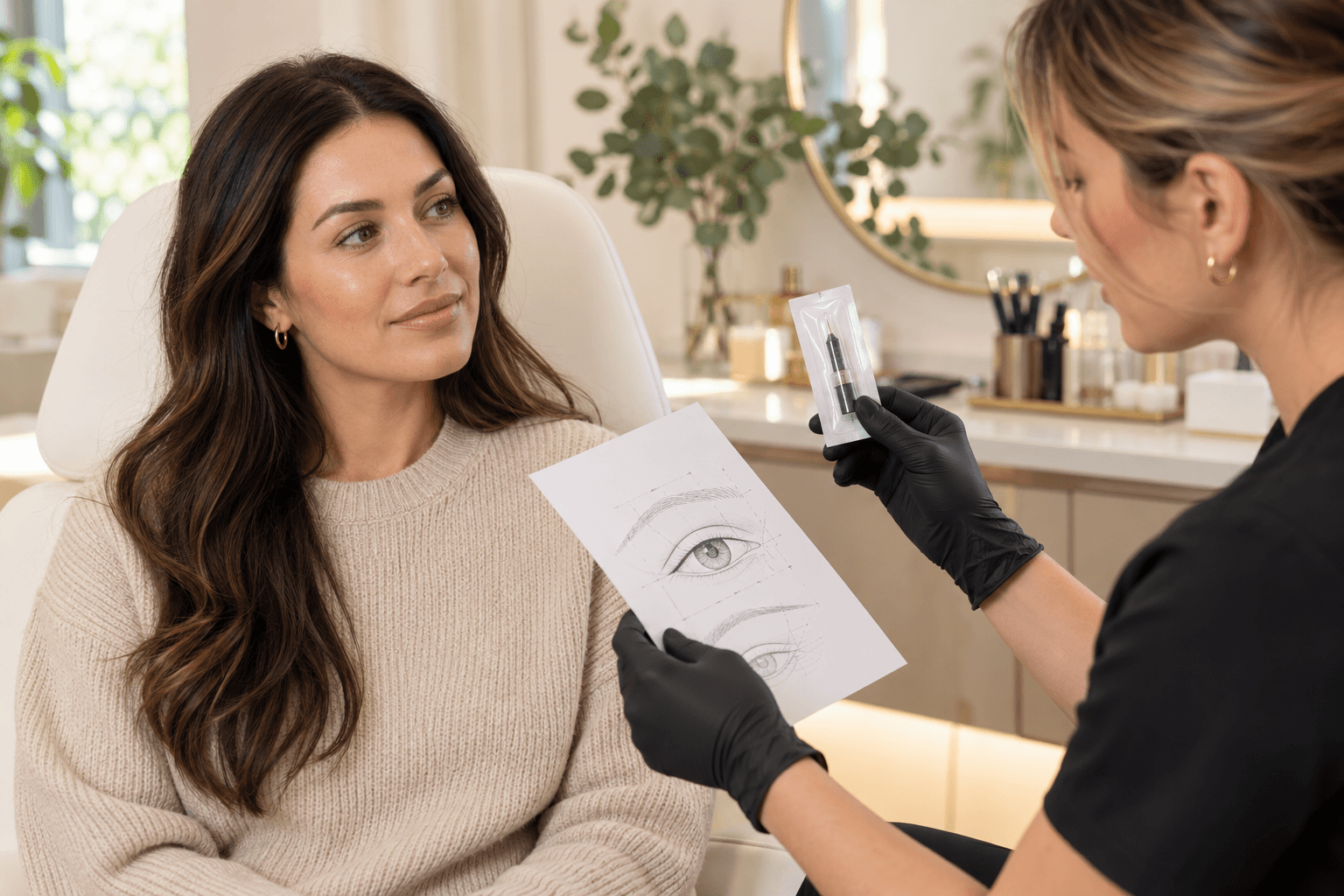
Permanent eyeliner can be performed with careful safeguards, but no tattoo procedure is risk-free. A needle places pigment into eyelid skin. Possible problems include infection, allergic or inflammatory reactions, unwanted shape or color, pigment migration, scarring and difficult removal.
Is permanent makeup a tattoo?
Yes. FDA describes permanent makeup as a tattoo used to resemble eyeliner, brows or lip color. “Permanent,” “semi-permanent,” “micropigmentation” and “cosmetic tattoo” marketing do not change that pigment is implanted into skin and can remain for years.
How does permanent eyeliner work?
After consultation, consent and mapping, a practitioner uses a needle device to place pigment along eyelid skin. Fresh color is not the healed result. Swelling and surface healing can change its appearance, and later fading or color change may occur. Correction or removal near the eye can be complex.
Who should pause and ask a clinician?
Postpone for active redness, swelling, infection, broken skin, a stye, unexplained eye pain, discharge or vision change. Ask an appropriate licensed clinician before proceeding with a current eye condition, recent eye procedure, significant allergy history, unusual scarring, immune or healing concerns, pregnancy or nursing questions, or medicines that may affect bleeding or healing. Never stop prescribed medicine unless the prescriber directs it.
DO / DO NOT
Protect the decision before the design.
Do: disclose eye, skin and health history; verify registration and facility permits; ask to see unopened single-use items; request pigment brand, shade and lot documentation; arrange written aftercare and an emergency contact.
Do not: proceed through active eye symptoms, share numbing products, accept reused pigment cups or cartridges, or choose a practitioner only from freshly edited photos.
Which hygiene and pigment questions matter?
- Will a new sterile single-use needle or cartridge be opened for this appointment?
- How are reusable surfaces and equipment protected and disinfected?
- Is pigment dispensed without returning used material to its container?
- Are brand, color and lot recorded?
- What happens if the client moves, bleeds unexpectedly or develops eye symptoms?
Clean technique reduces risk but cannot make it zero. FDA has documented infections from contaminated tattoo inks, including contamination that can exist before opening.
What do Orange County rules require?
Orange County Health Care Agency classifies permanent cosmetics as body art. Practitioners must hold a Body Art Practitioner Registration, and procedures may only occur in a facility with a valid body-art facility permit. Registration is a baseline—not proof that one design, pigment or practitioner suits everyone.
When can ordinary eye makeup return?
There is no responsible universal day count. Keep eyeliner, mascara, removers and applicators away from newly treated skin until the written protocol allows them and healing is progressing as expected. Replace contaminated or expired products and never share them. Seek assessment instead of covering worsening symptoms.
Which symptoms need medical care?
Increasing or spreading redness, worsening pain, pus, fever or open sores needs prompt medical evaluation. Eye pain, marked swelling, light sensitivity, discharge, difficulty opening the eye or vision change needs urgent eye care; severe allergic symptoms or breathing difficulty require emergency care. A cosmetic practitioner should not diagnose an eye problem.
Nine consultation questions
- May I see current practitioner registration and facility permit?
- How often do you perform permanent eyeliner?
- May I see healed, unfiltered work?
- Which cartridge, pigment and numbing product will be used?
- How does my medical and eye history affect candidacy?
- Where will pigment be placed, and which areas are avoided?
- What is normal during healing?
- Who do I contact for a reaction or eye symptom?
- What are the correction or referral options if the healed result is unsuitable?
Related guidance
Use the artist checklist, understand healing week by week, and review the aftercare and Orange County safety guide.
Sources
- U.S. FDA — Think Before You Ink: Tattoo Safety
- U.S. FDA — Tattoos & Permanent Makeup Fact Sheet
- U.S. FDA — Cosmetics Safety Q&A
- Orange County Health Care Agency — Body Art / Permanent Makeup
- U.S. FDA — Eye Cosmetic Safety
Evidence note: Sources describe tattoo, ink, infection and local regulatory risks; they do not establish that permanent eyeliner is risk-free or suitable for one person.
Medical disclaimer: Educational information only; not medical advice, diagnosis or individual candidacy clearance.