LASH LIBRARY · RETENTION
Why do lash extensions fall out early?
A calm troubleshooting guide.
Retention is not one promise or one person’s fault. Look at what shed, when it happened and whether the eye feels healthy.
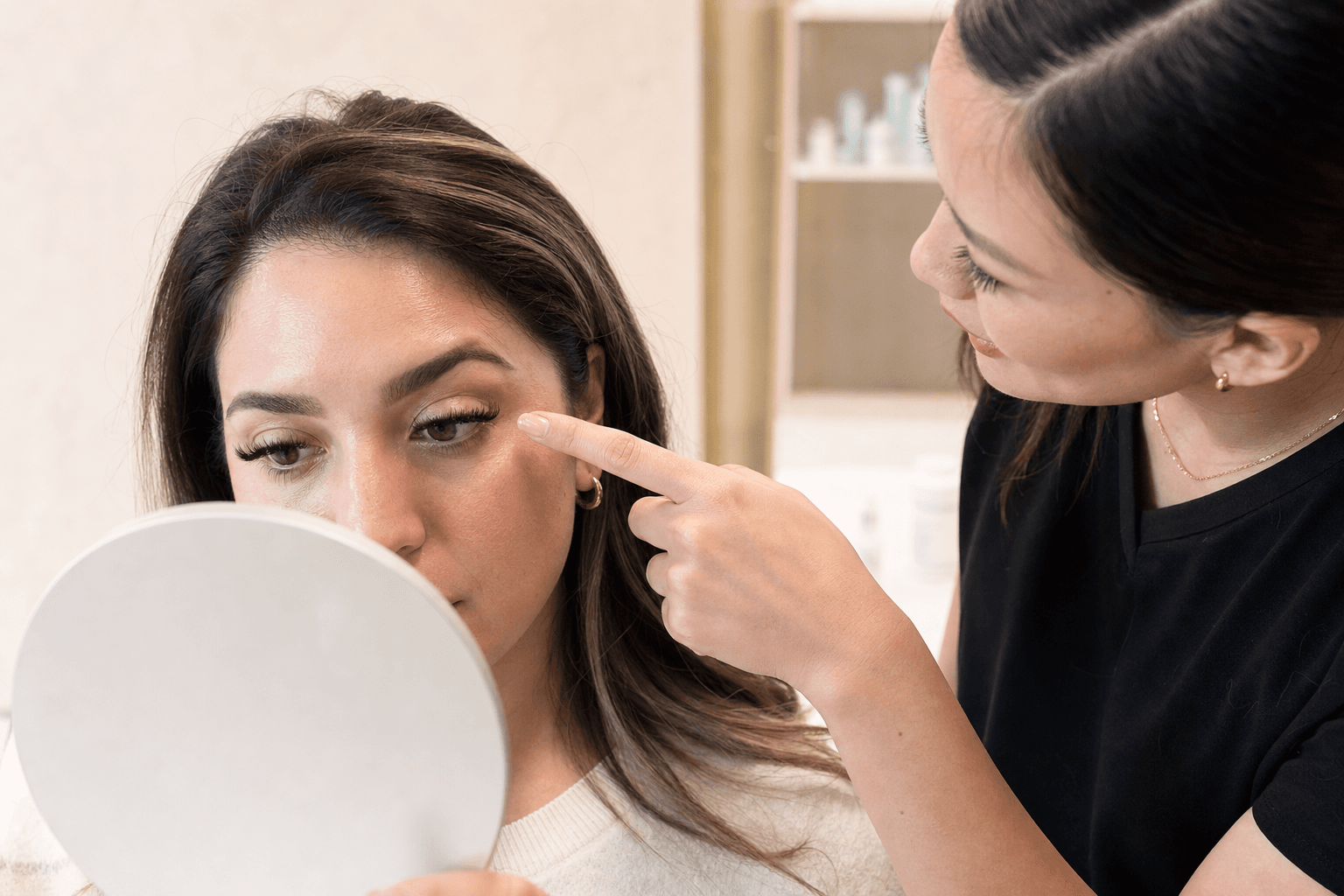
Short answer: lash extensions can appear to fall early because natural lashes are shedding, the extension-to-lash bond released, natural lashes broke, or irritation led to rubbing. A photo and a prompt check with the artist are more useful than a universal wear-time promise.
First, look at what came off
If one full-length natural lash is attached to an extension, that can be ordinary shedding: lashes cycle through growth and rest before releasing. If many extensions come away without a natural lash during the first few days, the bond may have released early. If the attached natural hairs look short, bent or snapped, pause and ask about weight, isolation and friction.
Do not count every loose fiber as proof of poor work. Also do not accept sudden widespread loss as “just your cycle” without reviewing the pattern.
Common reasons retention changes
Natural growth cycle
Each extension follows the natural lash supporting it. Sets do not shed uniformly, and two people with the same style can have different patterns.
Preparation and attachment
Residual makeup, skin care or debris can affect the bonding surface. Attachment area, isolation and selecting a weight the natural lash can support are technique questions for the artist—not aftercare tasks a client can fix at home.
Adhesive working conditions
Professional cyanoacrylate adhesives cure in response to environmental conditions. The artist is responsible for following the manufacturer’s instructions and managing the room and product. Clients should not try to recure or reglue extensions themselves.
Friction, buildup and routine
Repeated rubbing, picking, sleeping pressure and difficult makeup removal can stress a set. Keeping the lash line clean matters for comfort as well as appearance. Follow the specific instructions given for the adhesive system and read our washing, swimming and exercise guide.
Shedding versus breakage
A naturally shed lash is generally full length, sometimes with a tiny pale club at the root end. Breakage looks shorter or irregular. Multiple natural lashes stuck together, persistent pulling or visible gaps deserve an assessment. Never separate lashes with tweezers at home.
Rapid thinning of natural lashes, especially without extensions attached, can also have cosmetic or health causes. The Cleveland Clinic notes that eyelid inflammation, allergy, trauma and some health conditions can contribute to lash loss. A salon cannot diagnose those causes.
What to record before contacting the artist
- The appointment date and when heavier loss began.
- Clear photos in similar lighting, without pulling the lashes.
- Whether loose extensions have a natural lash attached.
- New eye products, cleansers, medications or health changes.
- Swimming, high heat, unusual rubbing or sleeping pressure.
- Any itching, swelling, pain, discharge or vision change.
A good retention conversation separates observable clues from assumptions and reviews both application and routine.
When this is an eye-safety issue
Itching, burning and swollen eyelids may signal irritation or allergy rather than simple poor retention. Pain, marked redness, discharge, light sensitivity, a foreign-body sensation or vision change needs an optometrist or ophthalmologist; sudden severe symptoms need urgent care. Do not add adhesive, remover or oils to an irritated eye.
AAO EyeWiki documents eye and eyelid complications reported with extensions, including allergic blepharitis and corneal or conjunctival injury. Read the ENCLAVE eye-safety guide before deciding whether to continue.
Questions for a retention check in Santa Ana
- Does the pattern look like natural shedding, bond release or breakage?
- Is the current length, curl and weight appropriate for the natural lashes?
- Were multiple lashes inadvertently bonded together?
- What cleaning routine matches the exact adhesive instructions?
- Should the set be adjusted, removed professionally or paused?
California requires paid eyelash-extension services to be performed by a licensed cosmetologist or esthetician. License status does not guarantee a result, but it is a basic consumer check.
Frequently asked questions
Is losing extensions in the first week normal?
Some loss is expected as natural lashes shed. A dramatic or uneven change within days is worth documenting and discussing promptly.
Do oily skin or hormones automatically cause poor retention?
No single trait proves the cause. Changes in skin products, eye watering, routines or health may be relevant, but avoid self-diagnosis and ask a clinician about unexplained natural-lash loss.
Can I glue loose extensions back on?
No. Consumer glue or professional adhesive used near an open eye can cause injury, and a loose extension should not be reattached at home.
Sources and editorial note
- American Academy of Ophthalmology EyeWiki: Eyelash Extensions — checked August 31, 2026
- Cleveland Clinic: Why Are My Eyelashes Falling Out? — published May 6, 2025; checked August 31, 2026
- California Board of Barbering and Cosmetology: FAQs — checked August 31, 2026
- California Board: Eyelash and Eyebrow Services bulletin — checked August 31, 2026
Editorial note: Current search results and community questions were used only to identify consumer wording. Safety and licensing claims rely on clinical and government sources.
Medical disclaimer: Educational only, not medical advice or a diagnosis.