LASH LIBRARY · DAILY AFTERCARE
Lash extension aftercare:
washing, swimming, exercise and sleep.
The goal is not to keep lashes permanently dry. It is to follow the adhesive system’s curing directions, keep the lash line clean and avoid friction.
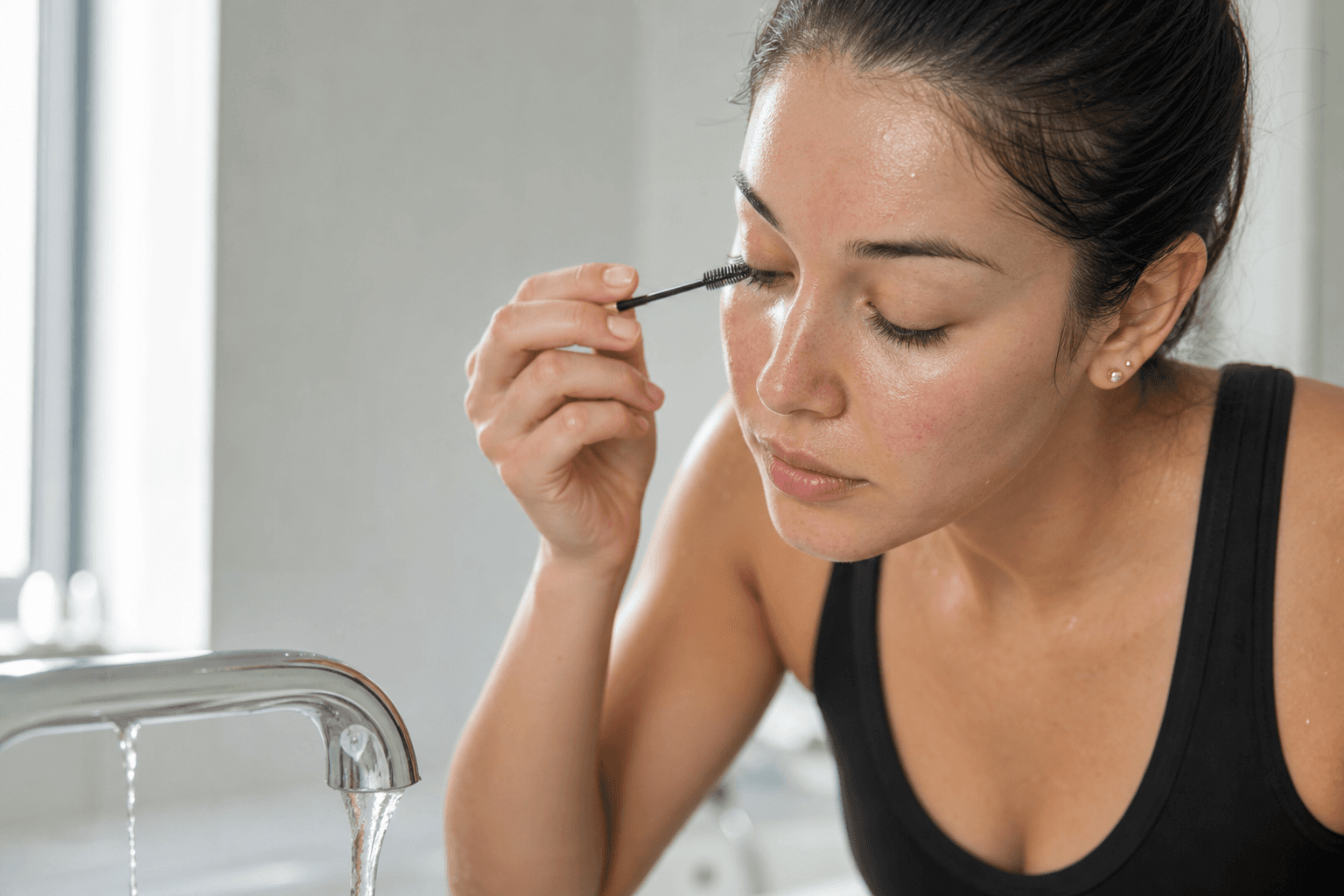
Short answer: you can wash, exercise and swim with lash extensions after the specific adhesive system’s curing window. Directions vary, so use the instructions for the products actually applied—not a universal rule copied from social media.
Why cleansing matters
Oil, sweat, makeup, sunscreen and skin debris can collect near the lash line. FDA warns that contaminated or misused eye cosmetics can contribute to infection. Clean hands and tools matter, and an inflamed or infected eye area is a reason to stop eye cosmetics and postpone a service.
How to wash lash extensions gently
- Wash your hands.
- Use the compatible cleanser and frequency recommended for the adhesive and your skin.
- Clean along the lash line with gentle pressure; do not scrub, twist or pull.
- Rinse thoroughly without directing a high-pressure shower stream at the eyes.
- Pat around the eye with a clean, lint-free towel and let fibers dry before brushing them into place.
Do not use saliva, unclean brushes or improvised solvents near the eye. “Oil-free” on a label does not by itself guarantee compatibility with every adhesive.
The first shower after an appointment
Older advice often gives one fixed 24- or 48-hour water ban, while current adhesive systems may have different curing instructions. Ask your artist to name the product-specific window. During that period, avoid steam, direct shower pressure and rubbing. If lashes get wet accidentally, do not panic or pull; blot around the area and follow the provider’s instructions.
Exercise and hot yoga
Plan intense exercise around the stated curing window. After a workout, do not leave sweat and skin-care residue sitting at the lash line. Clean and dry the area as directed. High heat and steam may affect comfort and wear, but they do not justify skipping hygiene.
Swimming in Orange County
Pool, ocean and beach days are compatible with extensions for many clients after curing. Rinse away salt, chlorine, sunscreen and sand; cleanse as directed; and avoid rubbing wet fibers with a towel. Goggles should not press or drag across the extensions. Frequent swimmers may need a maintenance plan that reflects their routine rather than a promise of identical retention.
Sleeping positions and friction
Side sleeping is possible, but burying the eye area in a pillow can bend fibers and cause uneven friction. Try to keep the lashes from being crushed. A silk pillowcase may feel smooth, but it cannot guarantee retention or correct unsuitable weight or attachment.
Makeup, contacts and daily handling
Use only eye-area products compatible with the extension system, remove makeup without tugging and keep applicators clean. Do not share eye cosmetics. Contact-lens users should follow their eye-care professional’s instructions and avoid contaminating lenses or cases while handling the eye area.
Aftercare cannot treat a reaction
Persistent burning, marked redness, swelling, discharge, pain, light sensitivity or vision change is not a cleansing problem. Stop eye cosmetics and contact an optometrist or ophthalmologist. Seek urgent care for significant pain, chemical exposure or vision changes. Read ENCLAVE’s lash extension safety guide for more warning signs.
Frequently asked questions
Can I wash lash extensions?
Yes. Follow product-specific first-day directions, then cleanse gently with compatible products.
Can I swim or exercise?
Usually after curing. Rinse and cleanse sweat, salt, sunscreen and pool residue as directed.
Can I sleep on my side?
Yes, but minimize pressure and friction against the lashes.
Sources and editorial note
- U.S. FDA: Eye Cosmetic Safety — updated December 18, 2006
- American Academy of Ophthalmology EyeWiki: Eyelash Extensions — reviewed in 2026
- Ocular disorders due to eyelash extensions — 2012
- Eyelid cosmetic enhancements and associated ocular adverse effects — 2019
Editorial note: Current salon FAQs were reviewed only to identify common questions and conflicting curing advice. Product-specific directions take precedence over generic timing claims.
Medical disclaimer: Educational only, not medical advice or a diagnosis.