PMU REMOVAL · DECISION GUIDE
How is unwanted brow pigment removed?
Identify the pigment before choosing the fix.
Color, ingredients, depth, saturation, layering, skin and prior treatments can change both response and risk.
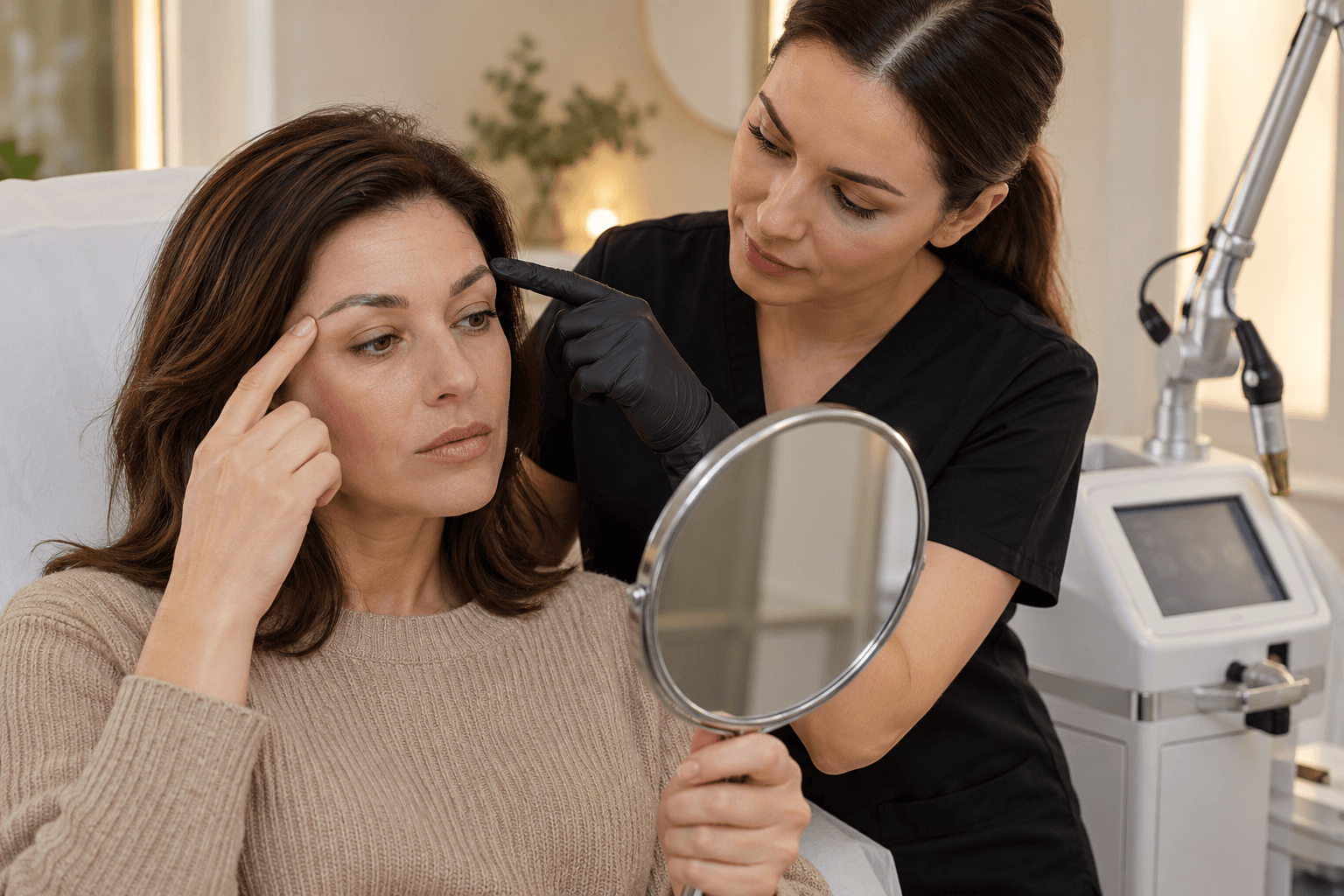
Unwanted permanent makeup may be lightened or removed, but no method guarantees complete clearance or one session. FDA notes that flesh-colored and permanent-makeup pigments may darken with laser exposure, making assessment essential.
What determines the plan?
- Known pigment brand, color and ingredients
- Depth, saturation and number of layers
- Current color, shape and skin condition
- Prior laser, saline, acid, cover-up or correction work
- Healing, scar and pigment-change history
When is cover-up inappropriate?
Adding pigment can make an already saturated, misplaced or unstable color harder to correct. Active irritation, infection, broken skin and incomplete healing require a pause. A neutralizing color is not an eraser.
What happens next?
A qualified provider documents the starting point, explains device or technique limits, tests when appropriate, gives written aftercare and reassesses only after healing. Expect uncertainty: response can be uneven and multiple sessions may be needed.
Do / Don’t
Do: bring pigment and treatment records, ask about eye protection and referrals, and photograph healed progress consistently.
Don’t: scrape, acid-peel, salt, bleach or tattoo over inflamed or unassessed pigment.
Red flags
Seek care for worsening pain, spreading redness, pus, fever, extensive blistering, eye pain, light sensitivity or vision change.
Related: pain and comfort, cost and sessions, and Santa Ana removal services.
Sources
Educational only; not medical advice or a result guarantee.