TATTOO REMOVAL · PAIN & COMFORT
Does tattoo removal hurt?
Comfort varies—and numb does not mean risk-free.
Laser removal can feel uncomfortable or painful. The tattoo, area, device, settings, sensitivity and comfort plan matter; no honest consultation can promise one pain score.
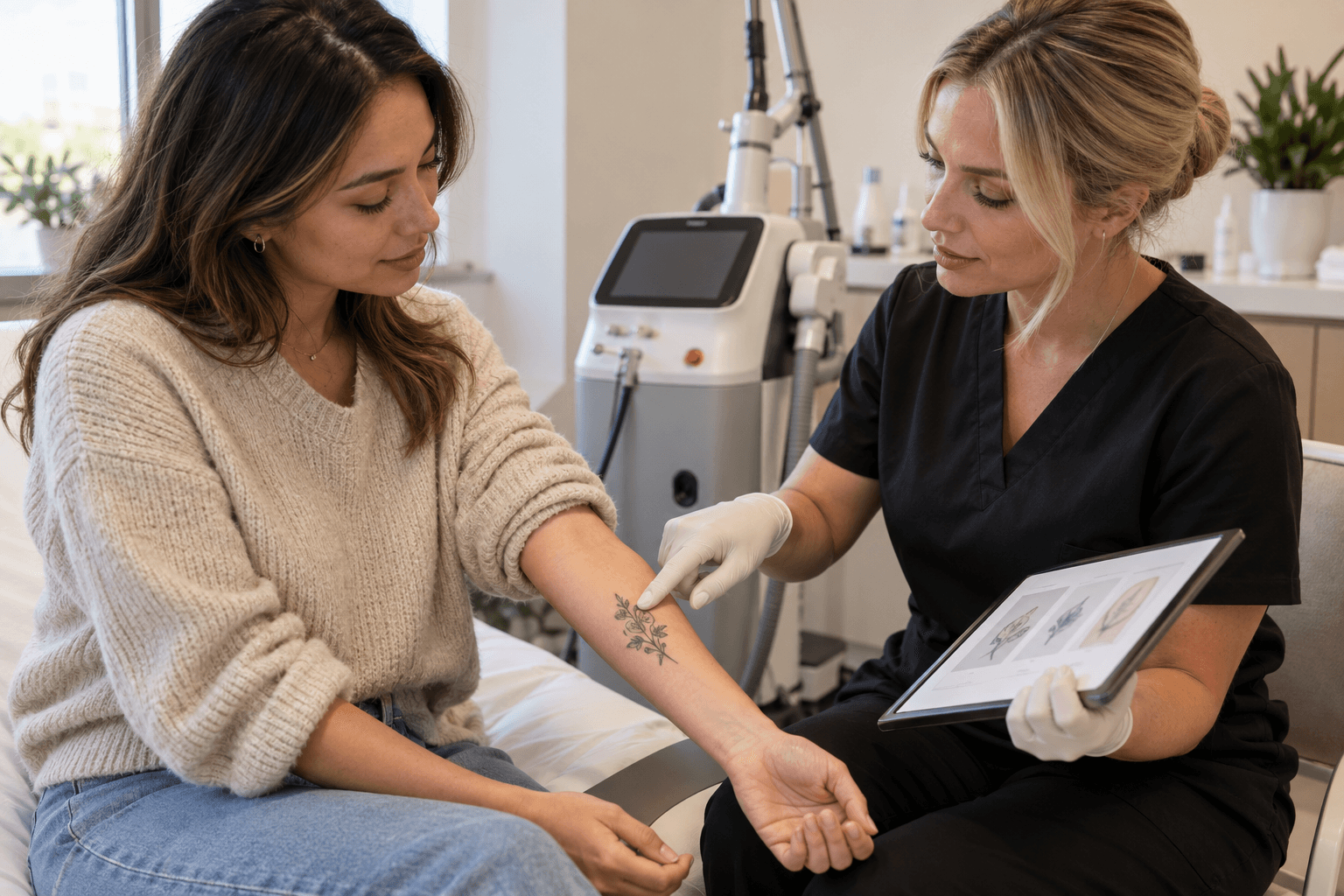
Yes, laser tattoo removal may feel uncomfortable or painful. FDA compares it with a thin rubber band snapping against skin, but that is only a reference—not a prediction. Soreness can also occur afterward.
What changes how it feels?
- Location: skin thickness, sensitivity and proximity to bone vary.
- Tattoo: size, density, colors, depth and whether it is body art or permanent makeup affect the plan.
- Laser and settings: wavelength and parameters must fit the pigment and skin response.
- Session: treated area and time differ between visits.
- Individual response: anxiety, prior experience and sensitivity can change perceived discomfort without making it “all in your head.”
What may happen during and after?
People may notice repeated hot, sharp or snapping sensations. Temporary redness, swelling, soreness, pinpoint bleeding or blistering may follow. These possibilities are not permission to ignore severe, spreading or worsening symptoms.
What can comfort measures do?
FDA notes that a small amount of numbing cream may be used when treatment is painful; the American Academy of Dermatology says a dermatologist may use numbing cream or an injection. The appropriate option depends on the professional, area, product, history and procedure. Numbing cannot prevent infection, scarring, pigment change or a wrong laser choice.
DO / DO NOT
Plan comfort without masking safety.
Do: ask who chooses the comfort method, what it contains and what you should feel; disclose allergies, medicines, prior reactions and skin conditions.
Do not: apply an unapproved amount yourself, use another person’s prescription or assume lack of pain proves the settings are safe.
When should treatment stop or wait?
Report severe or unexpected pain, eye symptoms, breathing difficulty, faintness or a rapid reaction immediately. Postpone over infected, injured, inflamed or incompletely healed skin. Pregnancy, significant conditions, medicines and unusual-healing history require case-specific discussion with the appropriate clinician; do not stop prescribed medicine unless its prescriber directs it.
What soreness needs medical care?
Follow written aftercare. Seek prompt care for spreading redness, increasing warmth or pain, pus, fever, red streaks, extensive blistering or a significant allergic reaction. Eye pain, light sensitivity or vision change after treatment near the eye needs urgent eye care.
Seven questions to ask
- Who performs or supervises the procedure?
- Which device and wavelength fit this pigment and skin?
- What discomfort is expected?
- Which comfort options are appropriate, and who administers them?
- How will nearby eyes and skin be protected?
- Which symptoms require a call or medical care?
- How is healing assessed before another session?
A provider should not guarantee painless, scar-free or complete removal. FDA says cleared removal lasers are for use by, or under supervision of, a health care professional. Ask how that applies to the offered treatment.
Related guidance
Compare cost and session variables, learn how scarring differs from normal healing, and review the removal overview.
Sources
- U.S. FDA — Tattoo Removal: Options and Results
- American Academy of Dermatology — Tattoo Removal: Lasers Outshine Other Methods
- U.S. FDA — Medical Lasers
Evidence note: Sources identify possible sensations, comfort options and risks; they do not establish one score or protocol for every person, tattoo, device or area.
Medical disclaimer: Educational information only; not medical advice, diagnosis or a guarantee of candidacy, comfort or results.