TATTOO REMOVAL · QUESTIONS PEOPLE ASK
Can permanent eyeliner be removed?
Yes, carefully. It is the tattoo that sits next to your eye.
A brow tattoo sits on bone. A body tattoo sits on skin with muscle underneath. Permanent eyeliner sits between your lashes, on skin so thin that eye-injury researchers say it cannot protect the eye from a laser. That does not make removal impossible. It means the plan starts with the eye, not the ink. Here is what the evidence says, the seven mistakes we see people make, and the questions that keep your sight safe.

Short answer: permanent eyeliner can often be lightened, sometimes a lot, but complete removal cannot be promised. Because the line sits millimeters from the eye, laser removal should only happen with eye shields placed under or over the lids and a trained operator; published eye injuries from facial lasers happened mostly when protection was missing or removed. Pigment that has spread can sometimes be lightened over several sessions. Lids that itch or swell around the eyeliner need a doctor first, because lasering an allergic tattoo can make the reaction worse. Non-black pigments can turn darker under a laser. In California, the laser must be operated by a physician, or a registered nurse or physician assistant under physician supervision.
The line you once loved, and the mirror that changed its mind
Maybe it was a thick wing that felt right ten years ago. Maybe the line has softened into a gray-blue smudge, or crept below the lashes so you look tired even after a full night of sleep. Maybe your lids have started to itch and nobody has connected it to the eyeliner. Whatever brought you here, the thought is the same: can I take this back?
Permanent eyeliner is a tattoo. The FDA says so plainly: permanent makeup is a type of tattoo applied to look like eyebrows, eyeliner or lip liner, and it follows the same removal rules as any other tattoo. Laser removal, done by a trained health care professional, “can be safe and effective,” the agency says, but it usually takes multiple treatments a few weeks apart, and complete removal may not be possible. Its listed risks include scarring, infection, pinpoint bleeding, redness, soreness and skin that ends up lighter than the area around it.
What the FDA page does not spell out is the geography. On a forearm, a stray beam hits more forearm. At the lash line, the next thing behind the skin is the eye.
Why the lash line is the hardest address to work at
Tattoo-removal lasers work because certain wavelengths are absorbed by pigment. The eye is full of pigment too: the iris, the retina, the tissue behind them. In a 2017 Dermatology Times interview on preventable eye injuries, oculoplastic surgeon Brian Biesman, MD, said most lasers used for hair and tattoo removal “pose a significant threat to the eye,” and that the 1,064-nm YAG wavelength commonly used for tattoos can damage the ciliary body, a structure inside the eye. He added that external eye patches are no substitute for corneoscleral shields, the smooth shields that sit directly over the eye under the lids.
The research on real injuries points the same way. A 2018 review in the Journal of Clinical and Aesthetic Dermatology (Huang and colleagues) gathered 21 published cases of eye injury from cosmetic laser treatments of the face. The injuries included iris damage, cataract, inflammation inside the eye, glaucoma, visual-field and pupil problems, retinal burns and corneal injury. In 13 of the 21 cases (62%), eye protection was not used or was removed during the procedure so the area near the eye could be treated, and some injuries happened even with protection in place. Most cases came from laser hair removal near the brows rather than tattoo removal, but the lesson carries over. The authors' conclusion is the sentence to remember: the eyelids are too thin to sufficiently protect the eye, and lesions on or around the eyelids should not be treated without metal ocular shields or wavelength-specific glasses.
A 2023 review in BMC Ophthalmology (Bonińska) adds cases of retinal burn and bleeding inside the eye after a Q-switched Nd:YAG laser used without protection, notes that protection lowers but does not erase risk, and gives one instruction every patient should know: any change in vision during or after laser treatment should be checked by an ophthalmologist as soon as possible.
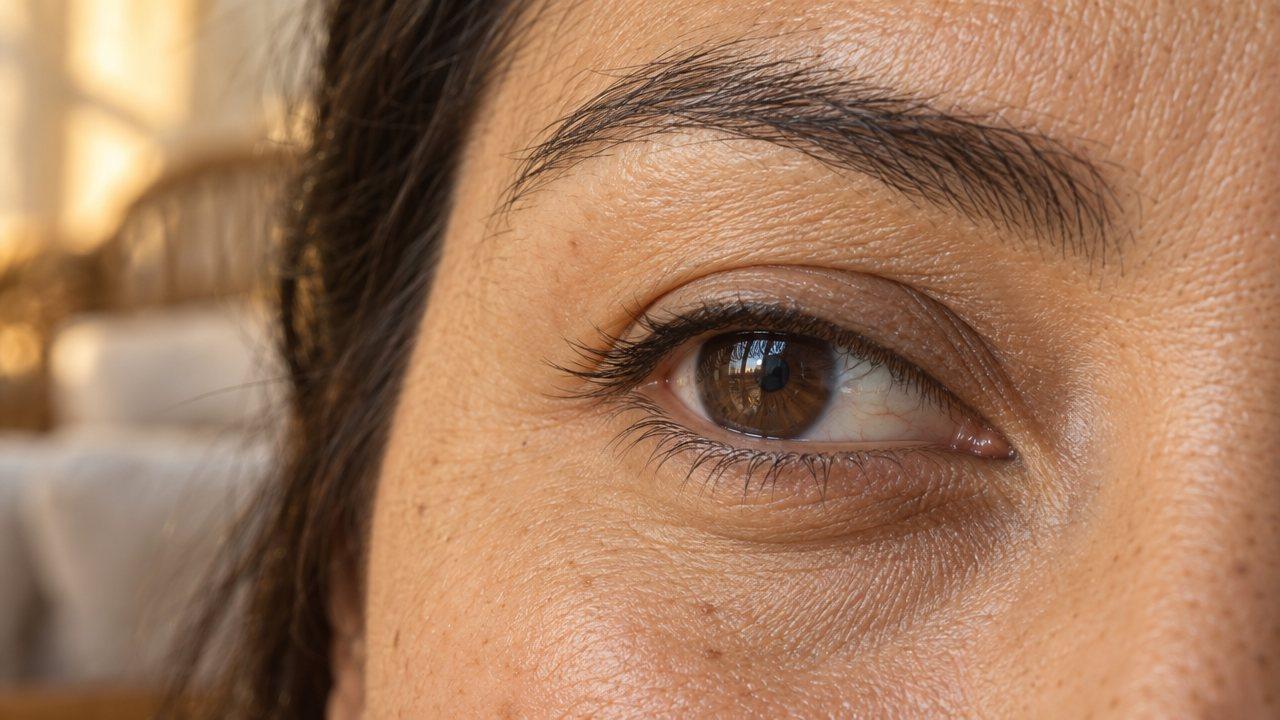
First, name the problem: color, shape, spread or reaction
“I want it gone” can mean four different things, and each one leads to a different plan.
- The color is wrong. Black that healed blue or gray, or a brown that warmed up over time. The FDA says dark blue and black are among the easiest colors for lasers, while green, red and yellow are hardest, and that flesh-colored, white and permanent makeup pigments can oxidize and turn black. Once that happens, the agency says, the pigment is no longer treatable by laser. A small test spot is a reasonable request when the pigment is not pure black.
- The shape is wrong. A wing that is too long, a line too thick for hooded lids. Sometimes the goal is lightening one part, not erasing the whole line.
- The pigment has spread. Ink that bled outward from the lash line, sometimes called fanning or migration, can look like a permanent shadow or bruise.
- The skin is reacting. Itching, thickening, bumps or swelling along the lid margin, sometimes long after the tattoo healed. This one is a medical question first; we explain why below.
A 2021 literature review presented at the Cosmetic Surgery Forum (Akella and Tran) found only 11 published patients with cosmetic eyeliner complications in eight articles from 1999 to 2018, all women. The problems ranged from scarring and patchy light or dark lash margins to pigment that migrated to the tear trough and needed skin grafts, late granulomas, and needles that went fully through the eyelid and left pigment on the surface of the eye. Patients were generally referred to dermatologists, plastic surgeons and oculoplastic surgeons. Those are rare outcomes, but they show why the person removing eyeliner should be able to tell a cosmetic problem from a medical one.
When eyeliner spreads: what the case reports show
Spreading is the most common “why can't I just fix it” complaint, and the published cases are encouraging but small.
In a 2001 report in Cutis, Korean dermatologists described two women whose amateur eyelash or eyebrow tattoos fanned into the surrounding skin. One, a 31-year-old, noticed pigment under her eye three years after an eyelash tattoo; eight Q-switched alexandrite laser treatments led to clearing. The authors still wrote that there is no curative treatment for pigment fanning once it has occurred, which is a fair warning that results vary.
In a 2014 case series in Clinical Interventions in Aging, Goldman and Wollina described an 84-year-old woman whose single lower-eyelid tattoo session was followed within days by “massive displacement” of pigment onto the lower lid, the side of the nose and the cheek. Three Q-switched Nd:YAG sessions, four to five weeks apart, were used to manage it. The authors suggest that loose, redundant eyelid skin (dermatochalasis) may be a risk factor for spreading and note that pigment can travel through the lymphatic vessels toward the midface.
Two cases are not a promise. They do show the pattern a good plan follows: protect the eye, treat conservatively, space the sessions out, and reassess at every visit.
When the eyelid itches: why laser can be the wrong tool
In September 2005, the American Academy of Ophthalmology's EyeNet published a case from Texas Oculoplastic Consultants. A 57-year-old woman had permanent eyeliner on her upper and lower lids. More than a year later, her lids became severely itchy, thick and inflamed, with lash loss and firm nodules along the lid margins. She had passed a patch test before the tattoo. A repeat patch test and a biopsy showed a delayed allergic reaction to the black eyeliner pigment.
Her surgeons did not recommend laser, because a laser “shatters the pigment and actually enhances antigen presentation,” meaning the immune system gets more exposure to the allergen. She improved with a prescription steroid eye ointment over several months. The authors also warned that a patch test before the procedure will not predict a delayed reaction. A 2025 review of tattoo-ink allergies (Werpachowski and colleagues) reaches a similar conclusion for body tattoos: laser treatment of suspected or confirmed allergic tattoos is strongly discouraged.
The practical rule: if your eyelids itch, swell, crust or form bumps around your eyeliner, see an ophthalmologist or dermatologist before anyone points a laser at it.

The seven mistakes that make eyeliner removal harder
- Treating it like a body tattoo. Same laser, different address. If the plan does not start with how your eye will be protected, it is the wrong plan.
- Accepting stick-on pads or closed eyes as protection. Researchers say the lids are too thin to protect the eye, and Dr. Biesman says external patches are no substitute for corneoscleral shields.
- Lasering a reaction. Itchy, thickened or bumpy lids need a diagnosis. Breaking up allergenic pigment can make the reaction worse.
- Skipping the test spot on brown or colored pigment. The FDA says permanent makeup pigments can turn black and then stop responding to laser.
- Trying creams, saline kits or DIY products. The FDA has not approved tattoo removal creams or DIY kits, and says they may cause rashes, burns or scars. Near the eye, the stakes are higher.
- Re-tattooing to “correct” a spread line. In the 2014 case series, a second patient's brows were made worse by repeated corrections from the same non-medical practitioner. Darker or thicker ink over a spread line can add to what has to come out later.
- Rushing the sessions. The FDA describes treatments a few weeks apart; the published eyelid cases used spacing of four to five weeks or about monthly. Wanting it gone before a wedding is understandable; skipping healing time is not a shortcut.
Who should wait, and when to see a doctor first
- Eyelids that itch, swell, crust, form bumps or lose lashes around the eyeliner.
- Pigment visible on the white of the eye or inside the eyelid.
- Any recent eye surgery, an active eye infection, or a current stye or eyelid inflammation.
- Pregnancy or breastfeeding: the American Academy of Dermatology says pregnant or breastfeeding patients should not be treated with tattoo-removal lasers.
- A history of keloids, slow healing, cold sores near the eyes, or gold injections for arthritis (our medical history checklist explains why each matters).
After any laser session, get urgent eye care for eye pain, blurred or reduced vision, flashes, a new shadow or floaters, light sensitivity or a red eye. The 2023 BMC Ophthalmology review says any change in vision during or after laser therapy should be checked by an ophthalmologist as soon as possible.
Questions to ask before anyone treats your eyeliner
| Ask | Why it matters |
|---|---|
| Who will operate the laser, what is their license, and who supervises? | The Medical Board of California allows physicians, and registered nurses and physician assistants under physician supervision, to use lasers for tattoo removal; estheticians and cosmetologists may not. |
| What eye shield will you use, and who places it? | Published injuries happened mostly when protection was missing or removed; the 2018 review calls for metal ocular shields or wavelength-specific glasses. |
| Is my pigment likely to darken? Can we test a small spot? | FDA: permanent makeup pigment can oxidize and turn black, and is then no longer treatable by laser. |
| Is this a cosmetic problem or a reaction? | Allergic reactions to eyeliner pigment have been treated medically rather than with laser. |
| How many sessions do you expect, how far apart, and what is realistic? | The FDA says multiple treatments are usual and complete removal may not be possible. |
| What should I do at home, and what symptoms mean I call you or an eye doctor? | A clear aftercare plan and a clear red-flag list protect both the skin and the eye. |
A good provider will welcome every one of these questions. A provider who waves them off has answered the most important one.
What a good outcome looks like
Picture the realistic version. Over a series of spaced visits, the heavy wing fades to a faint shadow you can cover with a pencil, or the smudge below the lashes softens until no one asks if you are tired. Your eyes feel normal the whole way through. Sometimes the goal changes along the way: a line that has lightened enough may simply be left alone, or refined later by an artist working with a cleaner canvas. Our correction vs. removal guide walks through that decision, and is permanent eyeliner safe? covers the risks if you are considering a new line.
Between sessions, protect the area from sun and rubbing as your provider instructs; the tattoo removal aftercare guide explains what normal healing looks like. Here in Santa Ana, the dry, gusty Santa Ana wind days that tend to arrive in fall and winter can make healing lids feel gritty, so wraparound sunglasses are worth keeping in the car; our Santa Ana winds skin guide has more on those days.
How we approach eyeliner at Enclave
At Enclave Beauty in Santa Ana, Eyeliner Pigment Removal is consultation-based, because the color, depth, spread and history of every line are different; we price it after we see it. For comparison, our tattoo and pigment removal menu lists Eyebrow Tattoo Removal from $250 per session, and new Upper or Lower Eyeliner permanent makeup starts from $385. If you're coming from Westminster, Garden Grove or Irvine, bring photos of how the line looked when it was new and any old aftercare papers, and book a free 45-minute consultation. If anything about your eyes needs a doctor first, we will tell you so.
Questions people ask
Can permanent eyeliner be removed?
Often it can be lightened, sometimes a lot, but nobody can promise it will disappear. The FDA says laser tattoo removal usually takes multiple treatments a few weeks apart and that complete removal may not be possible. Eyeliner adds a second problem: it sits a few millimeters from the eye, so the plan has to protect the eye first. A consultation should look at the pigment color, how deep and wide the line is, whether it has spread, and any history of itching or swelling.
Is laser eyeliner removal safe for my eyes?
It is only reasonable with proper eye protection and a trained operator. In a 2018 review of 21 published cases of eye injury from cosmetic facial lasers (Huang and colleagues, Journal of Clinical and Aesthetic Dermatology), most injuries happened when no eye protection was used or it was removed to treat near the eye, and the authors wrote that the eyelids are too thin to protect the eye. They advise that lesions on or around the eyelids should not be treated without metal ocular shields or wavelength-specific glasses. Ask what shield will be used and who places it.
My eyeliner spread or looks smudged. Can a laser fix it?
Sometimes. Pigment that has fanned out from the lash line has been lightened with Q-switched lasers in published case reports: a 2001 Cutis report described clearing after eight alexandrite laser sessions in one woman, and a 2014 report described three Nd:YAG sessions, four to five weeks apart, for an 84-year-old woman whose lower-lid pigment spread to her nose and cheek. These are individual cases, not a guarantee, and the same authors note that loose upper-eyelid skin may be a risk factor for spreading.
My eyelids itch and swell around my eyeliner. Should I laser it off?
Not before an eye doctor or dermatologist examines it. In a 2005 case in the American Academy of Ophthalmology's EyeNet, a 57-year-old woman developed a delayed allergic reaction to her eyeliner pigment more than a year after the tattoo; her oculoplastic surgeons did not recommend laser because shattering the pigment can increase the immune reaction, and she improved with prescription steroid ointment over several months.
Can eyeliner pigment turn darker or change color during removal?
It can. The FDA says flesh-colored, white and permanent makeup pigments can oxidize and turn black, and that oxidized pigment is no longer treatable by laser. A 2014 case series in Clinical Interventions in Aging also notes occasional paradoxical darkening of cosmetic pigments. Ask for a small test spot when the pigment is not pure black, and ask what happens if it darkens.
Who can do laser eyeliner removal in California?
The Medical Board of California says physicians may use lasers to remove tattoos, and registered nurses and physician assistants may do so under physician supervision; estheticians, cosmetologists and electrologists may not. The FDA says tattoo-removal lasers are cleared for use by, or under the supervision of, a health care professional. Ask who will hold the laser, their license, and who supervises.
Do eyeliner removal creams or saline work?
The FDA says it has not approved tattoo removal creams, ointments or do-it-yourself kits, is not aware of evidence that they are safe or effective, and that they may cause rashes, burns or scars. Never put a removal product near your eyes. Other non-laser methods should be discussed with a physician who treats the eyelids, because the lash line is not the place to experiment.
Sources and evidence note
- U.S. FDA — Tattoo Removal: Options and Results (content current as of August 3, 2023; read November 19, 2026; permanent makeup is a tattoo; lasers cleared for use by or under the supervision of a health care professional; multiple treatments; complete removal may not be possible; flesh, white and permanent makeup pigment can oxidize and is then not treatable by laser; creams and DIY kits not approved)
- Huang A, Phillips A, Adar T, Hui A. Ocular injury in cosmetic laser treatments of the face. J Clin Aesthet Dermatol. 2018;11(2):15–18 (review of 21 case reports; 13 of 21 without protection or with protection removed; eyelids too thin to protect the eye; metal ocular shields or wavelength-specific glasses; read November 19, 2026)
- Bonińska K. Dermatologic laser-induced ocular and periocular complications: a review. BMC Ophthalmol. 2023;23:419 (Q-switched Nd:YAG without protection: retinal burn and vitreous hemorrhage; vision changes should be seen by an ophthalmologist as soon as possible; read November 19, 2026)
- Dermatology Times — Preventable eye injuries (September 1, 2017; Brian S. Biesman, MD; tattoo and hair removal lasers pose a significant threat to the eye; external patches no substitute for corneoscleral shields; read November 19, 2026)
- American Academy of Ophthalmology EyeNet — A patient whose problem was skin deep (September 2005; DeMartelaere, Blaydon, Shore; delayed hypersensitivity to eyeliner pigment; laser not recommended; steroid ointment; read November 19, 2026)
- Goldman A, Wollina U. Severe unexpected adverse effects after permanent eye makeup and their management by Q-switched Nd:YAG laser. Clin Interv Aging. 2014;9:1305–1309 (published August 11, 2014; two cases; three sessions four to five weeks apart; dermatochalasis possible risk factor; paradoxical darkening; read November 19, 2026)
- Lee IW, Ahn SK, Choi EH, Whang KK, Lee SH. Complications of eyelash and eyebrow tattooing: reports of 2 cases of pigment fanning. Cutis. 2001;68:53–55 (amateur tattoos; eight Q-switched alexandrite sessions led to clearing in one patient; read November 19, 2026)
- Practical Dermatology — Akella SS, Tran AQ. Pitfalls of pigmentation: a literature review of cosmetic eyeliner tattoo complications (presented at the Cosmetic Surgery Forum, December 3, 2021; 8 articles, 11 patients, 1999–2018; read November 19, 2026)
- Werpachowski et al. Allergic reactions to tattoo inks: review. J Dermatol Sci Cosmet Technol. 2025 (advises against laser on suspected or confirmed allergic tattoos; checked November 7, 2026)
- American Academy of Dermatology — Tattoo removal: lasers outshine other methods (updated November 28, 2023; pregnant or breastfeeding patients should not be treated)
- Medical Board of California — Cosmetic Treatments FAQ (accessed October 18, 2026; who may use lasers to remove tattoos)
- Enclave Beauty — Services (Eyeliner Pigment Removal by consultation; Eyebrow Tattoo Removal single session $250; Upper or Lower Eyeliner $385; checked November 19, 2026; prices may change)
Evidence note: Photos in this guide are styled illustrations; they do not show Enclave clients or treatment results. Published evidence on eyeliner removal is mostly individual case reports and small reviews, so we describe what happened in those cases rather than promising outcomes. Most eye injuries in the 2018 review came from laser hair removal near the eyes, not tattoo removal; we cite them for the shared lesson about eye protection. Two PubMed Central pages for related case reports showed a browser check and could not be read, so we used the publisher's full text of the same 2014 case series instead. The Werpachowski, AAD and Medical Board of California details come from our newsroom's earlier verified reads on the dates shown. We did not use archive, cache or mirror copies of any source.
Medical disclaimer: This article is educational and is not medical advice, diagnosis or treatment. Enclave Beauty services do not replace care from a licensed medical professional.