DERMAPLANING · RECOVERY + REBOOKING
How often should you dermaplane your face?
Let recovery set the schedule.
A monthly reminder cannot see redness, active breakouts, retinoid irritation or a recent procedure. Use your skin's recovery—and a qualified assessment—to decide when another session makes sense.
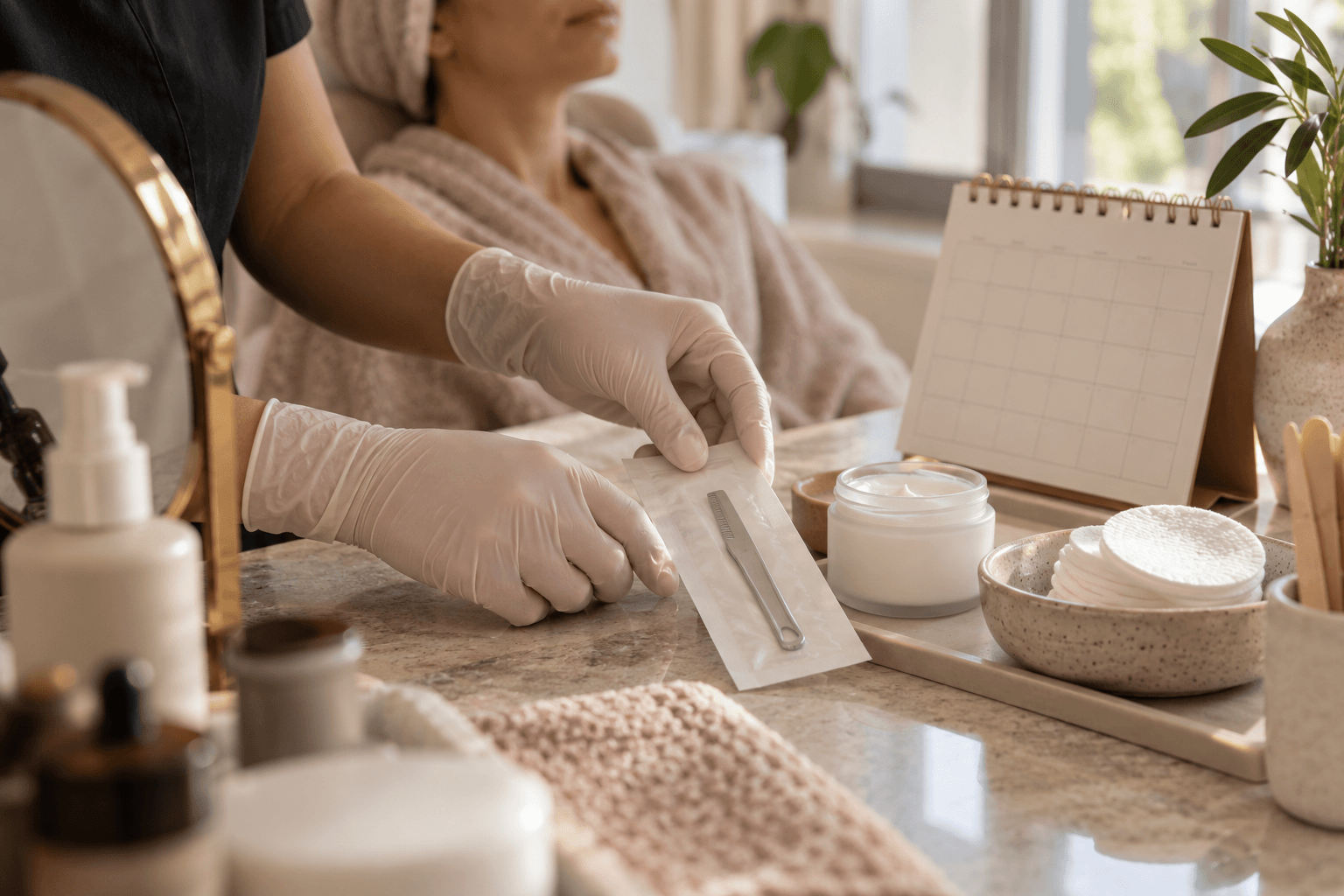
There is no evidence-based dermaplaning calendar that fits everyone. Do not repeat the service until redness, stinging, tenderness, peeling or other irritation has resolved. The exact procedure, your skin's response, home products, recent hair removal and nearby treatments should guide the next appointment—not a universal “every month” rule.
Start with the right definition
California's Board of Barbering and Cosmetology describes dermaplaning as exfoliating the epidermis with a razor-edged tool, typically a single-use surgical blade with a rounded end, while also removing fine vellus hair. Since January 1, 2022, trained California estheticians and cosmetologists may perform this beautification service within their licensed scope.
That definition matters. Superficial cosmetic dermaplaning is not scar surgery, acne treatment or permanent hair removal. It may temporarily change surface feel and the way makeup sits. A 2011 systematic review—based on a literature search ending in August 2009 and grouping dermaplaning with other facial-rejuvenation modalities—found the evidence too limited for confident rejuvenation conclusions. That older review is a reason to question sweeping promises, not proof against every modern claim. Read the broader dermaplaning benefits, limits and preparation guide before choosing the service by its strongest-sounding claim.
Why a fixed monthly rule can fail
Two people can receive a service with the same name and recover differently. One may use no exfoliating products at home; another may use a prescription retinoid, acne products or acids. One may have calm, intact skin; another may be healing from sunburn, waxing or a peel. Booking both on the same automatic interval ignores the variables that change irritation risk.
The American Academy of Dermatology says exfoliation frequency depends on skin type and method, and that more aggressive exfoliation should be done less often. California's dermaplaning bulletin lists conditions that should postpone service but does not prescribe a universal repeat interval. Together, those sources support reassessment instead of one required number of days for every person.
Cleveland Clinic also advises complete healing between dermaplaning procedures, but its patient page describes procedures performed by healthcare providers and includes deeper, medical variants. It is useful for broader risk context, not as evidence for Enclave's exact superficial esthetic protocol or a specific rebooking cadence.
Use this recovery check before rebooking
A date on the calendar is only a reminder to reassess. Before scheduling again, ask:
- Does my skin feel normal? No persistent burning, stinging, unusual tightness, tenderness or itching.
- Does it look settled? No ongoing redness, peeling, open areas, fresh scabs, sunburn or worsening breakout.
- Is my routine stable? Familiar gentle cleanser, moisturizer and sun protection no longer sting.
- Have products changed? New acids, retinoids, benzoyl peroxide, scrubs or prescription products can change the plan.
- Did I have another service? Waxing, threading, sugaring, peels, lasers or other procedures may require more separation.
- Is the goal still reasonable? Temporary surface smoothness and vellus-hair removal are different goals from treating acne, scars or pigmentation.
If any answer is unclear, waiting is a useful decision—not a failed routine. Bring the product list and procedure timeline to a skin consultation instead of trying to calculate the interval from social-media advice.
Peach fuzz is not a safety clock
Fine facial hair will grow again because dermaplaning does not remove the follicle. Visible regrowth can influence whether you still like the cosmetic finish, but it does not prove the epidermis is ready for another exfoliation. Do not let hair regrowth override redness, sensitivity or a disrupted routine.
At-home face shaving is also not a substitute for a professional assessment. Both may remove hair, but the California Board's dermaplaning best-practice recommendations address training, licensed scope, infection control and opening a new single-use blade for the service. Avoid copying an exposed-blade technique from a short video.
When to postpone
California guidance says not to perform dermaplaning over open acne wounds, abrasions, sunburn or other irritation. Cleveland Clinic also advises discussing active acne, cold-sore outbreaks, eczema, psoriasis, burns, rashes and skin growths before treatment. These are reasons for an individual review, not an invitation to diagnose yourself from a photo.
Postpone and ask the appropriate provider or licensed clinician when:
- skin remains red, painful, itchy, peeling or unusually sensitive from the last service;
- you have open, crusted, blistered, bleeding or infected-looking skin;
- acne is inflamed or has open lesions in the planned area;
- a cold sore, eczema or psoriasis flare, rash or sunburn is active;
- a mole, growth or spot is new, changing, painful, bleeding or unexplained;
- you recently waxed, threaded, sugared, peeled or had another procedure;
- a prescriber changed a topical or oral medicine that affects your skin.
Do not stop a prescription because a beauty blog or appointment reminder says to. Ask the prescriber and the provider how—or whether—to time the service.
Preparation should protect the skin you have today
The California dermaplaning bulletin advises avoiding physical or chemical exfoliation for three to five days before the service. For prescription topical exfoliants, it describes seven to fourteen days or another interval directed by the prescribing physician. Those are preparation guardrails from the state bulletin, not permission to stop a prescription without the prescriber.
The bulletin also advises against waxing, threading, sugaring or other hair removal at the dermaplaning appointment and recommends scheduling those services one to two weeks earlier. Stacking methods to save time can remove or irritate more surface skin than intended.
Do / Don't before another session
Do:
- Wait until skin has returned to its usual calm baseline.
- Bring a current list of prescription and over-the-counter products.
- Share recent peels, waxing, lasers, facials and sunburn honestly.
- Verify the provider's active California license and dermaplaning training.
- Ask whether a new single-use blade will be opened and placed in a sharps container afterward.
- Leave with written, service-specific aftercare and warning signs.
Don't:
- Rebook automatically because four weeks passed or fine hair returned.
- Hide irritation so the appointment can proceed.
- Stack scrubs, acids, retinoids, waxing and dermaplaning without a coordinated plan.
- Assume stronger exfoliation creates a better glow.
- Accept medical, scar-removal or permanent-hair claims from a cosmetic service.
- Reuse or share a dermaplaning blade.
Skin tone and dark-spot history belong in the plan
AAD cautions that aggressive exfoliation may increase dark spots for people with darker skin tones or a history of pigment changes after burns, bites or acne. That does not make dermaplaning universally safe or unsafe for one skin tone. It means the method, pressure, frequency, current inflammation and past pigment response deserve a conservative, individualized discussion.
If you develop darkening, lightening or prolonged irritation, pause further exfoliation and seek qualified guidance. Trying to scrub or peel away a pigment change can worsen it.
Aftercare is part of the interval
Use the written plan for cleansing, moisturizer, makeup, exercise, sun protection, retinoids and acids. Keep care simple while skin is reactive; do not test several new “repair” products at once. Our dermaplaning aftercare guide explains why makeup, workouts and active products do not share one universal restart time.
A repeat session should not be used to fix irritation from the previous one. If the skin has not returned to baseline, the next step is reassessment—not more exfoliation.
What can go wrong?
Dermaplaning can cause cuts, irritation, infection, scarring or a change in skin color. Following hygiene practices, opening a new single-use blade, choosing a trained provider and screening candidacy can reduce avoidable risk but cannot make the service risk-free. More frequent treatment is not proof of better care.
Contact a licensed clinician for bleeding that does not stop, blistering, signs of infection or swelling that lasts longer than expected or worsens. Rapidly spreading redness, increasing warmth, fever or chills need prompt medical evaluation. Trouble breathing or swallowing, or swelling of the lips, tongue, face or throat, is an emergency—call 911.
A concise rebooking decision
| What you notice | Useful next step |
|---|---|
| Skin is calm, intact and back to its normal routine | Discuss whether the cosmetic goal still justifies another session |
| Fine hair returned, but skin still stings or peels | Wait; hair regrowth does not override recovery |
| New retinoid, acid, acne product or prescription | Ask the prescriber and provider how it changes timing |
| Recent waxing, peel, laser or sunburn | Postpone and coordinate separation between services |
| Open acne, rash, cold sore, infection or changing spot | Do not dermaplane over it; seek the appropriate evaluation |
| Worsening pain, blistering, spreading redness or fever | Seek licensed medical care promptly |
THE SHORT DECISION
Ready means recovered—not merely due.
If your skin is calm, intact, back to its familiar routine and free from conflicting recent treatments, a consultation can reassess whether another session fits your goal. If it is still reactive, postpone. A date is not a diagnosis.
Frequently asked questions
How often should you dermaplane your face?
There is no evidence-based interval that fits every face. Consider another professional dermaplaning appointment only after redness, stinging, tenderness, peeling or other irritation has resolved and a qualified provider has reassessed your skin, products and recent treatments.
Is monthly dermaplaning always safe?
No. A monthly appointment may be too soon for irritated or slow-to-recover skin, especially when other exfoliants, retinoids, waxing, peels or procedures are involved. A calendar cannot confirm that your skin barrier has recovered.
Should peach-fuzz regrowth decide when to rebook?
Hair regrowth can affect the cosmetic result you notice, but it should not override skin recovery. Do not repeat exfoliation simply because fine hair is visible again while the skin is still reactive.
When should dermaplaning be postponed?
Postpone over open acne wounds, abrasions, sunburn or other irritation. Active cold sores, eczema or psoriasis flares, burns, rashes, concerning growths, recent procedures and prescription skin products may require provider or clinician guidance first.
Is at-home face shaving the same as professional dermaplaning?
No. Both may remove fine hair, but professional dermaplaning is a controlled epidermal-exfoliation service performed with a specific razor-edged tool, training, hygiene and scope requirements. Do not copy a professional blade technique at home.
Sources and evidence note
- California Board of Barbering and Cosmetology — Dermaplaning Industry Bulletin (January 2022; state scope, training, single-use blade, contraindications, preparation, hair-removal separation and sharps practices)
- American Academy of Dermatology — How to Safely Exfoliate at Home (updated February 6, 2026; skin type, method, frequency, sensitizing products and pigment considerations)
- Cleveland Clinic — Dermaplaning (medically reviewed April 6, 2022; broader healthcare-provider procedure scope, complete healing, candidacy, risks and clinician-contact signs; not Enclave's service protocol)
- Aesthetic Plastic Surgery — Dermaplaning, Topical Oxygen, and Photodynamic Therapy: A Systematic Review (published December 2011; literature search ended August 2009 and grouped several modalities; a dated limitation signal rather than proof about each modern claim)
- U.S. Centers for Disease Control and Prevention — About Cellulitis (updated August 5, 2025; spreading redness, pain, warmth, fever and urgent medical evaluation)
- American Academy of Dermatology — Signs Your Rash Needs Medical Attention (January 23, 2024; rapidly spreading rash and eye, lip or breathing warning signs)
- MedlinePlus — Anaphylaxis (updated December 4, 2025; emergency breathing, swallowing and swelling symptoms)
Evidence note: QuestionFinder displayed the exact, unedited query “how often should you dermaplaning your face” at 1,600 monthly searches, Google signal 43 and buyer intent 40 when collected October 8, 2026. The headline normalizes that wording to “How often should you dermaplane your face?” These are directional tool labels, not a guarantee or a Santa Ana search-volume claim. No authoritative source reviewed for this article established a universal monthly interval, so the answer is intentionally recovery-based.
Medical disclaimer: This article is educational and is not medical advice, diagnosis or treatment. Enclave Beauty services do not replace care from a licensed medical professional.