FACIALS & SKIN HEALTH · QUESTIONS PEOPLE ASK
Can you get a facial with rosacea?
Yes, if it respects your skin's thermostat.
You booked the facial as a treat. You walked out pinker than you walked in, and by dinner your cheeks felt warm, tight and a little stingy. Was that the famous post-facial glow, or a flare? If you have rosacea, or suspect you do, that question is the reason many people stop booking facials at all. They do not have to. Here is what dermatology groups and the National Rosacea Society actually say, the seven mistakes that turn a calm hour into a red evening, what to tell the person working on your skin, and when a dermatologist should come first.
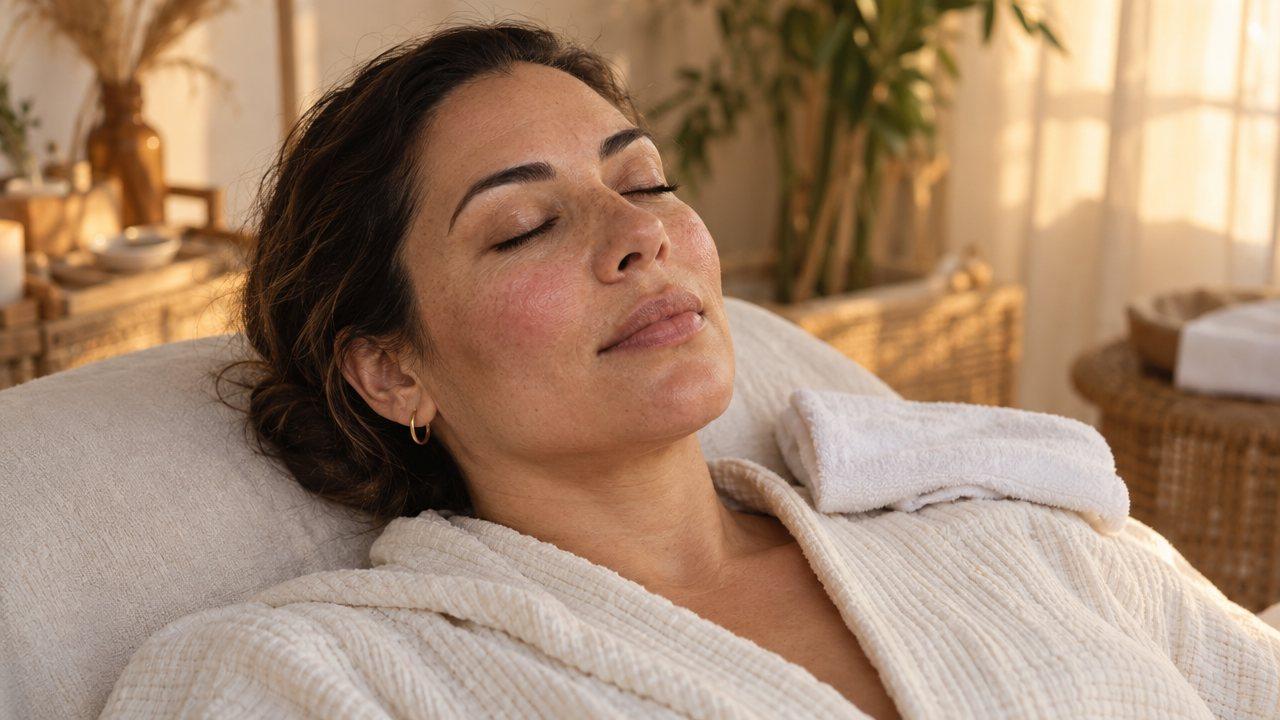
Short answer: many people with rosacea can get a facial, and some find it relaxing, as long as it is designed around rosacea. That means no steam, hot towels or hot wax, no scrubs, coarse exfoliation or strong peels, and no trigger ingredients such as alcohol, menthol, camphor, peppermint, eucalyptus, witch hazel or heavy fragrance. Tell the provider about your rosacea, your prescriptions and anything that has burned or stung before; ask for a patch test of new products. Skip the facial and see a dermatologist first if your skin is actively flaring, you have bumps, burning or swelling you have never had diagnosed, or your eyes are dry, gritty or swollen. A facial is not a rosacea treatment: there is no cure, and medical care comes from a dermatologist.
First, what rosacea is (and why a facial can go either way)
Rosacea is a long-term skin condition, not a skin type. Mayo Clinic lists its common signs as facial redness and flushing, visible veins, swollen bumps, a burning sensation, eye problems and, less often, an enlarged nose. It notes that people are more likely to develop it if their skin burns easily in the sun, they are between 30 and 50, they have smoked or a family member has rosacea. The National Institute of Arthritis and Musculoskeletal and Skin Diseases (NIAMS) adds that it is more common in women, but tends to be more severe when men get it.
Both agencies say the same thing about the future: there is no cure, but treatment can keep rosacea under control. And both point to triggers. Mayo Clinic's list includes sun or wind, hot drinks, spicy foods, alcohol, very hot and cold temperatures, emotional stress, exercise, some blood pressure medicines and “some cosmetic, skin and hair care products.”
Now picture a classic spa facial: a steamer aimed at your face, a hot towel wrapped around it, a gritty scrub, a tingling toner, a fragrant mask and a peel to finish. Almost every step is on someone's trigger list. That is the whole story in one image. The question is not whether facials and rosacea can coexist. It is whether this particular facial was built for your skin.
Your face has a thermostat. Heat turns it up.
The most useful numbers here come from the National Rosacea Society (NRS), a patient-education nonprofit that has surveyed people with rosacea for decades. These are self-reported surveys, not clinical trials, but they line up with what dermatologists list as triggers.
- In a survey of 1,066 people published in 2002, 81% said sun exposure aggravated their rosacea, 79% emotional stress and 75% hot weather. Wind (57%), heavy exercise (56%), alcohol (52%) and hot baths (51%) followed. 41% named certain skin-care products and 27% cosmetics.
- In a May 2010 survey of 431 people, 84% said avoiding heat sources reduced how often they flared, and 74% said they had switched to cooler baths or showers.
- In a 2017 survey of 650 people, 44% said their flares were worst in summer and half said afternoons or evenings were the worst time of day.
Heat, friction and irritating ingredients are exactly what a careless facial adds. The NRS has said it plainly: steaming, hot towels and hot wax “can stimulate flushing,” and any treatment involving steam may cause rosacea to flare.
Here in Santa Ana, the thermostat gets tested from outside too. Our afternoons can stay warm into November, Santa Ana wind events bring dry, gusty air, and the low winter sun on the drive home along the 5 or the 22 lands right on your cheeks. (We wrote about that in our Santa Ana winds skin guide.) If you are booking a facial, a calm, cool day and a cool room are part of the plan.
The seven mistakes behind a post-facial flare
1. Saying yes to the steamer
Steam is often treated as the “relaxing” part of a facial. For rosacea-prone skin, the NRS lists it as a step to avoid, and the dermatologist interviewed by Healthline in February 2024 said steam facials should be skipped because they may worsen symptoms. Ask for it to be left out before the appointment starts, not halfway through.
2. Hot towels and warm wax
Same thermostat, different tool. The NRS groups hot towels and hot wax with steam as treatments that can stimulate flushing. A cool, damp cloth does the same cleansing job without the heat.
3. Scrubs, brushes and “deep” exfoliation
The American Academy of Dermatology (AAD) tells people with rosacea to be gentle: avoid rubbing or scrubbing, and skip washcloths, sponges and exfoliators. The NRS lists exfoliating with coarse cleansers among salon steps that may aggravate rosacea. If a facial on the menu is sold on how thoroughly it scrubs, it is the wrong first pick for reactive skin. Our guide to over-exfoliated skin explains why a stripped barrier stings.
4. A strong peel “to fix the redness”
Redness is not something you can peel away. The NRS advises avoiding skin peels, and Healthline's dermatologist source said a very strong chemical peel is not an ideal option. If a dermatologist is treating your rosacea, ask them before any peel, at a spa or at home.
5. The tingling toner and the fragrant mask
The AAD's rosacea pages say to stop using astringents and toners and to avoid products containing menthol, camphor or sodium lauryl sulfate. Its April 2024 tips add alcohol, fragrance and urea for facial products. The NRS adds peppermint, eucalyptus, witch hazel and certain fragrances. “Tingle” is not proof that something is working. On rosacea-prone skin it is often the first sign of irritation.
6. Not mentioning your prescription
Many people with rosacea use prescription treatments: the AAD lists options such as azelaic acid, ivermectin, metronidazole, minocycline foam and low-dose oral doxycycline, and in November 2024 the FDA approved Emrosi, an extended-release oral minocycline, for the bumps and redness of rosacea in adults. Some people also use active skin care such as retinoids or acids. Your esthetician needs to know what you are using so they can avoid stacking irritation on top of it. Bring a photo of the labels.
7. Booking a facial in the middle of a flare
A facial is a comfort service, not a rescue for a flare. If your face is burning, swollen or bumpy right now, or you have never had those symptoms checked, the right appointment is with a dermatologist. Mayo Clinic's advice is simple: ongoing symptoms of the face or eyes deserve a diagnosis and treatment from a healthcare professional.
Is it rosacea, sensitive skin or something else?
A facial cannot tell you. Redness and stinging have many causes: irritation from products, eczema, acne, sun damage and more. Research is still sorting out how close some of them are. A small pilot study from George Washington University, published in the Journal of the American Academy of Dermatology and announced on May 5, 2026, compared 30 women aged 30 to 50 with and without sensitive skin syndrome. It found that antimicrobial peptides that are typically raised in rosacea were lower in the sensitive-skin group, and Demodex mites were found at the same rate in both groups. The authors say larger studies are needed, but the takeaway for you is practical: the label matters, and a dermatologist is the one who gives it.
That is especially true for brown and Black skin. Mayo Clinic notes that the flushing and redness of rosacea may be difficult to see on brown and Black skin, and NIAMS says rosacea may be underdiagnosed in people with darker skin because it can mask facial redness. A review in the American Journal of Clinical Dermatology, published online on September 21, 2026, estimates rosacea may affect up to 2–4% of Black, Asian, Pacific Islander and Hispanic/Latino American populations, says that is likely an underestimate, and notes redness on darker skin can look violet-toned and be mistaken for hyperpigmentation. In a community as diverse as Little Saigon, Santa Ana and Garden Grove, “I don't really get red” is not the same as “I don't have rosacea.” Burning, stinging, bumps and eye irritation count as clues too.
When to see a dermatologist before any facial
- You have persistent redness, flushing, bumps or burning that has never been diagnosed.
- Your eyes or eyelids are dry, gritty, irritated or swollen. Mayo Clinic says eye symptoms can appear before, after or with skin symptoms, and NIAMS warns that untreated eye involvement can lead to eye damage and vision loss.
- Your skin thickens, especially on the nose, or bumps keep coming back.
- A product or treatment left you with pain, blistering or discoloration. The NRS advises calling your doctor for pain, discomfort or discoloration after a skin procedure.
- You want lasers or intense pulsed light for redness and visible vessels. The AAD describes these as rosacea treatments and recommends a board-certified dermatologist for the procedure.
What to tell your esthetician (copy this into your notes app)
The NRS suggests telling the salon about your rosacea up front, along with allergies, pregnancy, heart conditions and high or low blood pressure, and bringing your own routine or products if you like. In its fall 2025 tips it suggests calling ahead to ask whether someone on staff knows how to handle rosacea-prone skin, and asking which products they use so you can check the ingredients. Here is a simple script:
- “I have rosacea (or my skin flushes easily). Please skip steam, hot towels, scrubs and peels.”
- “These have burned or stung before: ____.”
- “I use these prescriptions or actives: ____.”
- “Can I see the ingredient lists for what you plan to use?”
- “Which step is least likely to aggravate my rosacea?” (This is the NRS's own suggested question.)
- “Can we patch test anything new on a small area first?”
A good provider will not be offended. They will adjust the plan, and if something sounds like it needs a doctor, they will say so.
What a rosacea-friendly facial looks like
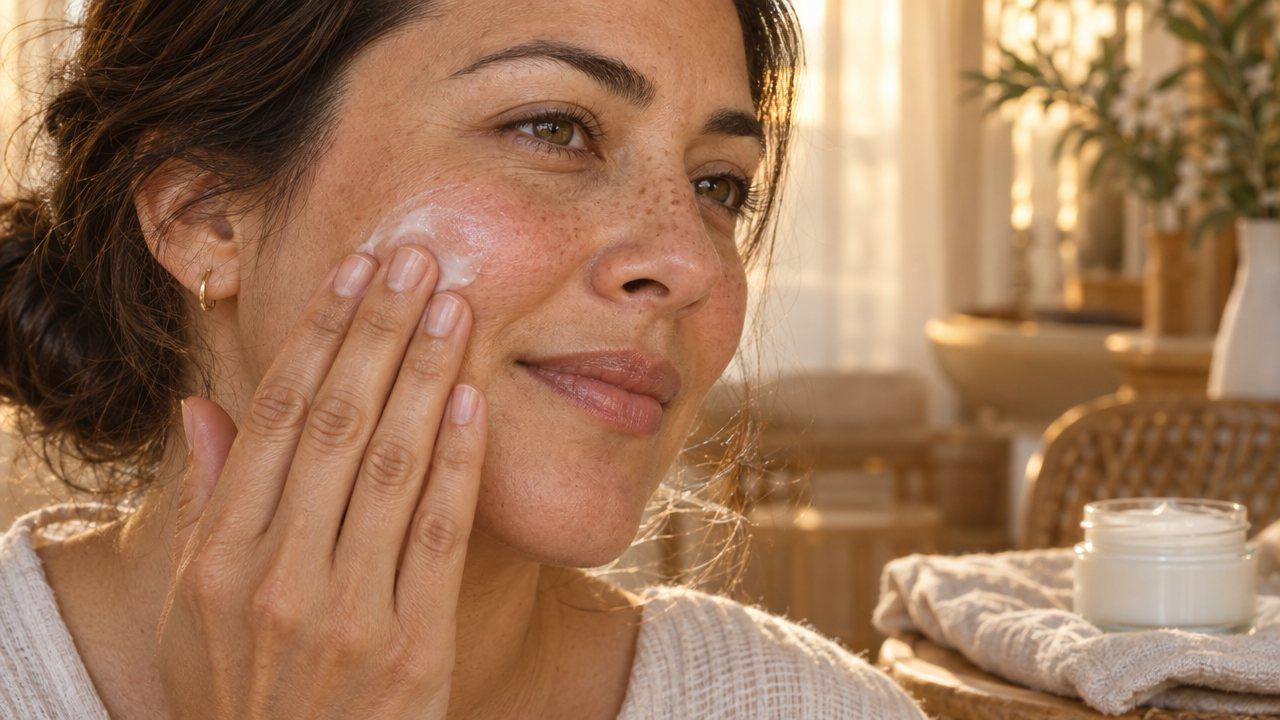
No single protocol is official, but putting the AAD, NRS and dermatologist guidance side by side, a gentle facial for rosacea-prone skin tends to look like this:
- A cool, calm room and lukewarm or cool water; no steamer, no hot towels.
- A mild cleanser, applied with fingertips and rinsed thoroughly, then the skin patted dry.
- No scrubbing tools, brushes or gritty exfoliants, and no peel.
- Soothing, simple products, fragrance-free where possible. The dermatologist interviewed by Healthline named green tea, aloe vera and hyaluronic acid as gentle options, and said retinoids, salicylic acid and high-strength vitamin C can irritate.
- Light, slow hand work rather than vigorous massage. If anything starts to sting or heat up, it stops.
- A moisturizer and a mineral sunscreen to finish. The AAD suggests a broad-spectrum SPF 30 or higher every day, and says a fragrance-free formula with zinc oxide, titanium dioxide or both is least likely to irritate sensitive skin.
At home, the AAD's routine is just as short: a mild cleanser up to twice a day, moisturizer every day, sunscreen, no rubbing, and a patch test for new products on the inner arm for 7 to 10 days before they go on your face. Our patch test guide walks through how.
Do and don't
- Do book on a calm-skin day and tell the studio about your rosacea when you book.
- Do bring your prescription names and the products that have stung before.
- Do ask for steam, hot towels, scrubs and peels to be left out.
- Do wear a mineral sunscreen and a hat on the way home, and skip the hot yoga class that evening.
- Don't book a facial as a fix for a flare; book a dermatologist.
- Don't push through stinging because “it means it's working.”
- Don't try a new active, peel or tool the same week as a facial.
- Don't ignore eye symptoms.
How we approach rosacea-prone skin at Enclave
We are a beauty studio, not a dermatology clinic, and we do not diagnose rosacea. What we can do is slow down. Every new skin client in Santa Ana can start with the free 45-minute skin consultation: we talk about when you flush, what has burned before, what your dermatologist prescribes and what you want from a facial. If your skin is calm and a gentle approach fits, the Signature Relax Facial (from $85) is the softest place to start on our facials menu, and we adapt it around your triggers. Treatments built on deeper cleansing or exfoliation, such as the Diamond Deep-Clean Facial (from $135) or the Dermaplaning Facial (from $110), are not where we would begin with reactive skin. If your skin is flaring or your eyes are involved, we will tell you that a dermatologist is the better first stop, and we mean it.
Not sure which service fits? Our guide to choosing a facial and our first facial guide explain what each one involves.
What a good outcome looks like
Picture walking out to your car on a cool November afternoon. Your skin feels soft and quiet, not hot. You glance in the visor mirror and see your face, not a flare. That evening there is no sting when you wash, and the next morning there is nothing to cover. You know which steps to say no to, your dermatologist handles the medical side, and a facial has gone back to being what it was supposed to be: an hour where someone takes care of you, carefully.
If you are coming from Westminster, Tustin or Irvine and want to talk it through first, book the free consultation or call or text (310) 666-8298.
Questions people ask
Can you get a facial if you have rosacea?
Often, yes. The National Rosacea Society has written that a facial can be relaxing for some people with rosacea when it is performed properly with appropriate products, and a dermatologist interviewed by Healthline in February 2024 said skipping facials entirely is not always necessary. The facial needs to be built around rosacea: no steam, hot towels or hot wax, no scrubs or strong peels, and no trigger ingredients such as alcohol, menthol, peppermint, eucalyptus, witch hazel or heavy fragrance. If your rosacea is actively flaring, or you have eye symptoms, see a dermatologist first.
What should you avoid in a facial if you have rosacea?
Heat and friction are the big two. The National Rosacea Society advises avoiding steaming, hot towels and hot wax because they can stimulate flushing, and avoiding skin peels and exfoliation with coarse cleansers. The American Academy of Dermatology suggests skipping astringents and toners and products with menthol, camphor or sodium lauryl sulfate, and its 2024 tips add alcohol, fragrance and urea to the list for facial products.
Is steam bad for rosacea?
Steam is one of the treatments rosacea groups most often warn about. The National Rosacea Society notes that heat is one of the most common triggers in its patient surveys and that any treatment involving steam may cause rosacea to flare. In its 2010 survey of 431 people with rosacea, 84% said avoiding heat sources reduced how often they flared.
Are chemical peels safe for rosacea?
Strong peels are generally a poor fit. The National Rosacea Society lists skin peels among the salon treatments to avoid, and the dermatologist quoted by Healthline said a very strong chemical peel is not an ideal option. If a dermatologist is treating your rosacea, ask them before any peel or active exfoliation, at a spa or at home.
Can a facial cure rosacea?
No. Mayo Clinic and the National Institute of Arthritis and Musculoskeletal and Skin Diseases both say there is no cure for rosacea, but treatment can help control it. Medical treatment, such as prescription creams, oral medicines, lasers or intense pulsed light, comes from a dermatologist. A gentle facial can be a comfortable, calming part of your routine; it is not a rosacea treatment.
Does Enclave Beauty offer facials for rosacea-prone skin?
Enclave Beauty in Santa Ana starts every new skin client with a free 45-minute skin consultation, which is where we talk through flushing, triggers, medications and what your dermatologist has advised. We do not diagnose rosacea. If your skin is calm and a gentle approach fits, the Signature Relax Facial (from $85) is the softest starting point on our menu; if your skin is flaring or your eyes are involved, we will suggest seeing a dermatologist first.
Sources and evidence note
- Mayo Clinic — Rosacea: Symptoms and causes (October 17, 2023; signs, triggers including some cosmetic, skin and hair care products, risk factors, ocular rosacea, harder to see on brown and Black skin, no cure; read November 16, 2026)
- NIAMS (National Institutes of Health) — Rosacea (who gets it, may be underdiagnosed in darker skin, eye symptoms and vision risk, no cure but treatment can control it; read November 16, 2026)
- American Academy of Dermatology — How to prevent rosacea flare-ups (stop astringents and toners; avoid menthol, camphor and sodium lauryl sulfate; SPF 30+ fragrance-free mineral sunscreen; see a dermatologist for a skin care plan; read November 16, 2026)
- American Academy of Dermatology — 7 rosacea skin care tips (news release, April 9, 2024; avoid alcohol, fragrance, menthol and urea in facial products; patch test on the inner arm for 7–10 days; be gentle, skip washcloths, sponges and exfoliators; read November 16, 2026)
- American Academy of Dermatology — Rosacea: Diagnosis and treatment (last updated April 3, 2024; skin care is essential to every treatment plan; prescription options; IPL and lasers; choose a board-certified dermatologist; read November 16, 2026)
- National Rosacea Society — New survey pinpoints leading factors that trigger symptoms (Rosacea Review, Summer 2002; 1,066 respondents; sun 81%, stress 79%, hot weather 75%, skin-care products 41%, cosmetics 27%)
- National Rosacea Society — New survey finds rosacea worsens with exposure to heat sources (May 25, 2010; 431 respondents; 84% said avoiding heat reduced flares)
- National Rosacea Society — Survey suggests summer afternoons may be worst for rosacea flare-ups (Rosacea Review, Summer 2017; 650 respondents)
- National Rosacea Society — Tips for finding a day salon sensitive to rosacea (Rosacea Review, Winter 2001; facials can be relaxing when performed properly; avoid steaming, hot towels, hot wax, peels, coarse exfoliation and listed ingredients)
- National Rosacea Society — Q&A: spa treatments (Rosacea Review, Summer 2007; heat among the most common triggers; steam and exfoliation may aggravate)
- National Rosacea Society — Safety tips for skin procedures (Rosacea Review, Summer 2013; ask which treatment is least likely to aggravate rosacea; patch test; call your doctor for pain or discoloration)
- National Rosacea Society — Treat your rosacea skin better with these tips (Rosacea Review, Fall 2025; call ahead about staff experience with rosacea-prone skin; check product ingredients)
- Healthline — Your guide to getting a facial if you have rosacea (Alysa Hullett, February 26, 2024; medically reviewed by Cynthia Cobb, DNP, APRN; dermatologist Divya Sachdev, MD, on gentle ingredients, skipping steam and strong peels)
- Dermatology Times — FDA approves Journey Medical's DFD-29 (Emrosi) for rosacea (November 4, 2024; minocycline extended-release 40 mg for inflammatory lesions and erythema in adults)
- News-Medical — New evidence separates sensitive skin syndrome from rosacea (May 5, 2026; George Washington University release on Menta et al., JAAD 2026 pilot study of 30 women)
- Lohani D, Marson JW, Baldwin HE. Rosacea in patients with skin of color: diagnosis and management. Am J Clin Dermatol. 2026;27(6):1225–1238 (published online September 21, 2026; up to 2–4% prevalence estimate, likely underestimated; violaceous erythema)
- Enclave Beauty — Services (Signature Relax Facial $85, Diamond Deep-Clean Facial $135, Dermaplaning Facial $110, free skin consultation; starting prices checked November 16, 2026; prices may change)
Evidence note: Photos in this guide are styled illustrations; they do not show Enclave clients or treatment results. There are no controlled trials comparing facial techniques in people with rosacea that we could find. The trigger figures come from National Rosacea Society patient surveys, which are self-reported and are not peer-reviewed clinical studies; the three surveys are separate and should not be combined. The esthetician guidance comes from NRS patient-education pages and a dermatologist interviewed by Healthline, which is expert opinion. The GWU study is a 30-person pilot reported through the university's release; we did not read the full journal paper. The FDA approval details for Emrosi come from Dermatology Times' report of the manufacturer's announcement. All pages listed were readable on November 16, 2026; no archive, cache or mirror copies were used.
Medical disclaimer: This article is educational and is not medical advice, diagnosis or treatment. Enclave Beauty services do not replace care from a licensed medical professional.