CHEMICAL PEELS · SKIN OF COLOR
Are chemical peels safe for dark skin?
The question is bigger than the acid name.
A peel may be appropriate for skin of color, but “safe for every skin tone” is not a meaningful guarantee. Current inflammation, pigment history, peel depth, sun exposure, home products and provider experience all change the risk.
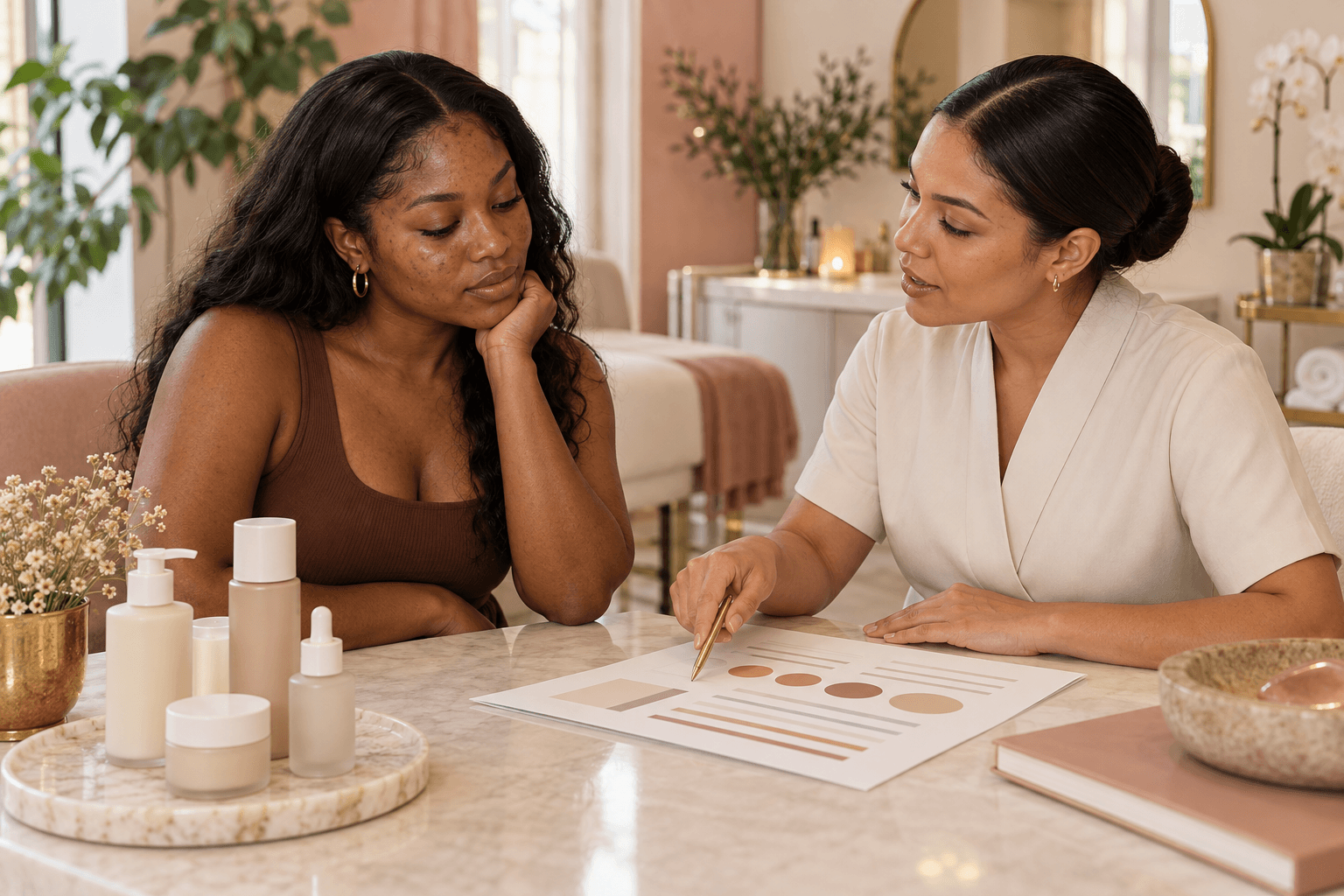
Yes—some chemical peels can be used on darker skin tones, but the plan must be individualized. The American Academy of Dermatology says people with skin of color can safely have chemical peels while emphasizing expertise in treating darker skin. The important risk is not melanin itself; it is an inflammatory injury that can leave darker or lighter pigment changes, a burn or a scar.
What is a chemical peel?
A chemical peel applies a controlled chemical solution to remove skin layers to a planned depth. “Chemical peel” is therefore a category, not one procedure. Ingredient, concentration, pH, number of layers, contact time, application method and the condition of the skin can all influence depth and recovery.
Who may consider one?
Depending on the specific peel and provider scope, peels may be considered for concerns such as some forms of acne, uneven tone or surface texture. A cosmetic consultation cannot diagnose melasma, dermatitis, infection or the cause of a changing dark spot. If the concern is unclear, painful, rapidly changing, raised, bleeding or medically persistent, evaluation by a dermatologist comes before an elective peel.
Why does pigment risk matter?
Inflamed or injured skin can produce excess pigment afterward, called post-inflammatory hyperpigmentation. It can also become lighter than surrounding skin. These outcomes can happen in any skin tone, but the visual impact and risk profile deserve specific discussion in skin of color. A 2026 scoping review found that chemical peels can be safe and effective in skin of color with appropriate patient selection and technique, while also noting that evidence varies across peel types and studies.
Six questions that reveal more than “Is this peel safe?”
- What exact peel and depth are being proposed? “Brightening peel” is a marketing label, not enough information for informed consent.
- How will my current skin condition change the plan? Active irritation, sunburn, open skin, infection or uncontrolled inflammation may require postponement.
- What experience do you have with my skin coloring and concern? The AAD specifically recommends asking how many peels the provider has performed on people with similar skin coloring.
- Which products and medicines must be reviewed? Retinoids, benzoyl peroxide, acids, recent hair removal, prescriptions and prior procedures may affect sensitivity or timing.
- What pigment changes are possible? Ask about darkening, lightening, prolonged redness and the provider’s plan if healing departs from expectations.
- Who should I contact after treatment? Written aftercare and a clear escalation path matter as much as the procedure itself.
What problem can a stronger peel create?
Stronger is not automatically faster, more appropriate or more effective. The FDA warns against buying or using high-concentration chemical peel products without professional supervision because depth depends on concentration, applications and contact time. Reported harms include chemical burns, pain, swelling, infection, pigment change and disfiguring scars.
Do not use a high-strength peel at home because a social post recommends a percentage for your skin tone. Skin color alone cannot determine concentration, depth or candidacy.
A practical decision checklist
- The concern and expected benefit are clearly named.
- The provider explains the exact peel, intended depth and realistic recovery.
- Your history of dark marks after acne, cuts, burns or prior procedures is discussed.
- Current products, prescriptions, recent sun exposure and upcoming events are reviewed.
- You understand that one peel cannot guarantee even tone or erase melasma, acne scars or pores.
- You receive written sun protection, cleansing, moisturizer, makeup and active-ingredient instructions.
Why Orange County sun planning belongs in the consultation
Santa Ana and nearby Orange County clients may have year-round outdoor exposure rather than a predictable “peel season.” Plan around driving, sports, beach days, travel and events. Sun avoidance, shade, a hat and provider-approved broad-spectrum sunscreen are part of risk management; they are not a guarantee against pigment change.
When should medical care be involved?
Seek prompt care for severe or worsening pain, marked swelling, blistering, an extensive burn, pus, fever, eye involvement or rapidly spreading redness. A dermatologist should evaluate persistent pigment change, suspected infection or a lesion that should not have been peeled. Do not neutralize, scrub or layer another acid onto an unexpected reaction unless a qualified treating professional instructs you.
Related guidance
Use the chemical peel preparation checklist, plan makeup, sunscreen and aftercare, and compare a facial with a chemical peel before booking.
Sources
- American Academy of Dermatology — Chemical Peels: FAQs
- American Academy of Dermatology — Chemical Peel Preparation
- U.S. FDA — Warning on Chemical Peel Products Without Professional Supervision
- Chemical Peels in Skin of Color — 2026 Scoping Review
Evidence note: “Skin of color” includes varied tones, conditions and histories. Evidence from one peel, concentration or study population cannot guarantee another person’s outcome.
Medical disclaimer: Educational information only; not medical advice, diagnosis or a guarantee of candidacy, safety or results.