PREGNANCY · SKIN-CARE SAFETY
Pregnancy skin care
starts with a label review.
Hormonal changes can bring acne, dryness, sensitivity, and pigment changes. The safest update is not a viral replacement list—it is a simple routine reviewed with your obstetrician and dermatologist.
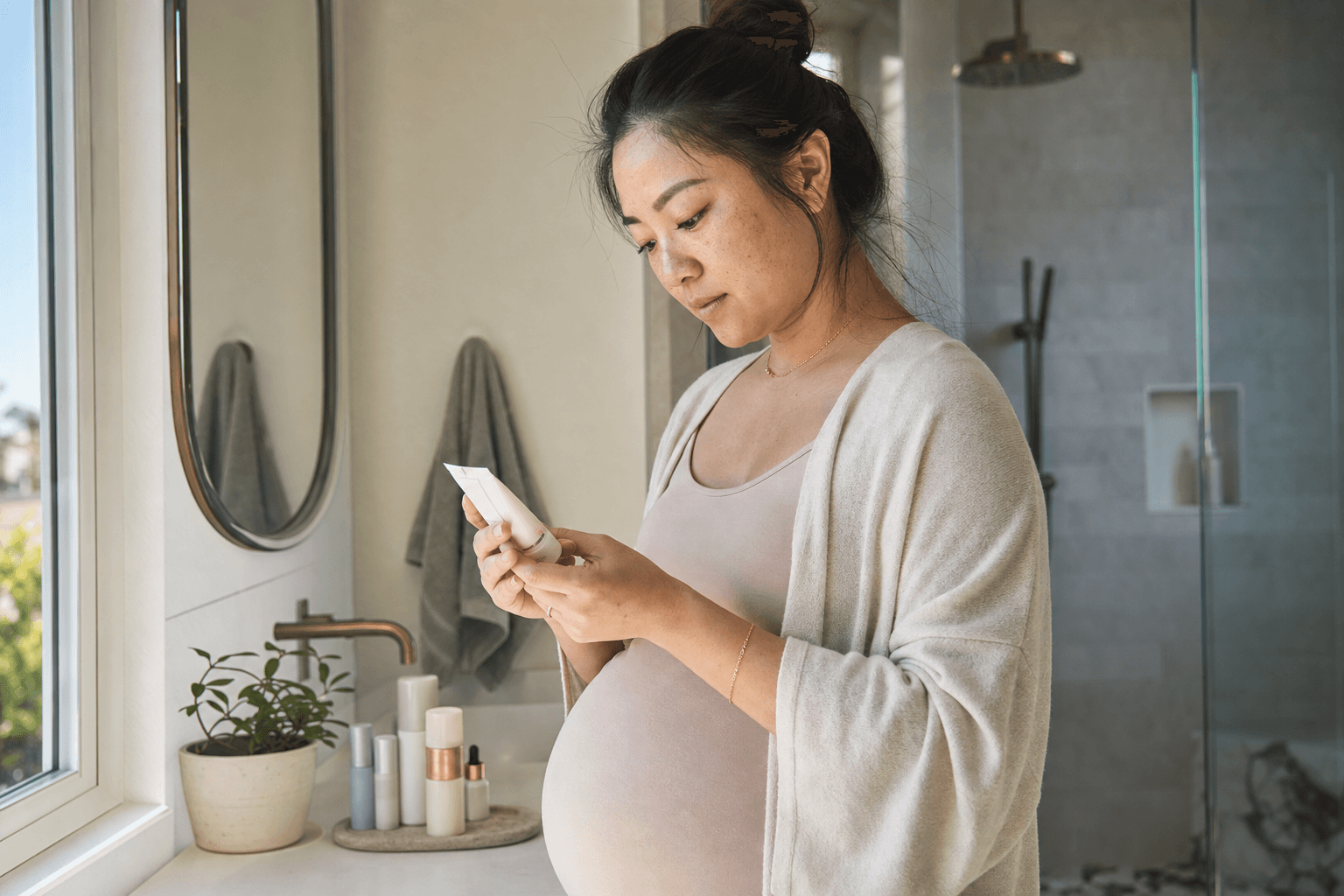
Pregnancy can change skin quickly, while product names hide ingredients across cleansers, acne gels, anti-aging serums, spot correctors, scalp treatments, and prescriptions. Make a complete list before changing anything, especially if you are pregnant, trying to conceive, or breastfeeding.
Build around three gentle steps
The American Academy of Dermatology recommends a simple base: cleanse gently up to twice daily and after sweating, moisturize for your skin type, and protect exposed skin from sun. Fragrance-free options may reduce avoidable irritation when skin becomes more reactive.
Review every retinoid
ACOG and the AAD recommend avoiding topical retinoids during pregnancy, including prescription tretinoin and tazarotene and over-the-counter retinol or adapalene. Oral isotretinoin has a known severe birth-defect risk and requires strict pregnancy-prevention controls. Do not substitute, stop, or restart a prescription without contacting the prescriber; call promptly if pregnancy occurs during treatment.
Acne options need context, not a blanket list
ACOG identifies topical benzoyl peroxide, azelaic acid, topical salicylic acid, and glycolic acid as over-the-counter ingredients that may be used during pregnancy, while AAD guidance urges caution with higher-dose salicylic acid and recommends discussing benzoyl peroxide and other actives with a dermatologist. Concentration, body area, frequency, broken skin, and combinations matter. Ask your obstetrician before starting treatment.
Melasma needs protection, not aggressive correction
Pregnancy-associated facial pigment can deepen with ultraviolet and visible-light exposure. Use shade, a wide-brim hat, sunglasses, and a broad-spectrum, water-resistant sunscreen as tolerated. The AAD advises avoiding hydroquinone during pregnancy. Postpone aggressive peels or devices marketed as quick melasma fixes until clinicians review the condition and timing.
“Natural” does not mean pregnancy-tested
Essential oils, botanical extracts, supplements, and handmade products can still irritate skin, trigger allergy, or lack pregnancy safety data. A label such as clean, non-toxic, or organic is not a medical safety determination. Bring photographs of the front, Drug Facts, and full ingredient panel to appointments.
Plan facials, brows, lashes, and permanent makeup carefully
Tell the provider about pregnancy, prescriptions, skin changes, allergies, and clinician restrictions before booking. Postpone services on inflamed, infected, open, or actively reacting skin. Permanent makeup and other body-art procedures add infection, healing, pigment, and aftercare considerations; obtain explicit guidance from your obstetric clinician rather than relying on a salon waiver.
When skin changes need medical assessment
New severe itching, widespread rash, blisters, jaundice, rapidly worsening swelling, pain, infection signs, or a rash involving the eyes or mouth needs prompt medical advice. Some pregnancy-specific skin conditions can require monitoring. Trouble breathing or swelling of the lips, tongue, face, or throat is an emergency.
Sources and editorial note
- American College of Obstetricians and Gynecologists: Skin Conditions During Pregnancy
- American Academy of Dermatology: Pregnancy Skin Care — updated 2025
- AAD: Acne Treatment During Pregnancy
- AAD: Retinoid or Retinol?
Editorial note: Reviewed August 31, 2026. Guidance can differ by ingredient, dose, route, condition, and individual pregnancy; this article does not authorize any treatment.
Medical disclaimer: Educational only, not medical advice. Pregnancy medication and procedure decisions belong with qualified clinicians.