WOMEN’S WELLNESS · HAIR HEALTH
Hair shedding has many causes.
Iron deserves testing—not guessing.
Low iron may contribute to some nonscarring hair loss in women, but a supplement is appropriate only when evaluation shows a need.
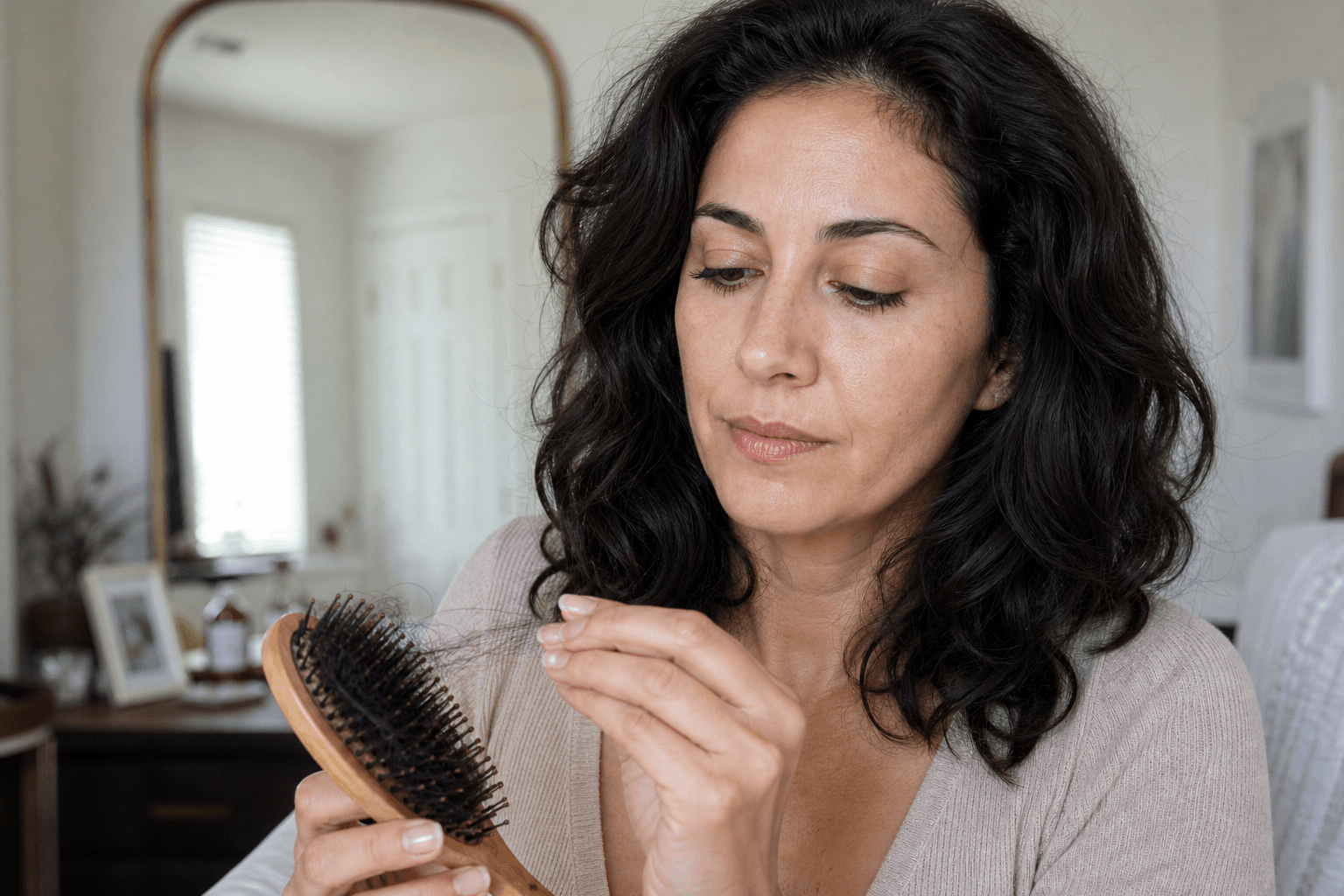
Iron supports hemoglobin and many body functions, and iron deficiency is more common in women under 50, people with heavy periods, pregnant people, frequent blood donors and some people with gastrointestinal conditions. Yet hair loss alone cannot tell you whether iron is low.
What research shows—and does not show
A 2022 systematic review and meta-analysis of 36 studies found that women with nonscarring hair loss had lower ferritin values on average than women without it. The authors also noted that the literature had not established a clear-cut relationship. Association does not prove that low iron caused every case—or that raising ferritin above an arbitrary internet target will regrow hair.
Ferritin is one piece of a workup
Ferritin reflects stored iron, but interpretation can be affected by inflammation and the clinical context. A clinician may consider a complete blood count, ferritin and other iron measures alongside menstrual history, diet, pregnancy, medications, recent illness or surgery, thyroid symptoms, weight change and the pattern of shedding. The correct panel and thresholds belong with a qualified clinician.
Different patterns suggest different questions
Diffuse shedding after illness, stress, childbirth or major change may differ from a gradually widening part, smooth round patches, broken hairs, or a painful and inflamed scalp. The American Academy of Dermatology emphasizes that women develop hair loss for many reasons and that conditions that look similar may require different treatment.
Do not start iron because a beauty product says so
The AAD advises taking iron, biotin or zinc only when a blood test shows deficiency. If levels are normal, supplementation can be harmful. Iron commonly causes gastrointestinal side effects, interacts with some medicines, and excessive intake can cause poisoning. Keep every iron-containing product away from children; accidental overdose can be fatal.
Food supports health without promising regrowth
Iron comes from meat, seafood, poultry, fortified grains, beans, lentils, spinach, peas, nuts and some dried fruit. Vitamin C can improve absorption of nonheme iron from plant foods. Dietary variety supports health, but food advice does not replace evaluation for heavy bleeding, malabsorption, pregnancy needs or confirmed anemia.
What to bring to an appointment
Record when shedding began, whether it is diffuse or patchy, recent illness or childbirth, menstrual changes, dietary restrictions, family history and every supplement dose. Bring photos of the part line and temples in the same lighting. Mention fatigue, weakness, reduced exercise tolerance or other symptoms rather than treating hair as an isolated cosmetic issue.
Where salon and beauty care fits
Gentle handling can reduce avoidable breakage, but a facial, scalp treatment or supplement cannot diagnose the cause of hair loss. Avoid tight styles, harsh brushing and aggressive chemical services when the scalp is inflamed or hair is breaking. Seek a dermatologist for sudden, patchy, scarring, painful, itchy or progressive loss.
Sources and editorial note
- American Academy of Dermatology: Hair Loss Diagnosis and Treatment
- NIH MedlinePlus: Iron — updated 2024
- Iron Deficiency and Nonscarring Alopecia in Women: Systematic Review and Meta-Analysis — 2022
- American Academy of Dermatology: Female Pattern Hair Loss
Evidence note: Observational differences in ferritin do not establish a universal treatment threshold or prove that iron will regrow hair.
Medical disclaimer: Educational only, not medical advice or a diagnosis.