TATTOO REMOVAL · HOW TO DO IT RIGHT
How soon can you remove a new tattoo?
Not tonight. Here is the calm plan for the weeks in between.
It looked perfect on the stencil. Three days later, under the bathroom light, it feels like a stranger moved into your arm. If you are searching “how soon can I remove a new tattoo” while the ink is still shiny, this guide is for you: why the laser has to wait for your skin, how long healing really takes, the panic mistakes that make removal harder, and what to do this week so the eventual plan goes smoothly.

Short answer: not while the tattoo is still healing. No agency sets one official waiting period, but the healing timeline is clear enough to plan around. Cleveland Clinic says the top layer of skin is typically healed around the two-month mark, with deeper layers taking several more months, and larger tattoos can take a few months to fully heal. Westlake Dermatology writes that most providers recommend waiting at least 8 to 16 weeks before the first laser session. Removal itself is a series: Ohio State says six to 10 treatments may be needed, four to eight weeks apart. You can book a consultation now; the laser comes later, once a provider confirms the skin has fully healed. Skip creams and DIY kits: the FDA has not approved them and says they may cause rashes, burns or scars.
First, breathe: you are far from the only one
Tattoo regret is common enough that it has its own polling data. In a Pew Research Center survey of 8,480 U.S. adults (July 10–16, 2023, published August 15, 2023), 32% of adults said they have a tattoo, and among them about a quarter, 24%, said they have ever regretted getting one or more. Regret was reported by about three in ten Hispanic adults with tattoos, 23% of White and 21% of Black adults with tattoos.
Regret in the first days is its own flavor. The skin is red and raised, the lines look thicker than they will once healed, and the design is new to your eye. Some of that feeling fades as the tattoo settles. Some of it doesn't, and that is fine too. Either way, the decision is better made when the skin has calmed down and you can see what you actually have. That is not stalling. It is the same timeline the laser needs.
Why the laser has to wait for your skin
The FDA explains that laser removal works by sending light energy into the skin that shatters tattoo ink into small particles, which the body then clears over time. It is usually done in multiple treatments a few weeks apart, and when done by a trained health care professional, the FDA says it can be safe and effective. Side effects it lists include skin that is lighter than the surrounding skin, possible scarring, infection, pinpoint bleeding, redness and soreness.
A new tattoo is a fresh wound. Cleveland Clinic's dermatologist-led aftercare advice treats it that way: keep it out of direct sun while it heals, don't put sunscreen on it until it has healed, and watch for infection. Laser energy on top of that healing adds a second injury to skin that has not finished the first. Westlake Dermatology lists the reasons providers wait: blistering or burns on skin that is still healing, ink fragments trapped as new collagen forms, which can leave lasting discoloration, and a higher chance of scarring, which they compare to picking at a scab.
Here is the reassuring part. Waiting does not cost you progress. Ohio State dermatologist Desmond Shipp, MD, notes that older tattoos tend to be easier to remove and that the opposite can be said for new tattoos. There is no prize for starting in week two.
The healing timeline, in plain numbers
Sources describe healing in slightly different ways, and the honest summary is that the surface heals well before the deeper skin does:
| Time since the tattoo | What sources say is happening | What that means for removal |
|---|---|---|
| Days 1–10 | Inflammation stage (Healthline, medically reviewed). Ohio State says scabbing is common and can last about 10 days. | Aftercare only. No creams, scrubs or lasers. |
| Weeks 2–3 | The visible outer layer typically heals (Healthline). | It looks done. It isn't underneath. A good time to book a consultation and ask questions. |
| Around 2 months | The top layer of skin should typically be healed (Cleveland Clinic). Larger tattoos can take a few months. | Many providers start evaluating for a first session around here, if the skin looks and feels fully healed. |
| 8–16 weeks | The waiting window most providers recommend before starting laser removal (Westlake Dermatology). | A common provider convention, not a law. Your provider should decide by examining your skin. |
| Months 3–12 | Tissue remodeling continues; the skin under the tattoo can take up to a year to fully heal (Healthline). Cleveland Clinic says deeper layers take several more months. | Sessions are spaced weeks apart anyway, which gives the skin recovery time between treatments. |
Once removal starts, it is a series, not a single visit. Ohio State says six to 10 treatments may be needed and to allow four to eight weeks between sessions. University of Utah Health says a professional black tattoo can take nine to 12 visits or more, every six to eight weeks, and up to two years. Our tattoo removal cost and sessions guide explains how size, color and placement change that math.
What to do this week (instead of panicking)
- Heal it like any new tattoo. Follow your artist's aftercare. Cleveland Clinic advises keeping it out of direct sun, not putting sunscreen on it until it has healed, and not picking at flaking skin. Good healing now means calmer skin for the laser later.
- Write down the facts. The date of the tattoo, the studio, the ink colors used, and whether any area was gone over twice. Colors and layering change how removal is planned.
- Take a clear photo in daylight every week or two. You will see what the healed version really looks like, and your provider will see how the skin settled.
- Separate the feeling from the decision. Is it the whole tattoo, the placement, the size, one line that healed thick, or the color? A small fix and a full removal are very different plans.
- Book a consultation, not a session. A consultation now costs you nothing but time and gives you a realistic timeline before the first laser date.
The seven panic mistakes that make removal harder
- Rubbing on a removal cream. The FDA says it has not approved tattoo removal ointments, creams or DIY kits, and that they may cause skin rashes, burns or scars. Our tattoo removal creams guide covers why.
- Scrubbing, salting or picking the scab hoping the ink lifts out. That is an injury on an injury, and scars are harder to treat than ink.
- Booking a laser session in the first weeks. If someone offers to laser a tattoo that is still visibly healing, that is your cue to keep looking.
- Tanning while you wait. Cleveland Clinic and Healthline both put sun on a healing tattoo on the don't list. Cover it with loose clothing and shade instead.
- Racing to a dark cover-up. A bigger, darker design placed in a rush can be harder to remove later than the small piece you regret. Let it heal, then compare options in our fading vs. cover-up vs. full removal guide.
- Choosing a laser on price alone. In California, the Medical Board says physicians may use lasers to remove tattoos, and registered nurses or physician assistants may do so under physician supervision; it says estheticians and cosmetologists may not perform these laser treatments. Ask who operates the laser and who supervises.
- Expecting one visit. Every source above describes a series. Planning for months, not days, keeps the regret from turning into frustration.
Homemade, amateur or professional: why it changes the plan
In 2009, Kirby, Desai and colleagues published a scale in the Journal of Clinical and Aesthetic Dermatology to estimate how many laser sessions a tattoo needs. It scores six things: skin type, location on the body, ink colors, amount of ink, scarring or tissue change, and layering (a tattoo placed over an older one). In their review of 100 patients treated between 2004 and 2008, the average was about 10 treatments, with a range of 3 to 20, and the scale's score tracked closely with the actual count.
The authors noted that amateur tattoos tend to respond more quickly to laser treatment, while professional tattoos tend to lie deeper in the skin. For a brand-new tattoo, the two factors you can still influence are scarring and sun: heal it gently, keep it covered, and don't add damage that would push the session count up. The authors also said more studies are needed, so treat the scale as a planning tool, not a promise.
Who should wait longer, and when to see a doctor first
- Signs of infection. Cleveland Clinic lists fever, skin that feels hot, odor or significant drainage, pain that gets worse instead of better, and red streaks or redness spreading away from the tattoo. Those need a medical provider, not a laser.
- An itchy, raised or rash-like reaction in the inked lines. A possible allergy needs a doctor first; our laser tattoo removal medical history checklist explains why reactions change the plan.
- Pregnancy or breastfeeding. The American Academy of Dermatology says pregnant or breastfeeding patients should not be treated with tattoo-removal lasers.
- A history of keloids or raised scars, or a tattoo that healed raised or uneven. Mention it at the consultation; it changes the risk conversation.
Questions to ask at your first consultation
| Ask | Why it matters |
|---|---|
| Is my skin fully healed, and how will you check? | The first session should wait for healed skin, judged in person. |
| Who operates the laser, what is their license, and who supervises? | The Medical Board of California limits who may use lasers for tattoo removal. |
| How many sessions do you estimate, and how far apart? | Sources range from 4–8 weeks apart and six to 10 or more treatments; complete removal is not guaranteed. |
| Do my ink colors change the plan? | Color is one of the six Kirby-Desai factors; our ink colors guide explains why. |
| What should I do between sessions, and what symptoms mean I call you? | Clear aftercare and a clear red-flag list protect the skin. Our aftercare guide shows what normal healing looks like. |
Living with it while it heals in Orange County
The hardest part of the wait is daily life. Outdoor plans happen year-round here, from Huntington Beach to the Santa Ana River Trail, and an inner forearm or ankle catches sun on every drive down the 405. Loose long sleeves, a light scarf over an ankle or wrist, and shade are your friends until the skin is healed and sunscreen is allowed again. On the dry, gusty Santa Ana wind days that tend to arrive in fall and winter, healing skin can feel tight and itchy; resist scratching, and see our Santa Ana winds skin guide for those days.
What a good outcome looks like
Picture the realistic version. You let the tattoo heal without picking or tanning it. Around the two-month mark you sit down for a consultation, with your photos and the ink colors written down, and you leave with a plan: how many sessions are likely, how far apart, and what each step will feel like. Over the following months the lines soften visit by visit. Some people stop at “faded enough” and plan a new design over a lighter canvas; others keep going toward as clear as their skin allows. Either way, by the time the next summer comes around, the tattoo is a decision you made calmly, not a mistake you tried to scrub off at midnight.
How we approach new-tattoo regret at Enclave
At Enclave Beauty in Santa Ana, Body Tattoo Removal is priced after a consultation, because size, colors, placement and healing all change the plan; our tattoo and pigment removal page lists Eyebrow Tattoo Removal from $250 per session, or a 3-session package from $550. If your tattoo is new, come in for a free 45-minute consultation while it heals: we will look at the skin, talk through timing and tell you honestly if it is too soon. If you're coming from Westminster, Garden Grove or Tustin, bring the date of the tattoo and a list of the ink colors. If anything looks like a reaction or infection, we will tell you to see a doctor first.
Questions people ask
How soon can you laser a new tattoo?
Not while it is still healing. There is no single official waiting period: the FDA describes how laser removal works but does not set a start date. Cleveland Clinic says the top layer of tattooed skin is typically healed around the two-month mark and deeper layers take several more months; Westlake Dermatology writes that most providers recommend waiting at least 8 to 16 weeks after the tattoo before starting laser treatment. Your provider should look at the skin and confirm it has fully healed first.
Is a new tattoo easier to remove than an old one?
Not in a way that rewards rushing. Ohio State dermatologist Desmond Shipp, MD, notes that older tattoos tend to be easier to remove and that the opposite can be said for new ones. Waiting for the skin to heal does not cost you progress; treating skin that is still healing raises the risk of blistering and scarring.
Can I use a tattoo removal cream on a fresh tattoo?
No. The FDA says it has not approved any tattoo removal ointments, creams or do-it-yourself kits, and that these products may cause skin rashes, burns or scars. On a healing tattoo, that risk lands on open, fragile skin.
How many laser sessions does a new tattoo take?
It depends on the tattoo, not on how new it is. Ohio State says six to 10 treatments may be needed, spaced four to eight weeks apart; University of Utah Health says a professional black tattoo can take nine to 12 visits or more, every six to eight weeks, and up to two years. In the 2009 Kirby-Desai study of 100 patients, the average was about 10 treatments, with a range of 3 to 20.
Should I just get a cover-up instead?
Maybe, but not in the first week of regret. Decide once the tattoo has healed and you can see it clearly. A dark cover-up placed in a hurry is harder to undo than the original small piece. Our fading vs. cover-up vs. full removal guide walks through that choice.
Sources and evidence note
- U.S. FDA — Tattoo Removal: Options and Results (content current as of August 3, 2023; read November 27, 2026; laser energy shatters ink into small particles; multiple treatments a few weeks apart; lighter skin, scarring, infection, pinpoint bleeding, redness, soreness; creams, ointments and DIY kits not approved and may cause rashes, burns or scars; lasers cleared for use by or under the supervision of a health care professional)
- Cleveland Clinic — Tattoo Aftercare Tips From a Dermatologist (March 20, 2026; Shilpi Khetarpal, MD; top layer typically healed around two months, deeper layers several more months, larger tattoos a few months; avoid sun, no sunscreen until healed; infection signs; read November 27, 2026)
- Healthline — How Long Does It Take a Tattoo to Fully Heal? (updated March 20, 2026; medically reviewed by Carissa Stephens, RN; outer layer 2 to 3 weeks; skin beneath up to 1 year; inflammation days 1–10, tissue formation months 0–3, remodeling months 3–12; read November 27, 2026)
- Westlake Dermatology — How Soon Can a New Tattoo Be Removed? (August 26, 2019; staff-written; most providers recommend waiting at least 8–16 weeks; blistering, trapped ink and scarring risks on healing skin; read November 27, 2026)
- The Ohio State University Wexner Medical Center — What to do if you're rethinking your body ink (June 25, 2020; Desmond Shipp, MD; older tattoos easier, the opposite for new ones; scabbing about 10 days; six to 10 treatments; four to eight weeks apart; read November 27, 2026)
- University of Utah Health — Understanding Laser Tattoo Removal (May 5, 2025; Erika Summers, MD; every six to eight weeks; up to two years; professional black tattoo nine to 12 visits or more; blistering, scaling, infection signs; read November 27, 2026)
- Kirby W, Desai A, Desai T, Kartono F, Patel G. The Kirby-Desai Scale: a proposed scale to assess tattoo-removal treatments. J Clin Aesthet Dermatol. 2009;2(3):32–37 (100 patients, July 2004–August 2008; six parameters; mean about 10 treatments, range 3–20; amateur tattoos tend to respond quicker, professional tattoos lie deeper; read November 27, 2026)
- Pew Research Center — 32% of Americans have a tattoo, including 22% who have more than one (August 15, 2023; 8,480 adults surveyed July 10–16, 2023; 24% of tattooed adults have ever regretted one; read November 27, 2026)
- American Academy of Dermatology — Tattoo removal: lasers outshine other methods (updated November 28, 2023; pregnant or breastfeeding patients should not be treated)
- Medical Board of California — Cosmetic Treatments FAQ (accessed October 18, 2026; who may use lasers to remove tattoos)
- Enclave Beauty — Services (Body Tattoo Removal by consultation; Eyebrow Tattoo Removal single session $250; 3-session package $550; checked November 27, 2026; prices may change)
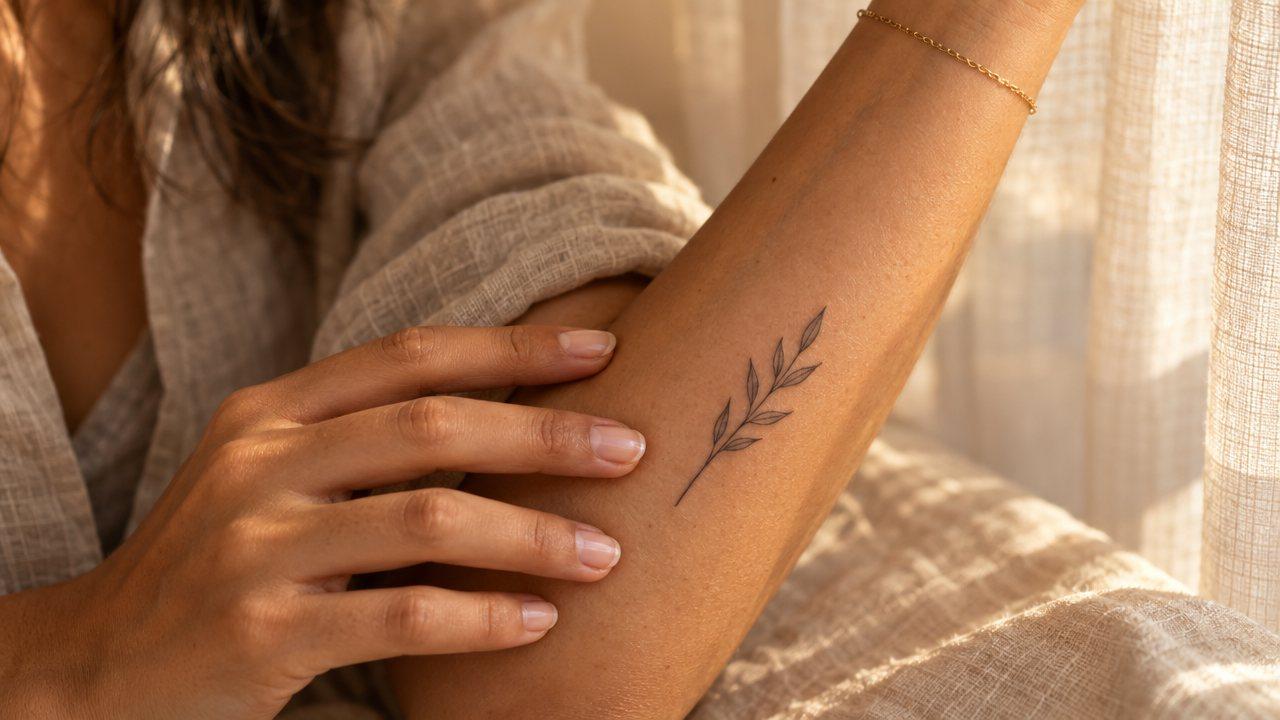
Evidence note: Photos in this guide are styled illustrations; they do not show Enclave clients or treatment results. No federal agency or professional society we found sets one official waiting period between a new tattoo and laser removal; the 8–16 week figure is a provider recommendation, and the healing timelines come from consumer health pages that differ slightly in how they describe the same process. The American Academy of Dermatology, Mayo Clinic and two PubMed Central studies on tattoo regret could not be read this run (fetch permission or browser checks), so we relied on the other sources listed; the AAD and Medical Board of California details come from our newsroom's earlier verified reads on the dates shown. We did not use archive, cache or mirror copies of any source.
Medical disclaimer: This article is educational and is not medical advice, diagnosis or treatment. Enclave Beauty services do not replace care from a licensed medical professional.