MAKEUP HYGIENE · EYE SAFETY
Your makeup routine
should not share germs.
Mascara wands, brushes, sponges, fingers, heat, and moisture all affect cosmetic hygiene. A few practical habits can lower avoidable risk around delicate eyes and acne-prone skin.
Eye cosmetics are usually safe when used correctly, but an applicator repeatedly travels between skin, lashes, air, and its container. Contamination, sharing, poor storage, and accidental scratches can turn a beauty habit into an eye or skin problem.
Replace mascara on a short clock
The FDA advises discarding mascara three months after purchase; its shelf-life guidance notes that manufacturers commonly suggest two to four months. Throw it away sooner if the smell, color, or texture changes, if it dries out, or if you develop an eye infection while using it. Never add water or saliva: this can introduce microorganisms and dilute preservatives.
Never share eye makeup or applicators
Another person’s bacteria can be hazardous even when neither person looks ill. Avoid shared mascara, eyeliner, lash tools, brushes, and counter testers unless a new single-use applicator is used without double dipping. Wash hands before touching cosmetics or the eye area.
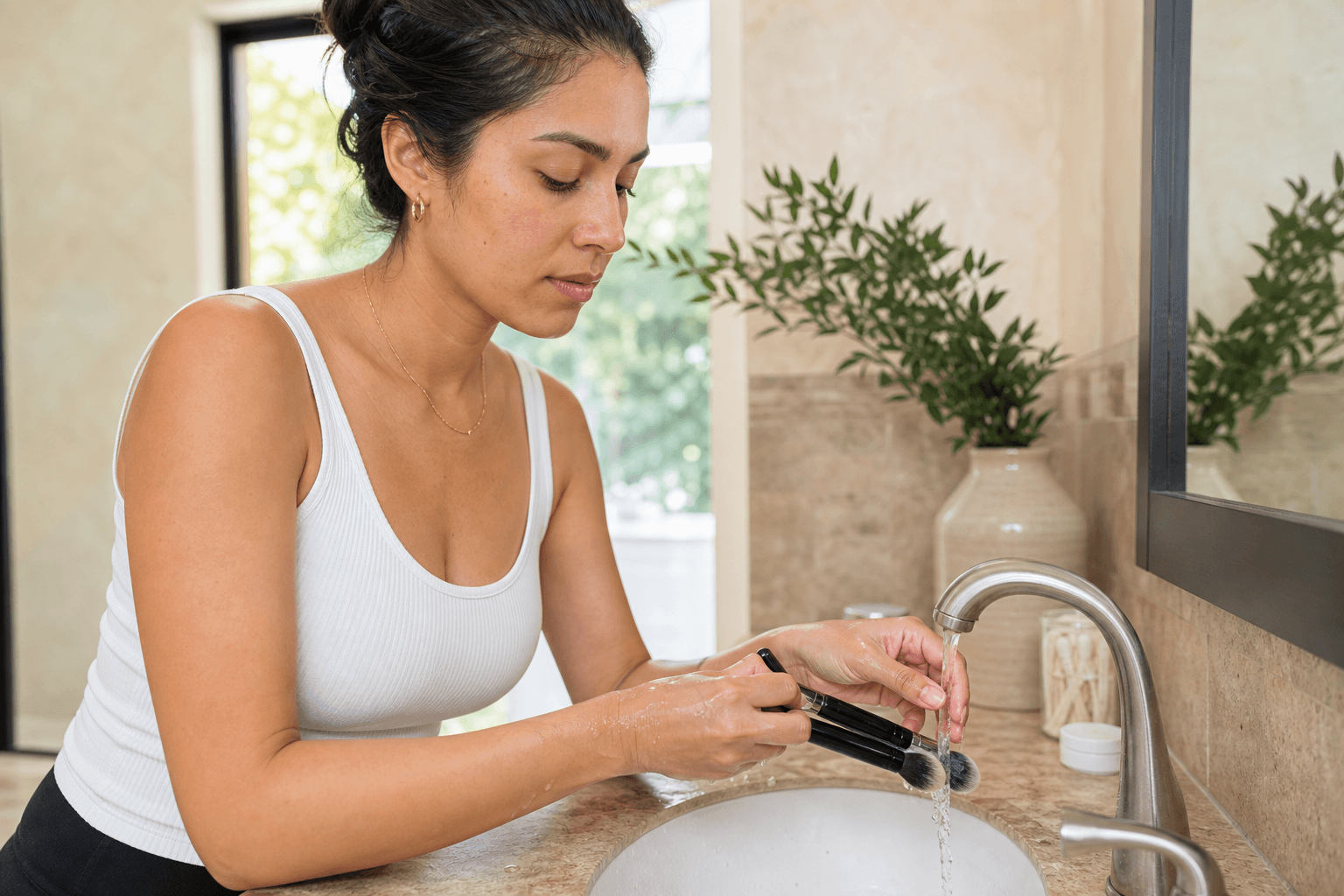
Clean brushes every seven to ten days
The American Academy of Dermatology recommends washing makeup brushes every seven to ten days. Rinse only the tips under lukewarm water, work in gentle shampoo, rinse until clear, squeeze with a clean paper towel, and lay flat with bristles hanging over a counter edge. Drying upright can send water into the ferrule and loosen glue.
Sponges need more frequent care
AAD guidance recommends cleaning a makeup sponge after every use and allowing it to air dry on a clean surface. Do not store damp tools sealed in a bag. Replace tools that remain stained, smell unusual, tear, or cannot be cleaned fully.
Heat matters in Orange County
Do not leave cosmetics in a hot car. FDA guidance warns that storage above 85°F for long periods can contribute to preservative deterioration. Around Santa Ana and Orange County, a parked vehicle can become much hotter than outdoor air, so carry makeup inside rather than using the glove box as storage.
Avoid moving-vehicle makeup
Applying mascara or liner in a moving car—even as a passenger—can scratch the cornea during a sudden stop or bump. A small abrasion can become infected. Use only products intended for the eye area; lip liner and unapproved color additives do not belong near the eye.
Pause makeup, lashes, and brows when the eye is inflamed
Stop eye cosmetics during an infection or when surrounding skin is red, swollen, painful, crusted, or actively inflamed. Discard the eye products used around the time the infection began. Postpone lash extensions, lash lifts, tints, lamination, and permanent makeup until the area is healed and a clinician has cleared unresolved symptoms.
When to seek care
Persistent irritation belongs with a clinician. Eye pain, light sensitivity, vision changes, marked swelling, discharge, trauma from an applicator, or rapidly worsening redness need prompt evaluation. Sudden vision loss is an emergency.
Sources and editorial note
- U.S. FDA: Eye Cosmetic Safety
- FDA: Eye Cosmetic Safety Q&A — updated 2024
- American Academy of Dermatology: How to Clean Makeup Brushes
- FDA: Shelf Life and Expiration Dating of Cosmetics — updated 2024
Editorial note: Reviewed August 30, 2026. Product instructions may be shorter than general guidance and should be followed.
Medical disclaimer: Educational only, not medical advice or a diagnosis.